


Britain’s decision to provide Ukraine with classified information on British-made components used in SCALP long-range cruise missiles has triggered a sharp response from Moscow, with the Kremlin accusing London of deliberately prolonging the war and warning that its latest support will “add fuel to the fire.”
The dispute comes as British Prime Minister Andy Burnham arrived in Kyiv on Monday on his first overseas trip since taking office. His visit is expected to include an announcement of additional British support for Ukraine’s domestic production of long-range missiles, reinforcing London’s commitment to strengthening Kyiv’s ability to sustain its own weapons production.
The development highlights a broader transformation in Western support for Ukraine: European governments are increasingly moving beyond supplying weapons toward helping Kyiv build an independent defence-industrial base capable of producing long-range systems domestically.
For Russia, however, that shift represents a direct threat to its military infrastructure and could further complicate already stalled efforts toward a negotiated settlement.
Stay ahead of the geopolitical week.
MD Briefing delivers expert analysis across five global fronts — the Indo-Pacific, energy, geoeconomics, European security, and the Middle East — every Monday morning. Free.
Moscow accuses Britain of blocking peace efforts
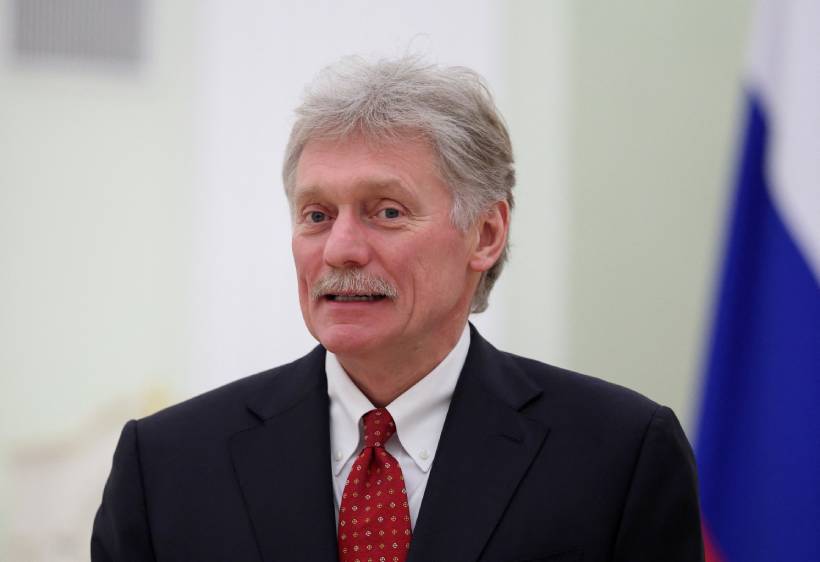
Kremlin spokesman Dmitry Peskov said Britain was deliberately working against prospects for peace.
He accused London of being directly involved in the war on Ukraine’s side and argued that British military assistance was preventing even limited progress toward a diplomatic settlement.
The Kremlin’s criticism reflects Moscow’s increasingly negative view of Britain’s role in the conflict. London has consistently backed Ukraine militarily and politically, while Russia has repeatedly warned that deeper Western involvement increases the possibility of a broader confrontation.
The latest British decision is particularly sensitive because it concerns long-range missile capabilities rather than purely defensive equipment.
Long-range systems allow Ukraine to strike targets deep inside Russian territory, potentially affecting military logistics, industrial infrastructure and other facilities supporting Moscow’s war effort.
Britain is moving toward deeper military involvement
Burnham’s visit to Kyiv reinforces the direction of British policy.
His government is not simply continuing to provide Ukraine with weapons. It is also helping Kyiv expand its domestic capacity to produce long-range missiles.
That could become strategically important as the war continues.
Ukraine has spent years trying to reduce its dependence on foreign weapons deliveries. Domestic production would provide Kyiv with greater control over the pace and scale of missile operations while reducing vulnerabilities created by changes in Western political support.
For Britain, supporting that production also provides a way to strengthen Ukraine without relying exclusively on repeated transfers from British stockpiles.
The approach reflects a broader European effort to expand defence-industrial capacity as the war enters another prolonged phase.
Russia threatens to target missile production
Peskov said Russia’s military was already systematically collecting information to identify the locations of Ukrainian missile production facilities and would destroy them.
That warning raises the stakes considerably.
If Ukraine expands domestic production of long-range missiles with British technical assistance, Russia could increasingly regard Ukrainian defence-industrial sites as priority targets.
The result could be another escalation cycle: greater Western assistance leads to greater Ukrainian strike capability, which prompts Russia to intensify attacks on production infrastructure, encouraging Ukraine and its allies to further expand military support.
That dynamic could make an eventual ceasefire more difficult to achieve.
Britain’s support comes despite Russian warnings
Moscow’s latest criticism follows a series of increasingly direct warnings aimed at Britain.
Last week, Russia warned London of unspecified “consequences” over British drones allegedly being used in long-range attacks against Russian territory.
Britain has rejected the broader Russian framing of its support, with Burnham previously stating that London remains fully committed to Ukraine in what he described as an illegal war.
The latest missile assistance therefore represents a continuation rather than a departure from British policy.
But the nature of the support matters.
Providing information about missile components and assisting domestic production can be viewed by Moscow as a deeper form of involvement than simply transferring existing weapons. It potentially embeds British technical expertise within Ukraine’s longer-term military-industrial capabilities.
The long-range weapons question
Long-range missiles have become one of the most sensitive aspects of Western military assistance to Ukraine.
For Kyiv, they offer an opportunity to strike Russian military targets beyond the immediate frontline and impose costs on Russia’s ability to sustain its operations.
For Moscow, attacks deep inside Russian territory are politically and militarily significant because they challenge the assumption that distance from the frontline provides protection.
This creates a persistent escalation dilemma for Ukraine’s Western partners.
They want Kyiv to have sufficient military capability to defend itself and improve its negotiating position, but they also have to consider how Russia might respond to increasingly sophisticated Western-backed capabilities.
Britain’s willingness to support Ukrainian long-range missile production indicates that London believes the strategic benefits outweigh those risks.
The peace process faces another obstacle
The timing is particularly significant because diplomatic efforts to end the war remain fragile.
Russia has repeatedly accused Western governments of undermining negotiations by continuing to arm Ukraine. Western governments, meanwhile, argue that military support is necessary to prevent Moscow from dictating the terms of any settlement through battlefield pressure.
That creates a fundamental disagreement over what produces peace.
Russia views the expansion of Ukrainian military capabilities as evidence that the West is prolonging the conflict. Britain and its allies view military assistance as a means of ensuring Ukraine can survive the war and negotiate from a stronger position.
Neither interpretation is likely to disappear quickly.
As Ukraine becomes more capable of producing long-range weapons domestically, the military balance could become increasingly difficult for Russia to manage. Moscow may consequently increase pressure on Ukrainian defence infrastructure, potentially producing further demands from Kyiv for Western air defence, intelligence and weapons assistance.
A more autonomous Ukraine could mean a longer war
There is an important strategic paradox in Britain’s approach.
Helping Ukraine develop its own missile production could strengthen Kyiv’s ability to defend itself over the long term. It could also make Ukraine less dependent on the political decisions of individual Western governments.
But greater Ukrainian military autonomy could simultaneously reduce the incentives for Russia to compromise if Moscow believes that Ukraine is becoming increasingly capable of sustaining long-range strikes.
The issue therefore extends beyond a single British weapons package.
It concerns the future structure of the war itself.
If Ukraine develops a sustainable domestic defence industry while European governments expand their own military production, the conflict could evolve into a longer-term confrontation in which neither side can easily achieve decisive victory.
Britain is betting on deterrence
For London, the calculation appears to be that strengthening Ukraine is the best way to deter further Russian aggression.
Supporting missile production gives Kyiv the capacity to threaten Russian military infrastructure while reducing reliance on foreign stockpiles. It also signals that Britain expects to remain committed to Ukraine even as political circumstances change.
Russia, however, is interpreting the same policy in the opposite way.
Peskov’s remarks demonstrate that Moscow sees Britain’s involvement not as a path toward deterrence but as an obstacle to negotiations.
That gap in perceptions is one of the central problems facing any future peace process.
Until Russia and Ukraine, as well as their respective partners, reach some understanding over the relationship between military pressure and diplomacy, each side is likely to continue viewing the other’s actions as evidence that further escalation is necessary.
Britain’s latest missile support therefore carries significance far beyond the technical information being transferred. It signals that London is preparing Ukraine for a potentially prolonged conflict and a future in which Kyiv possesses a stronger independent long-range strike capability.
For Moscow, that means a more capable adversary and potentially more targets.
For Kyiv, it means greater strategic autonomy.
And for Europe, it means that the boundary between supporting Ukraine and becoming increasingly embedded in the conflict continues to narrow.
With information from Reuters.
