


The hardliner–pragmatist divide is a useful analytical framework for understanding the main disagreement over the war, but the reality of power within the Islamic Republic (IR) is more layered. Actors who find themselves on the same side of the debate over negotiations do not necessarily share the same interests or priorities on security, economic policy, or foreign relations. The war has brought these issue-based divisions into closer contact, making the competition over the future of the Islamic Republic more complex.
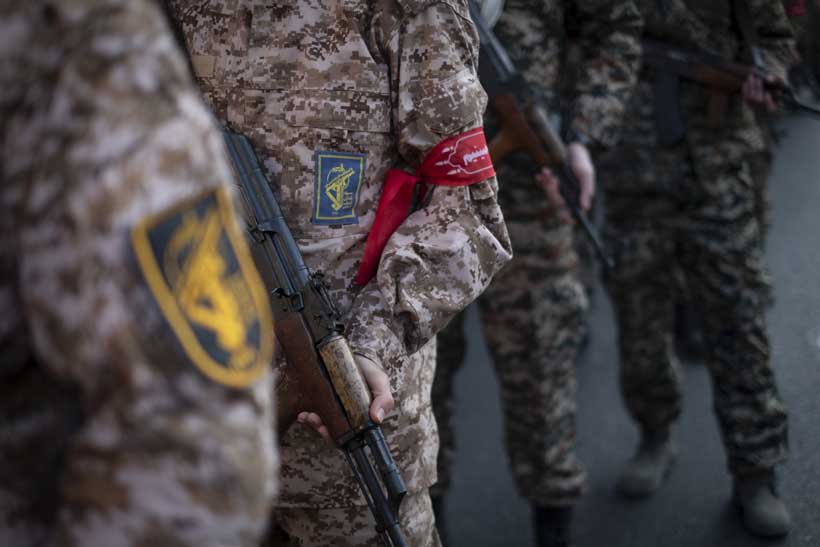
Within the system, there are reformists, members of the Executives of Construction Party (حزب کارگزاران سازندگی ایران), figures close to Hassan Rouhani, and figures such as Mohammad Javad Zarif, as well as a range of conservatives who do not necessarily fit neatly into either category. Nevertheless, this article focuses on these two poles because, under the current wartime conditions, they have greater access than other political currents to the instruments that can shape the political outcome of the war. Speaker of the IR Parliament Mohammad Bagher Ghalibaf and IR President Masoud Pezeshkian head the legislature and executive, respectively, while hardline factions retain significant influence over the country’s security, military, and media institutions, including the Islamic Revolutionary Guard Corps (IRGC) and state broadcasting.
The boundaries between these currents are also far from fixed. An actor may be closer to the pragmatists on negotiations while taking a very different position on security or domestic politics. Thus, in this article, “hardliners” and “pragmatists” are less two coherent political camps than two poles within a multilayered struggle over the direction of the Islamic Republic after the war.
Shortly after the U.S. and Israeli attacks on Iran on Feb 28, 2026, and the emergence of a proposal for negotiations, there have been growing signs of intensified competition for power among political groups within the Islamic Republic. On one side are those commonly described as pragmatists, or moderates, who support negotiations and justify their position in terms of peace, economic development, and stability. On the other side is the hardline faction, which believes that Iran should pursue resistance under the current circumstances. They view the first group’s attempts to compromise with the U.S., reduce tensions, and pursue negotiations at this stage as a betrayal. Some have gone so far as to accuse Ghalibaf, the current speaker of parliament and head of Iran’s negotiating team, of plotting a coup. This raises a broader question: has the foreign war now become a domestic struggle over what the IR will look like after the war?
Stay ahead of the geopolitical week.
MD Briefing delivers expert analysis across five global fronts — the Indo-Pacific, energy, geoeconomics, European security, and the Middle East — every Monday morning. Free.
In closed political systems such as the IR, war is not simply an external threat; it is also a political shock that can alter the balance of power at home. War determines who will be held responsible for defeat or credited with victory. It can also determine who gets to make decisions about negotiations. These questions, in turn, shape the future distribution of power and who gains access to it. Under such circumstances, the faction that succeeds in shaping the dominant narrative about the war can influence who bears responsibility for failure or success, how the war ends, and ultimately the country’s political trajectory after the war. This matters even more given the uncertainty surrounding the current leadership of the IR. Statements issued in the name of Mojtaba Khamenei, for example, have raised questions over whether they are actually coming from him or from a group acting in his name. His image and voice have not appeared on social media for nearly five months.
The war, therefore, does more than alter the IR’s position against an external enemy. It also creates political winners and losers within the regime itself. The IR has the experience of the eight-year war with Iraq to draw on. The Iran-Iraq War showed how war can generate long-term political and institutional capital for certain individuals and factions. A prominent example is Akbar Hashemi Rafsanjani, who served as chairman of the Expediency Discernment Council from 1989 to 2016. He also served two terms as president of Iran, from 1989 to 1997. Another example is Mohsen Rezaei, who served as secretary of the Expediency Discernment Council for 25 years and has now been appointed secretary of the Supreme National Security Council.
On the question of negotiations, these divisions also do not fit neatly into a simple two-sided divide. The Stability Front (Jebhe-ye Paydari / جبههٔ پایداری انقلاب اسلامی) has generally opposed negotiations with the U.S., framing the issue in terms of the ideology of resistance and deep distrust of Washington. The IRGC has likewise been highly sensitive to concessions in negotiations and to any agreement that could constrain the IR’s deterrence capabilities, although its reasoning is more strategic and security-driven than purely ideological. State broadcaster IRIB has also generally taken positions close to factions opposed to negotiations in recent years, particularly in its coverage of the U.S. and the West. It would be misleading, however, to treat IRIB as a fully dependent political actor. But at critical moments, including during the nuclear deal negotiations (JCPOA), its position has largely reflected the calculations and preferences of the leadership and the center of power. Its current programming is not successful in mobilizing the population in support of the hardliner position.
On the other side, Ghalibaf and Pezeshkian have supported negotiations and a reduction in tensions with the U.S., although this does not necessarily mean that they are fully aligned with the reformists, or even with each other on other issues. Reformists and figures close to Hassan Rouhani have generally been more supportive of negotiations and engagement with the West, while figures such as Mohammad Javad Zarif have openly emphasized diplomacy and the pursuit of a nuclear agreement. The debate over negotiations, therefore, is better understood not as a contest between two fully coherent camps, but as a spectrum of actors with varying degrees of support for, opposition to, or caution toward negotiations with the U.S.
The hardliners understand very well that if the opposing faction succeeds in imposing its narrative on the current situation, it could mean their political marginalization or even elimination from the power structure. The hardline camp includes the Paydari Front, which has consistently opposed negotiations with the U.S. and the nuclear deal, as well as state broadcaster IRIB, the IRGC, and figures close to Ali Khamenei. They regard resistance as the only way to preserve the IR and consider the U.S. untrustworthy. Saeed Jalili, the Supreme Leader’s representative to the Supreme National Security Council, has said that “taking revenge on the enemies is the people’s right and the officials’ duty.” The faction has also accused Ghalibaf of plotting against Khamenei because of his emphasis on negotiations with the United States.
The hardliners believe that if stability returns, people will take to the streets over issues such as monthly inflation, which has reached 87.9 percent, and widespread poverty, and will press for their demands. For this reason, they see maintaining wartime conditions as necessary for the survival of the regime and emphasize the importance of maintaining a security-oriented domestic environment. In April, 63 members of parliament affiliated with the Paydari Front called for the war to continue.
Opposing the hardline faction is the pragmatic, or moderate, camp (here, “moderate” is used only in relation to the current hardliners; members of this camp could themselves be considered hardliners when compared with other political factions in Iran). The moderate camp includes Pezeshkian, Ghalibaf, and those close to them. They see negotiations and a reduction in tensions with the U.S. as the way to protect Iran and its people from the consequences of war. In their view, negotiations would not only bring an end to the war and the current tensions but could eventually pave the way for sanctions relief.
To justify their position, they point to rising inflation, growing economic and political instability, and the impact of these conditions on people’s everyday lives. Speaking at a meeting of the Supreme Council of the Judiciary on July 20, Pezeshkian said: “Today, the most important battlefield for us is the economy and the livelihood of the people.” In contrast to the hardliners, this camp sees the survival of the Islamic Republic as dependent on reducing external pressure through diplomacy rather than through war and military resistance. Yet the disagreement between these factions is not simply about how the war should be managed. It may ultimately be about the direction the IR takes after the war.
What is clear is that the war could alter the balance of power among Iran’s political factions. The conflict has increased the control and influence of security institutions, which in turn affects how citizens view the war and the decision over whether it should continue or end. War also reduces economic resources, creates shortages of essential goods, fuels inflation, increases unemployment, and damages economic infrastructure. For example, U.S. and Israeli strikes on Iran’s petrochemical facilities have contributed to higher prices for plastic materials. The war has also brought severe disruptions to the internet, forcing many businesses to shut down. During the war, Iran experienced an international internet blackout that lasted for nearly three months. This has, in turn, increased the importance of negotiations and strengthened the political role of those conducting them. These developments can affect the legitimacy of political factions inside the regime, creating potential winners and losers at home.
At the same time, the war can strengthen revolutionary ideals among parts of the political establishment and reinforce the idea of resistance and confrontation with an enemy against which the IR has defined much of its identity for 47 years. For the hardliners, this can provide an additional source of political strength.
On the war itself, the differences are less about whether Iran should defend itself than about what the war is ultimately supposed to achieve. For all of these factions, the central concern is ultimately the survival and future of the IR, rather than Iran understood simply as a state and national interest. For hardline actors, the war is a test of the IR’s ability to sustain resistance, preserve its ideological foundations, and impose costs on its adversaries. The Stability Front and other hardline groups tend to emphasize the ideological dimension of resistance, while the IRGC approaches the conflict more heavily through the lens of deterrence and the preservation of the IR’s military and security capabilities. Pezeshkian and Ghalibaf, meanwhile, have supported Iran’s right to respond militarily while placing greater emphasis on turning military pressure into a political outcome rather than allowing the conflict to become open-ended. These differences mean that actors who may appear aligned during the war can still have very different ideas about what constitutes a successful outcome and when the war has achieved its purpose.
The war has not produced any meaningful liberalization on the domestic front. The internet remains heavily filtered and slow, while the security environment continues to shape what can be published, how people behave in public, and what forms of dissent are tolerated. At the same time, 56 people have been executed on political or security-related charges during the past five months, reinforcing the perception that the IR has not relaxed its coercive approach in response to the war.
Nor does the war appear to have generated a broad “rally around the flag” effect. Rather than bringing large segments of society closer to the IR, the conflict has often compounded existing grievances. Persistent power cuts, reportedly lasting around two hours a day across the country, have become another source of public frustration. Many Iranians attribute these shortages not simply to a lack of electricity, but to the alleged use of electricity-intensive cryptocurrency mining and related activities by powerful actors, including elements associated with the IR’s security establishment, as a way of circumventing sanctions. Combined with inflation, unemployment, continued executions, and the pervasive security environment, these grievances have limited the ability of the IR’s anti-U.S. messaging to translate into broader public support. The rally-around-the-flag effect, in other words, appears to have remained largely confined to the regime’s existing supporters rather than extending substantially into the wider population.
The struggle between these factions, therefore, is not simply about the military outcome of the war. It is also about who gets to shape its narrative and its political consequences. The war will help determine who is seen as responsible for victory or defeat, who gets to decide on negotiations, and which institutions will control the costs of the war and the resources available for reconstruction. More importantly, it could determine which faction gets to shape the country’s future roadmap and decide who should be regarded as a friend or an enemy. These issues could ultimately determine how power is distributed in the postwar period. If negotiations succeed, for example, there is a strong possibility that Iran’s relations with the West will become easier.
From an economic perspective, if we accept that the war has inflicted enormous damage on the IR, rebuilding Iran will involve vast financial resources, major contracts, economic opportunities, and the redistribution of rents. According to estimates, the IR has so far suffered around $270 billion in damage, equivalent to 56 percent of its annual GDP. The scale becomes clearer when we consider that Iran’s oil exports amounted to only $65 billion in 2024. The estimated war damage would therefore be more than four years’ worth of oil exports. For comparison, the estimated economic damage from the eight-year Iran-Iraq War was $645 billion. Some sources have estimated that the damage inflicted on Iran’s three major industrial sectors, South Pars, petrochemicals, and steel, during U.S. and Israeli strikes exceeds $100 billion. Reconstruction will therefore also become a question of foreign policy: which countries will be invited to help rebuild Iran, on what terms, and with what consequences for Iran’s relations with China, Russia, and the West. Ultimately, these decisions will be shaped by whichever faction emerges politically stronger from the war.
This divide also extends to foreign policy. The two camps are likely to disagree over Iran’s relations with the outside world after the war. The hardliners are more focused on maintaining and deepening ties with China and Russia, while the pragmatists emphasize keeping the door open to engagement with the West, especially Europe, reducing tensions with the United States, and creating a path toward sanctions relief. Pezeshkian has repeatedly said that “we seek to expand relations with all countries around the world.” By contrast, continued war and a security- and military-driven environment provide the hardliners with a rationale for the foreign policy they favor. In Iran, hardliners have long been described as “sanctions profiteers” on the grounds that they have consistently opposed negotiations aimed at reducing tensions and lifting sanctions. This stands in direct contrast to the pragmatists’ position. Ghalibaf also emphasized diplomacy as a means of reducing tensions with the U.S. during a meeting with the head of Hamas’s leadership council a month ago.
Taken together, these developments can be understood as a form of factional competition within the regime. The competition itself predates the war, meaning that disagreements over negotiations with the U.S are nothing new. What makes the current situation different is that the war has created exceptional conditions that have intensified this long-standing rivalry. Each side can now present the outcome of the war as a test of whether its preferred approach was correct. The postwar environment could therefore determine winners and losers in this internal struggle and, in turn, alter their positions and interests within the system.
The IR, moreover, is unlikely to emerge from the war as the same actor it was before it began. Its political and military command structure has suffered major damage, its network of proxies has been significantly weakened, and its military and economic infrastructure has sustained extensive destruction. At the same time, its limited leverage in negotiations leaves it with fewer cards to play in seeking better terms. This suggests that the balance of power among Iran’s political, military, and security institutions could shift after the war. If negotiations succeed, the Ghalibaf-Pezeshkian camp is likely to gain greater political credibility and, consequently, a larger share of power. The hardliners, meanwhile, could face growing pressure to take responsibility for the war’s enormous costs.
The war, therefore, may end on the battlefield before it ends politically. Its consequences will continue through the struggle over reconstruction, the shape of Iran’s future foreign relations, the position of the security establishment, and ultimately the balance of power within the Islamic Republic. The central question is no longer simply who wins the war. It is who gets to define Iran after it.
