


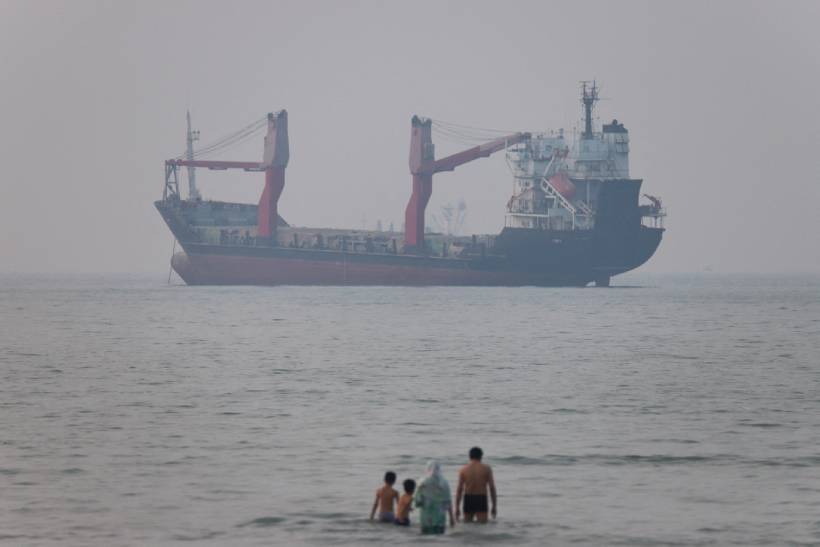
The Iran war has fundamentally reshaped global energy security calculations, forcing fuel importing nations to confront an uncomfortable reality. The disruption of the Strait of Hormuz, one of the world’s most important energy corridors, has exposed the vulnerability of countries that rely heavily on imported oil, natural gas, and refined fuels. While policymakers broadly agree that dependence on unstable supply routes must be reduced, there is far less agreement on how that goal should be achieved.
The debate has largely split along political and economic lines. Advocates of renewable energy argue that the crisis demonstrates the urgency of accelerating investment in electric vehicles, renewable power, and electrified industries. Others insist that countries should instead increase domestic fossil fuel production and refining capacity to shield themselves from external shocks. In reality, neither solution offers a complete answer.
Strait of Hormuz Crisis Reignites Energy Security Debate
The conflict between Iran, the United States, and Israel, which began on February 28, effectively halted normal traffic through the Strait of Hormuz, a narrow waterway that previously carried nearly one fifth of global crude oil, petroleum products, and liquefied natural gas exports.
Although oil markets continue to price in an eventual reopening of the route, uncertainty remains high. Current negotiations could result in Iran exercising greater influence over shipping movements through the strategic chokepoint, fundamentally changing regional energy security calculations even if exports resume.
Stay ahead of the geopolitical week.
MD Briefing delivers expert analysis across five global fronts — the Indo-Pacific, energy, geoeconomics, European security, and the Middle East — every Monday morning. Free.
For importing nations, this represents the second major global energy disruption in just four years. Russia’s invasion of Ukraine in 2022 triggered record spikes in oil, gas, coal, and electricity prices. The Iran conflict has reinforced concerns that geopolitical tensions can once again threaten global energy supplies with little warning.
Australia Illustrates the Global Dilemma
Australia offers one of the clearest examples of the difficult choices now confronting energy importing countries.
Despite being a major exporter of energy resources, Australia imports roughly 80 percent of its liquid fuel requirements after decades of refinery closures reduced domestic refining capacity from eight refineries to only two. Most imported fuels are diesel, which remains critical for mining, agriculture, transportation, and emergency services.
Concerned about long term supply risks, the Australian government recently announced a feasibility study into constructing the country’s first new refinery in six decades.
The proposal aims to strengthen fuel security by producing more diesel and refined products domestically, particularly for Western Australia’s mining and agricultural industries.
However, experts warn that building a modern refinery would require enormous investment. A competitive refinery capable of processing approximately 300,000 barrels per day could cost more than 12 billion dollars, not including additional infrastructure such as crude import terminals, export facilities, and strategic storage.
Even then, Australia would still depend on imported crude oil, merely replacing one form of dependence with another.
Electrification Emerges as an Alternative
Rather than expanding fossil fuel infrastructure, many analysts argue that reducing fuel demand offers a more sustainable solution.
Mining companies are increasingly investing in electric haul trucks, renewable electricity generation, and battery powered equipment to reduce diesel consumption. Fortescue Metals Group estimates that electrifying its operations could deliver annual savings exceeding one billion Australian dollars while reducing exposure to volatile fuel prices.
Australian consumers are also accelerating the shift toward electric mobility. Sales of electric vehicles, plug in hybrids, and hybrid vehicles have risen sharply, reflecting growing concern over long term fuel costs and supply security.
These trends suggest electrification is becoming not only an environmental strategy but also an economic and national security priority.
A Hybrid Strategy May Offer the Best Solution
Despite strong arguments for electrification, a complete transition away from fossil fuels will take decades.
Heavy industry, freight transport, aviation, shipping, and many agricultural operations remain heavily dependent on liquid fuels. Maintaining some domestic refining capacity could therefore provide an important buffer during future supply disruptions while the broader economy gradually transitions toward cleaner energy.
A balanced strategy combining limited investments in refining with accelerated electrification may therefore offer greater resilience than relying exclusively on either approach.
Such an approach would reduce exposure to imported fuels without requiring an abrupt transformation that could prove economically or politically difficult.
Asian Countries Are Already Moving in This Direction
Several Asian economies are already adopting diversified energy security strategies.
Vietnam is expanding electric vehicle production while encouraging greater adoption of electric scooters.
Indonesia is working toward an all electric public bus fleet by 2045 while promoting electric motorcycles and passenger vehicles.
Thailand has introduced generous subsidies for electric vehicle purchases alongside rapid investment in nationwide charging infrastructure.
Rather than abandoning fossil fuels overnight, these countries are pursuing gradual transitions that strengthen energy security while supporting economic growth.
Diversification Will Define Future Energy Security
The Iran war has demonstrated that energy security can no longer depend solely on access to global oil markets.
Countries will increasingly seek to diversify both the sources and forms of energy they consume. That means investing in renewable electricity, expanding electrified transportation, strengthening strategic fuel reserves, improving domestic refining where economically viable, and developing resilient supply chains for critical energy technologies.
There is no universal solution. Each country faces different geographic, economic, and political realities. Yet one lesson is becoming increasingly clear: relying on a single fuel source or a single supply route has become an increasingly costly risk in an era of growing geopolitical instability.
Analysis
The Iran war has accelerated a broader transformation in global energy policy. While immediate attention remains focused on reopening the Strait of Hormuz, governments are increasingly recognizing that true energy security requires structural change rather than temporary diplomatic solutions. Countries that diversify energy sources, expand electrification where feasible, and maintain strategic resilience through domestic production and storage will be better positioned to withstand future geopolitical crises. The next phase of global energy competition is therefore likely to be defined not only by access to oil, but by the ability to build flexible, diversified, and resilient energy systems capable of adapting to an increasingly uncertain international environment.
With information from Reuters.
