


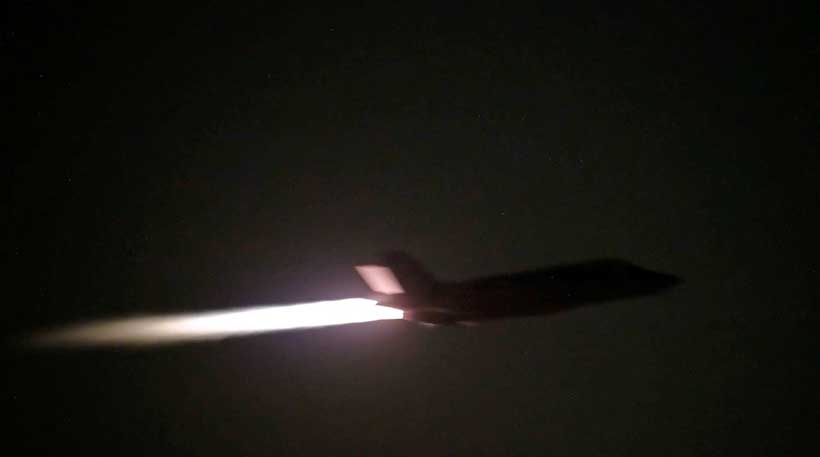
The United States has depleted a significant portion of its stockpile of long range precision missiles during its five month military campaign against Iran, raising concerns over its preparedness for future conflicts with major powers such as China and Russia. According to multiple sources familiar with internal military data, the extensive use of advanced strike weapons has exposed vulnerabilities in the US defence industrial base and reignited debate over whether prolonged regional conflicts could undermine Washington’s broader strategic deterrence.
Precision Weapons at the Centre of US Military Strategy
The missiles in question include the Army Tactical Missile System (ATACMS) and the newer Precision Strike Missile (PrSM), both designed to deliver highly accurate long range strikes against high value targets while keeping US forces outside enemy air defence range. These systems have become central to modern American warfare, having already played a significant role in supporting Ukraine’s deep strike operations against Russian military assets.
Analysts also consider these missiles indispensable for any future conflict in the Indo Pacific, where the United States would rely heavily on long range precision fires to counter China’s expanding anti access and area denial capabilities.
War with Iran Accelerates Stockpile Depletion
Sources told Reuters that the United States has used “virtually all” of its available ATACMS and PrSM inventories during operations against Iran. While officials declined to disclose exact figures, the reported scale of depletion has alarmed defence planners who fear prolonged combat could leave the US with limited flexibility to respond to simultaneous crises elsewhere.
Stay ahead of the geopolitical week.
MD Briefing delivers expert analysis across five global fronts — the Indo-Pacific, energy, geoeconomics, European security, and the Middle East — every Monday morning. Free.
Another source noted that Central Command has already exhausted most of its pre war allocation of land based missiles and has had to replenish supplies by drawing weapons from other regional commands, highlighting the pressure placed on America’s global force posture.
Growing Debate Over Military Readiness
The revelations have intensified concerns inside Washington over the sustainability of US military operations. President Donald Trump defended the country’s military position, insisting the United States still possesses more munitions than any other nation while pointing to expanding production by American defence manufacturers.
However, defence analysts argue that production increases cannot immediately compensate for the rapid consumption of expensive precision weapons, many of which require lengthy manufacturing timelines and complex supply chains. Missiles such as ATACMS and PrSM each cost more than one million dollars and cannot be replenished quickly during wartime.
Defensive Missile Supplies Also Under Pressure
The concerns extend beyond offensive strike weapons. Military officials have also warned that stocks of Patriot and THAAD missile interceptors have fallen sharply during the conflict as the United States defended regional bases and allies against repeated missile attacks.
Research published by the Center for Strategic and International Studies estimates that around 65 percent of Patriot interceptors and more than one third of THAAD interceptors have already been expended. Sources familiar with internal government data told Reuters these estimates closely match classified assessments.
The United States has also reportedly consumed nearly half of its global inventory of Tomahawk cruise missiles since the beginning of the war, further highlighting the strain placed on America’s precision strike arsenal.
Strategic Implications Beyond the Middle East
The depletion of long range missile inventories carries consequences far beyond the Iran conflict. Washington’s ability to deter China in the Indo Pacific depends heavily on maintaining sufficient stocks of advanced precision weapons capable of striking targets across vast distances.
Any prolonged reduction in these capabilities could influence Beijing’s strategic calculations while also complicating American commitments to allies in Europe and Asia. Defence experts warn that rebuilding inventories may take years even with accelerated production, leaving a temporary but significant gap in US military readiness.
Analysis
The reported depletion of America’s precision missile arsenal illustrates the growing challenge of sustaining high intensity warfare in an era of increasingly sophisticated conflicts. While the United States retains unmatched military capabilities, the Iran campaign demonstrates that even the world’s largest defence power faces practical limits in munitions availability.
The situation also highlights a broader structural issue within Western defence planning. Modern warfare increasingly depends on expensive precision guided weapons rather than mass conventional firepower, making industrial production capacity almost as important as battlefield performance. Future conflicts involving China or Russia would likely consume far greater numbers of advanced missiles than regional operations in the Middle East, placing unprecedented demands on defence manufacturing.
For policymakers, the lesson extends beyond replenishing stockpiles. The conflict reinforces the importance of strengthening defence industrial resilience, expanding production capacity, and ensuring that military planning accounts not only for operational success but also for the long term sustainability of prolonged strategic competition.
With information from Reuters.
