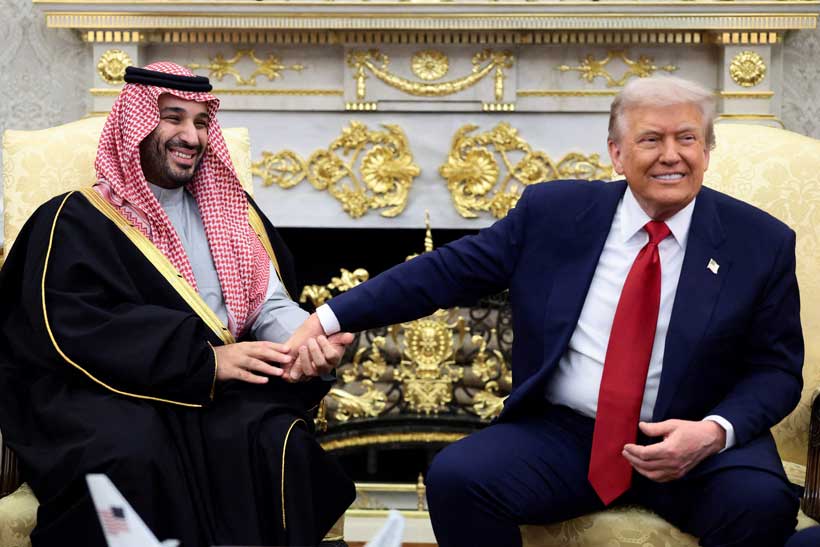
The Trump administration supports a nuclear energy agreement with Saudi Arabia that would allow the country to enrich uranium and process spent nuclear fuel, raising concerns about weapons proliferation among regional nations. For years, the U. S. and Saudi Arabia have talked about a nuclear cooperation deal that would give Saudi Arabia access to American technology and provide U. S. companies with contracts for Saudi atomic facilities. However, security risks and political complications in a volatile region have always been central issues.
Saudi Arabia has committed to the nuclear Non-Proliferation Treaty (NPT), which prohibits developing atomic bombs and allows for international inspections. Despite this, the U. S. has usually sought additional safeguards. Recently, sources reported that the Trump administration is ready to present an agreement to Congress, but it lacks the “gold standard” that would prevent Saudi Arabia from enriching uranium and processing spent nuclear fuel, which could lead to materials for nuclear weapons. This absence has raised alarm among U. S. allies in the Middle East, particularly Israel, and could face opposition in Congress, where stricter conditions have been previously demanded.
Saudi Arabia’s interest in a nuclear program comes despite being the largest oil exporter in the world. The country aims to reduce carbon emissions and allocate more crude oil for export as part of Crown Prince Mohammed bin Salman’s Vision 2030 plan. In 2024, two-thirds of Saudi electricity came from gas and oil, with significant crude oil consumption for power generation. Nuclear energy could help the kingdom conserve its oil resources, particularly for water desalination and air conditioning, while also increasing oil revenue. Additionally, Saudi Arabia has stated that if Iran develops nuclear weapons, it would feel compelled to do the same, heightening concerns about its nuclear ambitions.
A nuclear deal could offer strategic and commercial benefits for the U. S. The Trump administration’s predecessor, Joe Biden, had linked civil nuclear cooperation to efforts for Saudi-Israeli normalization. However, these issues are now separated, although a nuclear deal could enhance U. S. diplomatic relations with Saudi Arabia. The U. S. Energy Secretary indicated that both countries are making progress towards an agreement, but there has been no mention of broader normalization efforts.
If the U. S.-Saudi agreement collapses, Saudi Arabia has other options as several countries with nuclear capabilities have shown interest in partnerships. China’s National Nuclear Corporation, Russia’s Rosatom, South Korea, and France are potential partners depending on factors like technology, financing, and political alignment.
A critical point is whether the U. S. will agree to establish a uranium enrichment facility in Saudi Arabia and the management details of such a facility. Without stringent safeguards, Saudi Arabia could theoretically create highly enriched uranium suitable for nuclear weapons. Reports indicate that the proposed agreement would legally allow cooperation on uranium enrichment but does not require the U. S. to provide relevant technologies. Diplomatic tensions also exist since Israel, a key U. S. ally, has opposed a Saudi civil nuclear program.
With information from Reuters