


On July 18, Iran’s deputy foreign minister Kazem Gharibabadi announced that Tehran was suspending its commitments under the ceasefire it had signed in Islamabad five weeks earlier, citing an alleged US breach, just as the deadliest weekend for US forces in the war since March left three American service members dead. Brent crude, which had settled near sixty dollars a barrel when Pakistan first brought Washington and Tehran to the table in April, touched ninety dollars the same week. The Islamabad Memorandum, the framework Pakistani mediators spent five months assembling between two governments that would not otherwise speak to each other, has now collapsed into the same war it was built to end. The question worth asking is not whether Pakistan’s diplomacy failed. It is whether the deal’s own sequencing, relief now and verification later, was ever built to survive contact with two governments that had no reason to wait.
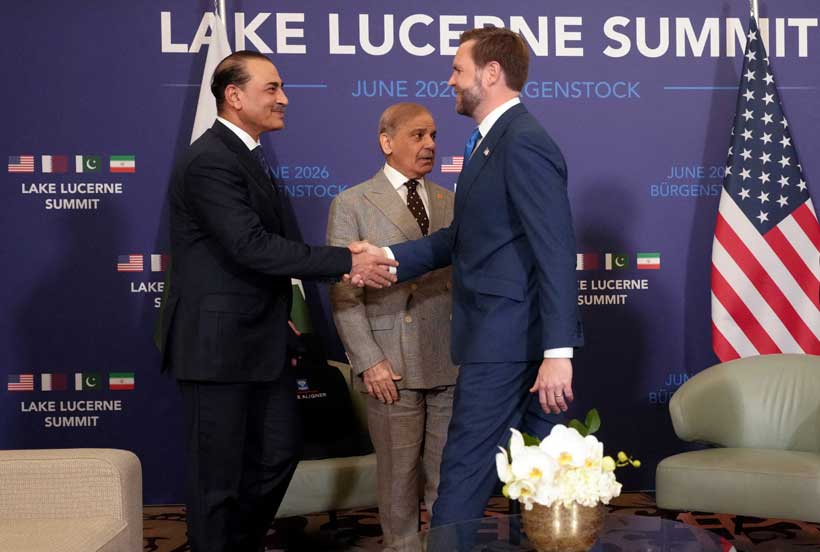
The 2026 Iran war began on February 28 with a joint US and Israeli strike campaign, Operation Epic Fury, that killed Supreme Leader Ali Khamenei and a wave of senior commanders. Pakistan emerged as the only state with functioning channels to both capitals, hosting a twenty one hour direct negotiation in Islamabad in April between a Pakistani team led by Prime Minister Shehbaz Sharif and Field Marshal Asim Munir, a US delegation led by Vice President JD Vance, and an Iranian team led by parliamentary speaker Mohammad Bagher Ghalibaf. On June 17, President Trump and Iranian President Masoud Pezeshkian remotely signed the resulting Islamabad Memorandum of Understanding, a sixty day framework that halted hostilities, began easing sanctions and the naval blockade immediately, and created a joint mechanism to negotiate and monitor further steps. Sharif himself later confirmed on the record that the text does not address Iran’s ballistic missile program, and the agreement is similarly silent on Iran’s regional proxy network.
Why Relief Came Before Verification
Coverage of this collapse has largely framed it as a story about Pakistani diplomacy failing to hold two adversaries together. That framing misses where the actual design flaw sits. The memorandum did establish an implementation mechanism, joint working groups tasked with negotiating the harder questions, including Iran’s nuclear program, over the sixty day window. The problem was not the absence of a mechanism. It was the order of operations. Washington began lifting elements of its blockade and sanctions on the day the memorandum was signed, while verification of Iranian compliance, and negotiation of the issues that mattered most, missiles, proxies, enrichment limits, were deferred to the working groups the mechanism had only just created. Relief was banked immediately. Constraint remained a set of promises to negotiate later.
Stay ahead of the geopolitical week.
MD Briefing delivers expert analysis across five global fronts — the Indo-Pacific, energy, geoeconomics, European security, and the Middle East — every Monday morning. Free.
That sequencing inverts the model that produced the most durable nonproliferation agreement in the region’s recent history. The 2015 Joint Comprehensive Plan of Action required Iran to cap enrichment at 3.67 percent, cut its low enriched uranium stockpile to roughly 200 kilograms, reduce its installed centrifuges to about 5,000, and accept continuous International Atomic Energy Agency monitoring as accomplished, verified facts before sanctions relief began, with a snapback mechanism ready to restore pressure the moment Iran fell short. The Islamabad Memorandum reversed that order, and it did so on a narrower text that excluded the missile and proxy questions from the outset, confirmed on the record by Sharif himself when he stated plainly that the memorandum does not mention Iran’s ballistic missiles. A government that has already received the relief it wanted has measurably less incentive to wait for a working group to finish negotiating the parts it never conceded, and the same is true in reverse: Washington’s own blockade and sanctions reversal was never conditioned on independently verified Iranian steps, only on the signature itself.
That inversion, not a missing mechanism, is what let both governments walk away without forfeiting anything. Gharibabadi’s July 18 suspension announcement came ten days after President Trump himself had already said the deal was effectively over. Washington’s mid July decision to reimpose the naval blockade and add a twenty percent toll on cargo transiting the strait cost it nothing it had not already reversed once. Iran’s resumption of tanker interceptions and strikes on Bahrain, Jordan, Kuwait, Oman, Qatar and Syria cost it nothing beyond what the working groups had never obligated it to give up in the first place. Both sides could return to the war holding the exact leverage they had before signing, because the memorandum’s own architecture let them bank the upside without first proving the downside was real. The human and economic cost of that inversion is now measurable. Iran says US strikes have killed at least forty six people and wounded more than four hundred since hostilities resumed, and India, the world’s leading supplier of merchant marine crew, has barred its nationals from vessels transiting the strait altogether, a direct signal of how far the working groups remain from delivering the compliance the memorandum was supposed to verify.
None of this diminishes what Pakistan accomplished procedurally, and its Foreign Office has a defensible point when it insists the Islamabad framework remains the only viable template for de escalation, since no rival channel between Washington and Tehran exists. But a mediator drafts the sequencing it is handed by the parties who actually hold the leverage. Pakistan could convene the talks and stand up the working groups. It could not force Washington to condition its blockade reversal on verified Iranian compliance, or force Tehran to put its missile program on the table, because neither concession was something either government was prepared to make to a mediator rather than to each other.
Three Paths From Here
Base case, roughly 50 percent: The current exchange of strikes continues at a similar intensity for several more weeks, oil prices stay elevated in the eighty five to ninety five dollar range, and a version of the Islamabad framework is eventually revived once both sides have extracted enough retaliatory value to justify returning to it, most likely alongside renewed Pakistani and Qatari shuttle diplomacy. This path matches the pattern visible since February, in which each escalation cycle has run for several weeks before both sides tire of the costs and return to some version of the same unresolved sequencing.
Downside case, roughly 30 percent: Continued Iranian interception of tankers, or a strike that kills a significant number of Gulf civilians, triggers a broader US air campaign against Iranian infrastructure beyond military targets, drawing a wider set of regional states into direct exchanges and pushing Brent decisively above one hundred dollars a barrel for a sustained period. The clearest trigger for this path would be a strike, deliberate or not, on a tanker flagged to a state not yet party to the conflict, the kind of incident that has historically forced governments to respond regardless of their stated preference for restraint.
Upside case, roughly 20 percent: The ten day pause reportedly floated by mediators in the past week is accepted by both Washington and Tehran, providing enough space to renegotiate the sequencing itself, conditioning any further sanctions or blockade relief on independently verified Iranian steps on missiles and proxies rather than on further promises to negotiate. That would be the first sign this round of the war produces a settlement built on the JCPOA’s verify first model rather than another round of relief now and compliance later. The clearest evidence would be a named third party verification role, whether International Atomic Energy Agency monitors on Iranian sites or a Qatari and Omani guarantor arrangement over the strait itself.
The Signal to Watch
The Islamabad Memorandum’s collapse is not a verdict on Pakistan’s capacity to mediate. It is a verdict on a sequencing choice, relief before verification, that let both signatories walk away from the deal without forfeiting anything they had already banked. The relevant signal for the weeks ahead is not whether Pakistan rejoins the process, since its Foreign Office has already signaled it will, but whether any revived framework reverses that order and conditions relief on independently verified steps rather than on further promises to negotiate. Watch for that specific feature in the text of any renegotiated deal. Absent it, every future ceasefire brokered from Islamabad or anywhere else will produce the same outcome, not because the mediator lacked skill, but because relief granted before compliance is proven is not peace. It is a loan neither side has any intention of repaying.
