


An Israeli airstrike killed an entire family of six in Gaza City on Tuesday, underscoring the continued human toll of a conflict that has persisted despite a U.S.-brokered ceasefire agreed more than nine months ago. The strike, which ignited the family’s home in the Sabra neighbourhood, came amid ongoing Israeli operations that have continued almost daily since the truce took effect.
According to Gaza health officials, the victims were Firas Al-Masri, his wife Salsabeel, and their four children—three daughters and a son. Rescue workers battled flames that engulfed the house before recovering the bodies. Video footage obtained by Reuters showed firefighters struggling to extinguish the blaze while residents searched through the charred remains of the building.
The Israeli military confirmed carrying out the strike, stating that its intended target was a Hamas militant. It said the incident was under review following reports that civilians had been killed. Israel has consistently maintained that its operations are directed at militant infrastructure and personnel, even as civilian casualties continue to mount.
The tragedy has intensified criticism over the effectiveness of the ceasefire, which halted large-scale military operations but failed to end targeted Israeli strikes across Gaza. Residents say the distinction offers little comfort to civilians who continue to live under constant fear of bombardment.
Stay ahead of the geopolitical week.
MD Briefing delivers expert analysis across five global fronts — the Indo-Pacific, energy, geoeconomics, European security, and the Middle East — every Monday morning. Free.
Standing outside the destroyed home, the victims’ father and grandfather, Abu Yusuf Al-Masri, described the attack as sudden and devastating.
“We were asleep when the explosion happened,” he said. “We couldn’t save our children or grandchildren from the flames. Most of those killed were women and children. There is no safe place left.”
His remarks reflect a broader reality facing Gaza’s civilian population, many of whom remain displaced and uncertain whether the ceasefire provides any meaningful protection.
Violence Persists Despite Ceasefire
The latest strike is part of a broader pattern of violence that has continued since the October ceasefire between Israel and Hamas. According to Gaza health authorities, more than 1,150 Palestinians—most of them civilians—have been killed in Israeli attacks during the ceasefire period alone.
Israel argues that it has continued targeting Hamas and Islamic Jihad militants who remain active inside the enclave. Since Friday, the Israeli military says it has killed four militants, including three who allegedly participated in Hamas’ October 7, 2023 attack on southern Israel and were involved in holding Israeli hostages.
While Hamas has not publicly detailed its military losses, the group continues to maintain control over much of Gaza despite months of fighting and repeated Israeli operations.
Four Israeli soldiers have also been killed by militant attacks in Gaza since the ceasefire began, highlighting the fragility of the truce and the persistence of hostilities on both sides.
Diplomatic Efforts Show Little Progress
International mediators—including Egypt, Qatar, Turkey and the United States—have continued efforts to transform the temporary ceasefire into a lasting political settlement.
Washington has promoted a framework supported by U.S. President Donald Trump that calls for Hamas to disarm in exchange for phased Israeli military withdrawals and broader security arrangements. However, negotiations have repeatedly stalled over disagreements on disarmament, governance of Gaza and long-term security guarantees.
The continued exchange of attacks has further complicated diplomatic efforts, with each new incident reducing confidence that a comprehensive agreement can be reached in the near future.
Humanitarian Crisis Deepens
The war began after Hamas-led fighters attacked southern Israel on October 7, 2023, killing about 1,200 people and taking roughly 250 hostages, according to Israeli figures. Israel’s military campaign that followed has killed more than 73,000 Palestinians, according to Gaza health authorities.
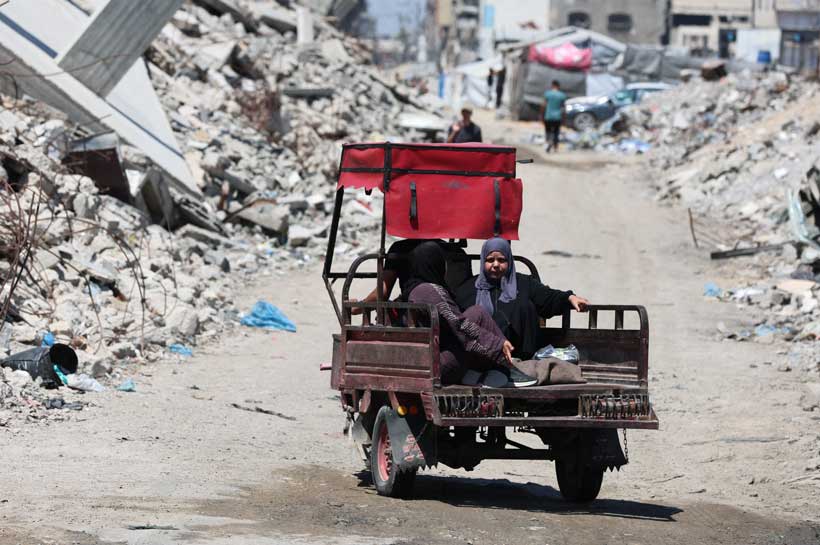
Much of Gaza has been devastated by months of conflict. Nearly the entire population of around two million people has been displaced at least once, with many now living in overcrowded tents or damaged buildings under severe shortages of food, clean water, electricity and medical supplies.
Although the ceasefire reduced the intensity of fighting, Tuesday’s deadly strike serves as another reminder that civilians remain highly vulnerable. As diplomatic efforts struggle to gain traction, incidents like the deaths of the Al-Masri family continue to fuel concerns that the ceasefire is steadily eroding and that the prospect of a durable peace remains distant.
With information from Reuters.
