


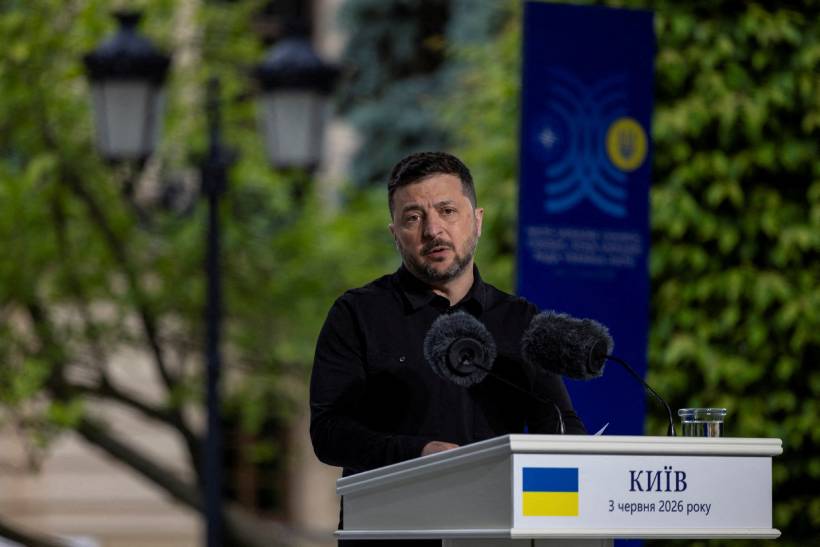
Western allies will seek to secure additional air defence support for Ukraine when they meet in Paris on Monday, as Kyiv faces growing shortages of interceptors that have left it increasingly vulnerable to Russian ballistic missile attacks despite recent shifts in battlefield momentum.
Ukrainian President Volodymyr Zelenskiy will join at least 25 world leaders for a meeting of the Coalition of the Willing, which aims to strengthen military support for Ukraine while advancing discussions on a common negotiating position with Russia and long-term security guarantees to underpin any future peace agreement.
The gathering comes just days after a NATO summit sought to demonstrate renewed transatlantic unity and sustained backing for Ukraine.
The urgency of the talks has been underscored by Russia’s latest wave of missile and drone attacks. On Saturday, Russian strikes killed eight people and wounded dozens more across Ukraine, prompting Zelenskiy to renew calls for faster weapons deliveries.
Stay ahead of the geopolitical week.
MD Briefing delivers expert analysis across five global fronts — the Indo-Pacific, energy, geoeconomics, European security, and the Middle East — every Monday morning. Free.
Air defence at the top of the agenda
French Foreign Minister Jean-Noel Barrot said Russia’s continued use of ballistic missiles against Ukrainian cities highlighted the need for stronger air defence capabilities.
“The ballistic missiles launched by Vladimir Putin are deliberately targeting civilian zones and June was one of the most murderous months since the start of the war,” Barrot told Ouest-France on Sunday.
Russia denies deliberately targeting civilians and says it only attacks military-related infrastructure.
French officials said Monday’s discussions will focus heavily on strengthening Ukraine’s ability to intercept ballistic missiles. Proposals include securing additional U.S.-made Patriot interceptors, accelerating deployment of the Franco-Italian SAMP-T air defence system, and expanding cooperation between European and Ukrainian defence industries to develop new air defence capabilities.
One proposal under consideration would see several European countries jointly develop a missile defence system that complements existing Patriot and SAMP-T systems while giving Ukraine a significant manufacturing role.
Ukraine has warned that dwindling interceptor supplies have severely limited its ability to defend against ballistic missiles, which travel at several times the speed of sound and are among Russia’s most difficult weapons to intercept.
Broader military and economic support
Beyond air defence, leaders are expected to discuss ways to increase pressure on Moscow by targeting its sources of revenue.
One key issue will be measures against Russia’s so-called “shadow fleet”—oil tankers operating under opaque ownership structures that help circumvent Western sanctions on Russian crude exports.
The European Union is also expected to approve its 21st sanctions package against Russia next week, further tightening economic restrictions.
French President Emmanuel Macron has indicated that Monday’s summit will include several new announcements, including possible bilateral agreements on joint weapons production.
Preparing long-term security guarantees
Leaders will also discuss plans for a future multinational force intended to help guarantee Ukraine’s security if a peace agreement is reached.
French officials said the proposed multinational force would include land, air, naval and training components, with participating countries conducting regular joint exercises to ensure readiness.
“What must be remembered is that the multinational force consists of land, air, sea and training,” a French presidency official said.
“All of these pillars are intended to be tested continuously, to varying degrees, with all participants in order to guarantee their credibility.”
The official stressed that any planned exercises would take place outside Ukraine and are intended to demonstrate preparedness rather than deploy forces into the country.
Analysis
The Paris meeting reflects a shift in Western priorities from simply supplying Ukraine with weapons to building a more sustainable long-term defence architecture. Air defence has become an urgent concern as Russia increasingly relies on ballistic missiles to strike civilian infrastructure while Ukraine’s interceptor stocks dwindle.
The discussions also highlight Europe’s growing effort to reduce dependence on U.S. military production by expanding its own defence industrial base alongside Ukraine’s. If successful, joint missile production and enhanced sanctions enforcement could strengthen Kyiv’s resilience over the long term, even as prospects for a negotiated settlement remain uncertain.
With information from Reuters.
