


A Thai labour court has agreed to hear a compensation claim filed by three sailors who survived a deadly attack on their cargo vessel in the Strait of Hormuz, opening a legal challenge over employer responsibility for sending civilian crews into an active conflict zone.
The case stems from the March attack on the Thai-flagged cargo ship Mayuree Naree, which was struck by two projectiles while transiting the strategic waterway during the U.S.-Israeli conflict with Iran. Three crew members were killed and 20 others rescued.
Crew seek compensation for trauma
The three former crew members are seeking at least one million baht (about $30,000) each in damages from companies and agencies linked to the vessel’s owner, Precious Shipping, as well as the ship’s captain.
Their lawyer, Kunpat Singhathong, said the sailors argue their employer knowingly exposed them to a dangerous route despite escalating regional tensions.
Stay ahead of the geopolitical week.
MD Briefing delivers expert analysis across five global fronts — the Indo-Pacific, energy, geoeconomics, European security, and the Middle East — every Monday morning. Free.
According to the claim, all three men have been diagnosed with post-traumatic stress disorder (PTSD), leaving them unable to return to work at sea.
The sailors say they have so far received only two months’ wages and compensation for personal belongings lost in the attack.
Shipping company defends its actions
In a statement to the Stock Exchange of Thailand, Precious Shipping said it had not yet been formally served with court documents but maintained that it had fulfilled all legal and contractual obligations toward its crew.
The company said it had provided continuous support to affected crew members and their families following the incident.
Immediately after the March attack, Precious Shipping said the vessel had adopted enhanced security measures and maintained contact with maritime security coordination centres while transiting the Strait of Hormuz.
According to the sailors’ lawyer, however, the company later indicated that no additional compensation beyond existing payments would be provided.
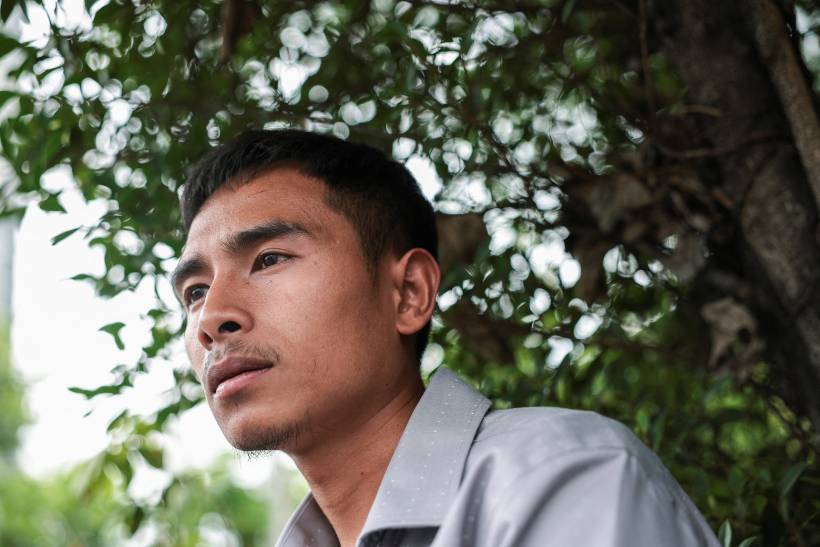
One of the plaintiffs, 33-year-old former crewman Noppadon Wongsuvan, described the compensation as inadequate and below international standards.
Another plaintiff, Panithi Tumkaew, who worked for the company for 11 years, said he continues to suffer psychological effects from the attack and requires medication after developing anxiety triggered by loud noises.
Attack occurred during heightened regional conflict
The Mayuree Naree came under attack on March 11 amid heightened tensions following U.S. and Israeli strikes on Iran that began on February 28.
Before the incident, Iran’s Revolutionary Guards had warned that vessels passing through the Strait of Hormuz could become targets. Several commercial ships were attacked during the period of heightened hostilities.
The Strait of Hormuz remains one of the world’s most strategically important maritime corridors, handling a significant share of global oil and liquefied natural gas exports.
What comes next
With the Labour Court accepting the petition, the case will now proceed through Thailand’s judicial process, where the court will determine whether the employer met its legal duty of care toward the crew and whether additional compensation is warranted.
The lawsuit could become an important test of employer liability for commercial shipping companies operating in conflict zones, particularly as geopolitical tensions continue to pose risks to international maritime trade.
With information from Reuters.
