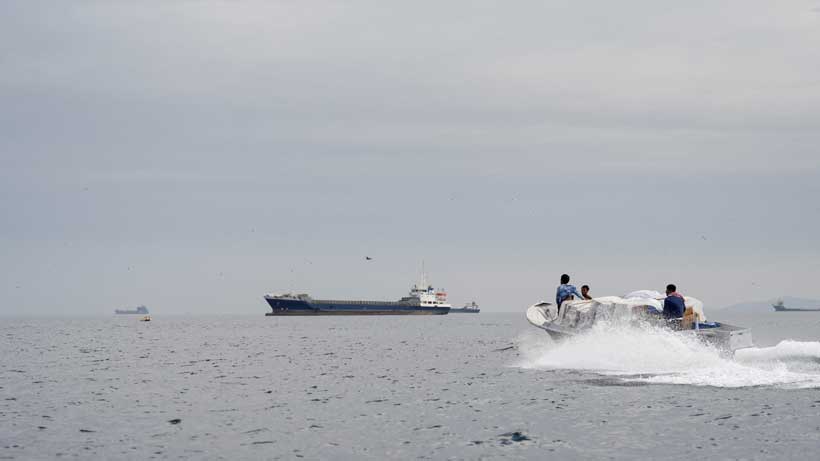
The world drew a collective sigh of relief on June 18 when Iran and the US announced a memorandum for peace, paving the way for a permanent peace deal, and a stabilization of global energy supplies by reopening the Strait of Hormuz, a crucial energy chokepoint for the transport of 20% of the world’s oil and gas, which has been closed by Iran since the beginning of the Iran War.
The supply paradox
Paradoxically, that oil is now again flowing through the Strait is not unequivocally good news. While easing the global energy shortage and reducing record-high fuel prices down to pre-war levels , the world economy might now face the opposite extreme. Global oil markets now stand before the prospect of an oversupply of oil and plummeting prices as previously trapped oil supplies re-enter a global economy that has learnt to reduce its demand for oil in the past months of energy shortage, with the International Energy Agency estimating a 1 million-barrel drop in global oil demand in 2026. In particular, while China’s large economy has long stabilized global oil prices by counter-cyclically buying up surplus oil, this has changed in recent months as China amidst the closure of Hormuz has pivoted toward importing Russian rather than Middle Eastern oil. Hence, without China to soak up more of this sudden glut of oil from the Middle East, the stabilization of energy markets might not be immediate.
Stay ahead of the geopolitical week.
MD Briefing delivers expert analysis across five global fronts — the Indo-Pacific, energy, geoeconomics, European security, and the Middle East — every Monday morning. Free.
Unstable peace
What is more, the fragile peace established by the ceasefire means that global shipping through the Strait remains shrouded in uncertainty so that shipping companies may remain hesitant to resume transport through the Strait. For one, an ongoing source of tension is Iran’s insistence on levying tolls for passage through the Strait, against the objections of the US and neighboring Oman, and contrary to the interim agreement stipulating toll-free passage through the Strait.
Another smoldering wick is the fact that the conflict between Israel and Hezbollah in Lebanon—two close allies of the US and Iran respectively—is not included in the interim agreement. Thus, a resurgence of conflict between Israel and Lebanon could lead Iran to repeat its successful closure of the Strait of Hormuz again, in order to extract further concessions from Israel and the US.
An incomplete opening
Relatedly, passage through the Strait of Hormuz has not fully returned to pre-war status, as ships seized during the conflict reportedly have been prevented from leaving by the Iranian Islamic Revolutionary Guard Crops, while others have to obtain certain permits before being allowed passage. In addition, the interim agreement did not settle a long-term peace, but merely gave Iran and the US 60 days to negotiate a permanent peace settlement. Thus, much can happen before a sustainable peace and stable energy flows are reached and oil supplies return to normal.
The lingering specter of Strait closure
Moreover, the specter of a renewed closure of the Strait and resulting energy shock still lurks in the shadows. From Teheran’s point of view, the experience of once having successful closed the Strait and extract significant concessions from one of the world’s biggest power—including the easing of crippling economic sanctions, and the reduction of the international scrutiny of its nuclear buildup it faces under the previous 2015 Iran nuclear deal (JCPOA) —may make it a tempting regular weapon in its geopolitical arsenal in future disputes to ensure the survival of the Islamic regime. From the point of view of global economic actors, the shock of the closure has left a deep mark of uncertainty on global supply chains, making shipping insurance more expensive and may induce global shippers to opt for safer albeit longer and more expensive routes for some time to come.
Lesson learned?
On the other hand, the closure has also led countries to pivot their energy systems toward greater self-sufficiency and less susceptibility to global supply. For example, the European Union announced in April the AccelerateEU plan, including an annual €660 billion-investment in locally produced renewable energy until 2030, and improved regional grid coordination, in order to reduce its dependence on imported fossil fuels currently providing over half of the bloc’s energy supply.
Similarly, Asian countries which have been particularly hard hit by the closure of Hormuz have announced plans to reduce their dependence on imported fossil fuels in the wake of the energy crisis. For instance South Korea has set out to triple its renewable energy production through investments in nuclear energy, subsidized EV use, and mandating solar panels for new factories. Likewise, Japan, who before the crisis imported 95% of its crude oil from the Middle East, is accelerating its renewable energy transition through increased investments in nuclear power and renewable infrastructure to cushion its economy against future supply shocks. In a similar vein, the energy crisis caused by the closure of Hormuz may incentivize oil-dependent African countries like Angola and Nigeria to diversify their economies and energy supplies away from reliance on geopolitically susceptible oil exports and imports.
A critical juncture
Thus, the world appears to be at a crossroads. On the one hand, the economy is exiting a critical shock to energy and food supplies, and has at least for now evaded fears of immediate inflation and recession. Moreover, the world’s economies have started to learn from the crude wake up call of the closure and have accelerated efforts to pivot away from geopolitically concentrated fossil fuels, suggesting that future closures of the Strait of Hormuz might hit the world’s energy supplies less hard. At the same time, peace in the Middle East remains uncertain, and the security of energy routes remain in flux lending itself to future geopolitical weaponization. Thus, the world may need to hold its breath a bit longer as they carefully watch the development of peace in the Middle East over the next couple of weeks.