


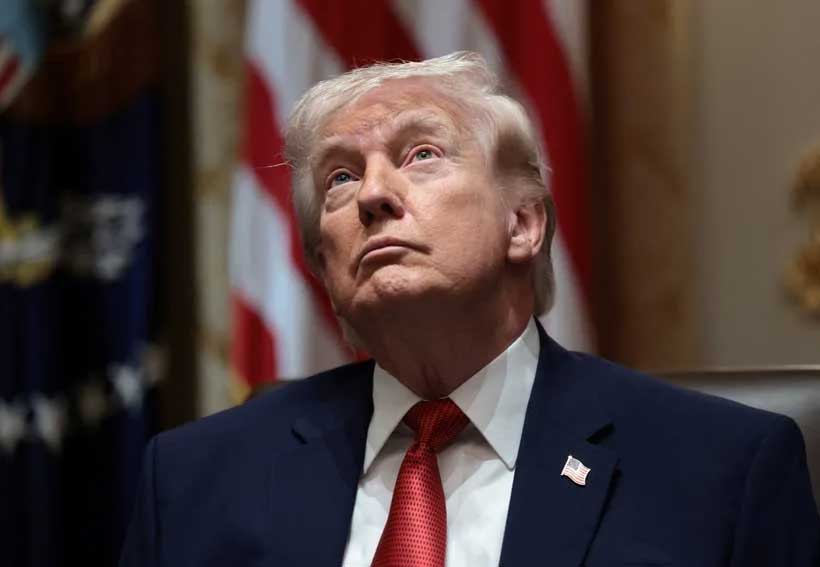
The fragile ceasefire between the United States and Iran faced its most serious test yet on Wednesday after U.S. President Donald Trump declared that the interim memorandum of understanding (MOU) signed in June to halt the conflict was effectively “over,” following renewed Iranian attacks on U.S. military installations in the Gulf.
The latest escalation has reignited fears that the conflict which began with U.S.-Israeli strikes on Iran on February 28 could return to full-scale hostilities. The renewed fighting has rattled global energy markets, disrupted shipping through the Strait of Hormuz and cast doubt over the future of negotiations aimed at securing a permanent peace agreement.
Trump declares ceasefire agreement ‘over’
Speaking ahead of the NATO summit in Ankara, Trump signalled that Washington had little interest in continuing negotiations with Tehran.
When asked whether the June 17 memorandum of understanding remained in force, Trump responded: “To me, I think its over.”
Stay ahead of the geopolitical week.
MD Briefing delivers expert analysis across five global fronts — the Indo-Pacific, energy, geoeconomics, European security, and the Middle East — every Monday morning. Free.
He added that he had no desire to continue engaging with Iran, describing negotiations as “a waste of time.”
The remarks marked Washington’s strongest indication yet that diplomacy has stalled despite the ceasefire framework remaining technically in place.
Iran strikes U.S. bases in Bahrain and Kuwait
The crisis intensified after Iran’s Islamic Revolutionary Guard Corps (IRGC) announced missile and drone attacks against U.S. military facilities in Bahrain and Kuwait.
Iran said it targeted:
- U.S. military sites in Bahrain
- Ali Al Salem Air Base in Kuwait
- U.S. military infrastructure in the Gulf
- A U.S. MQ-9 drone, which it claimed was shot down during the operation
Air raid sirens sounded across Bahrain and Kuwait, while the Kuwaiti military said its air defences intercepted incoming missiles and drones.
The attacks were presented by Tehran as retaliation for fresh U.S. military strikes carried out earlier against Iranian military targets.
U.S. responds with military strikes and tougher sanctions
Before the Iranian retaliation, the United States launched another wave of strikes against Iranian military infrastructure after attacks on commercial shipping in the Strait of Hormuz.
According to U.S. Central Command (CENTCOM), American forces struck:
- Iranian air-defence systems
- Coastal surveillance installations
- Surface-to-air missile batteries
- Anti-ship cruise missile sites
- Drone launch facilities
- More than 60 IRGC fast attack boats
Washington said the operation aimed to impose significant costs on Iran for violating the ceasefire through attacks on international shipping.
The United States also revoked a temporary licence that had allowed Iran to continue exporting oil under the June ceasefire arrangement.
Oil prices surge as markets fear wider conflict
Trump’s declaration and the renewed exchange of attacks immediately shook financial markets.
Brent crude jumped around 5%, climbing to roughly $78 per barrel the biggest one-day increase since May.
Although prices remain well below the wartime highs above $120 reached earlier in the conflict, traders worry that renewed instability could again threaten supplies through the Strait of Hormuz.
Global stock markets fell while government bond yields rose as investors reassessed inflation risks created by higher oil prices.
Shipping concerns mount in the Strait of Hormuz
Security concerns in one of the world’s busiest energy corridors intensified following attacks on commercial vessels.
Ship-tracking data showed at least four oil and LNG tankers turned back instead of attempting to transit the Strait of Hormuz after maritime authorities raised the threat level to “severe.”
The renewed disruption has revived fears over energy exports from major Gulf producers including Saudi Arabia, Qatar, the UAE and Kuwait.
The strait normally handles roughly one-fifth of global oil trade.
Iran accuses Washington of violating the ceasefire
Tehran argued that the United States not Iran had first breached the June agreement.
Iranian officials condemned:
- the latest U.S. military strikes;
- renewed U.S. oil sanctions;
- Washington’s withdrawal of the temporary oil-export licence; and
- continued Israeli military operations against Iranian allies.
Iranian Parliament Speaker Mohammad Baqer Qalibaf accused Washington of violating the ceasefire and warned that Iran would not yield under pressure.
Iran’s Foreign Ministry also said it reserved the right to take “any measure necessary” to protect national security.
International reaction
NATO Secretary General Mark Rutte described the latest U.S. strikes as “absolutely necessary.”
European Union foreign policy chief Kaja Kallas condemned Iran’s attacks on Bahrain and Kuwait, saying they further complicated already fragile diplomatic efforts to end the conflict.
Meanwhile, regional governments remain concerned that continued exchanges could again draw neighbouring Gulf states into the conflict.
Why the Strait of Hormuz remains central
Analysts say control over the Strait of Hormuz remains Tehran’s strongest strategic bargaining tool.
Rather than seeking outright military victory, Iran has repeatedly demonstrated its ability to threaten one of the world’s most important shipping lanes, giving it leverage during negotiations with Washington.
Even limited disruptions can significantly affect global energy prices and international trade.
What happens to the June agreement now?
The June 17 memorandum of understanding was intended to provide a 60-day window for negotiating a comprehensive peace settlement while allowing limited Iranian oil exports.
Trump’s statement that the agreement is “over” raises serious questions about whether those negotiations can continue.
Although neither side has formally withdrawn from the framework, both Washington and Tehran are now accusing each other of violating its terms.
Future outlook
The coming days will determine whether the latest escalation develops into another phase of direct military confrontation or remains a limited exchange. Much will depend on whether further attacks occur in the Strait of Hormuz, whether Washington imposes additional military or economic measures, and whether mediators such as Qatar or Oman can revive diplomatic contacts. Markets are likely to remain highly sensitive to developments, with oil prices, shipping activity and regional security expected to remain under close scrutiny as the ceasefire framework appears increasingly fragile.
With information from Reuters.
