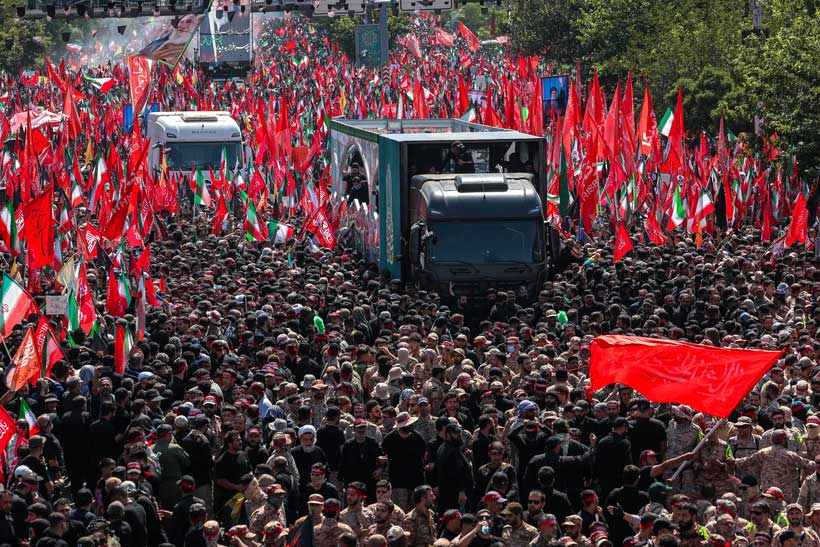
The funeral of former Iranian Supreme Leader Ayatollah Ali Khamenei symbolized a strong national stance against the United States and Israel, indicating that their attempts to weaken Iran had failed. Despite the ongoing conflict initiated by U. S. and Israeli actions, Iran projected unity and determination to influence future outcomes. Analysts suggest that the funeral marked a pivotal moment for Iran, allowing the country to leverage its resilience as a negotiating tool.
The ongoing war has highlighted Iran’s strategic control over the Strait of Hormuz, making it a powerful factor in any discussions regarding its nuclear program. Instead of negotiating on its nuclear advancements, Iran emphasizes its dominance over the vital oil chokepoint, viewing this influence as a key bargaining chip. Washington’s hope for a ceasefire intended to facilitate nuclear talks has instead fostered a competitive environment, where Iran prioritizes its strategic advantages over its uranium capabilities.
Iran’s leadership views control over the Strait not merely as an economic opportunity but as a significant symbol of sovereignty. They prioritize the political legitimacy tied to Hormuz rather than potential financial gains from oil transit fees, emphasizing that their power over the strait is non-negotiable. Iran’s position is clear: they wish to ensure that the international community acknowledges their authority over this critical route.
Negotiations appear to be deliberately prolonged by Iran, allowing the country to solidify its wartime gains before addressing the nuclear issue. Tehran is willing to take its time, confident that establishing dominance over Hormuz is essential. The idea is to embed their influence in the area through various arrangements while waiting to see how the U. S. will adjust to this new reality. Iran perceives President Trump’s domestic political challenges and desire to find a resolution as leverage that they can exploit.
U. S. military actions have not significantly altered Iran’s influence over the Strait, leaving the country less motivated to make concessions on its nuclear program until it can secure recognition of its new standing. Analysts state that the 60-day timeline for negotiations is unrealistic, as Iran prioritizes its strategic interests over immediate nuclear discussions. They intend to ensure that their newly established status is acknowledged before considering progress on nuclear matters.
The halt of the war has potentially transformed Hormuz from a contentious issue to a long-term advantage for Iran. Gulf officials express concern that Iran’s control over the strait will remain steadfast, even in negotiations over sanctions relief or the nuclear issue. As a result, Washington may need to navigate the reopening of the strait under terms largely controlled by Tehran. The conflict has shifted the balance of power, suggesting that while neither side may truly ‘win’, Iran may emerge with an advantage over the U. S.
With information from Reuters