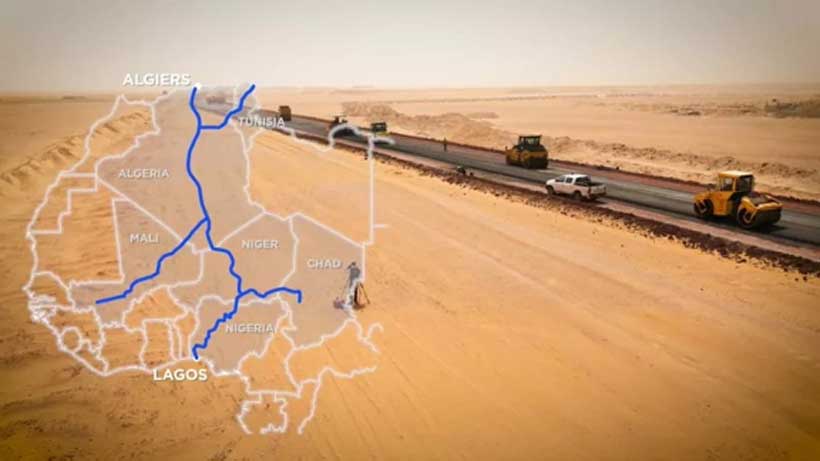
The proposed Trans-Saharan Railway Corridor linking Algeria, Niger, and Nigeria should be understood not merely as a railway but as a strategic instrument for reshaping the economic geography of Africa. By connecting the Mediterranean and Atlantic basins through a continuous north–south land corridor, the project would strengthen continental integration, diversify logistics networks, and reinforce the objectives of the African Continental Free Trade Area (AfCFTA). Although formidable engineering, governance, financing, and security challenges remain, the corridor has the potential to become one of the defining infrastructure systems of twenty-first-century Africa, provided that it is conceived as a long-term geopolitical and developmental project rather than a conventional transport investment.
African transport infrastructure has historically developed along colonial export patterns that privileged coast-oriented connections over continental integration—as this author has noted in the book co-authored with Prof. Anis H. Bajrektarevic (Europe and Africa—Similarities and Differences in Security Structures, 2017, Nova, United States). The result is a logistics landscape in which neighboring regional markets often remain weakly connected while trade continues to depend disproportionately on maritime routes and external chokepoints. The Trans-Saharan Railway Corridor offers an opportunity to reverse this structural logic. Instead of simply reducing travel times between three countries, it proposes the creation of a continental backbone capable of integrating North Africa, the Sahel, and West Africa into a more coherent economic space.
Ten-year-old prediction
The timing of such an initiative is particularly significant. As our book ‘Europe and Africa—Similarities and Differences in Security Structures’ predicted many years ago, international logistics is undergoing a profound transformation as governments and investors increasingly prioritize resilience alongside efficiency. Pandemic disruptions, geopolitical competition, supply-chain fragmentation, and the energy transition have demonstrated the vulnerability of highly concentrated transport systems. Across the world, states are investing in redundant and multimodal infrastructure capable of increasing strategic autonomy. Within this broader context, Africa is progressively emerging as one of the principal frontiers of global connectivity, and large-scale cross-border infrastructure projects are becoming central to its long-term development agenda.
Stay ahead of the geopolitical week.
MD Briefing delivers expert analysis across five global fronts — the Indo-Pacific, energy, geoeconomics, European security, and the Middle East — every Monday morning. Free.
The proposed railway aligns closely with this evolution. It would reinforce the implementation of the African Continental Free Trade Area by strengthening one of the continent’s weakest dimensions: north–south connectivity. Existing transport networks largely favor coastal movement or isolated national systems. A continuous rail axis extending from the Mediterranean to the Gulf of Guinea would complement these networks, facilitating industrial supply chains, agricultural exchanges, and mineral exports while encouraging the emergence of integrated regional value chains. Rather than competing with maritime transport, the corridor would broaden Africa’s logistical options and reduce excessive dependence on individual gateways.
The economic rationale is equally compelling. Niger and neighboring Sahelian states possess considerable mineral wealth but remain constrained by costly and often unreliable road transport. Access to both Mediterranean and Atlantic ports would diversify export routes, strengthen bargaining power, reduce transport costs over time, and improve resilience against regional disruptions. Algeria would consolidate its role as a Mediterranean logistics platform linking African production with European and global markets, while Nigeria would reinforce its position as the principal industrial and commercial hub of West Africa. The corridor would therefore generate value not only through freight movements but also by stimulating industrial clusters, logistics services, and investment along its route.
The corridor’s economic significance could be enhanced further through the parallel development of energy infrastructure, particularly natural gas. Co-locating (parallel routing) of railway and gas pipeline infrastructure would generate significant economic and operational synergies by reducing land acquisition costs, simplifying maintenance access, and creating shared logistics corridors. Algeria already possesses extensive experience as a major natural gas exporter to Europe, while Nigeria holds some of the world’s largest proven gas reserves. Undeniably, a trans-Saharan energy corridor connecting these complementary assets through Niger could strengthen African energy security, facilitate regional industrialization, expand access to cleaner energy across the Sahel, and diversify export options toward both Mediterranean and West African markets. As with the railway itself, such an initiative would require robust cross-border governance, long-term investment, and coordinated regulatory frameworks, but it would substantially enhance the corridor’s overall strategic value by transforming it into a truly multimodal infrastructure and energy backbone for the continent.
Yet the strategic importance of the railroad (or parallel routing) project extends beyond economics. Throughout history, major infrastructure corridors have functioned as instruments of political integration by creating durable patterns of mutual dependence. The railway could encourage deeper institutional cooperation among participating states, foster common regulatory standards, and strengthen regional governance. In this respect, the line should be interpreted not only as an engineering project but also as an institutional architecture designed to connect markets, administrations, and long-term development strategies that ultimately eradicate poverty.
Achieving this socio-economic (and political) vision, however, requires confronting substantial technical constraints. The Sahara remains one of the world’s most demanding operating environments. Extreme temperatures, shifting sand, unstable soils, long maintenance distances, and sparse settlement patterns significantly increase construction and operational complexity. These conditions call for adaptive engineering solutions, including resilient track design, predictive maintenance technologies, remote monitoring systems, and highly integrated logistics planning capable of supporting infrastructure across remote territories.
Engineering challenges are only one dimension of implementation. Governance may ultimately prove even more decisive. The corridor crosses sovereign jurisdictions characterized by differing regulatory frameworks, investment capacities, and administrative practices. Without a permanent institutional mechanism responsible for technical harmonization, customs coordination, financing, and long-term planning, there is a considerable risk that individual national railway segments would evolve independently rather than forming a genuinely integrated corridor. Establishing a dedicated Trans-Saharan Corridor Authority, supported by participating governments, regional organizations, and development partners, would therefore constitute a strategic prerequisite rather than an administrative refinement.
Security considerations reinforce this conclusion. Sections of the Sahel continue to experience instability, insurgent violence, and governance deficits that affect construction, operations, and investor confidence. Consequently, infrastructure protection cannot be treated as a parallel policy but must be embedded within the corridor’s overall governance model through coordinated border management, intelligence cooperation, and regional security frameworks.
Financing represents another critical challenge. Given the scale of investment required, implementation will necessarily depend upon a combination of sovereign resources, multilateral development finance, blended financial instruments, and carefully structured public-private partnerships. Resource-backed financing linked to future mineral exports may provide additional opportunities, although long-term viability will ultimately depend on sustained freight demand generated by wider industrialization policies rather than extractive activity alone.
Global Academy launching its Maritime Forum
Recognizing the strategic significance of these developments, the Global Academy for Future Governance (GAFG) is launching the GAFG Global Maritime Governance Forum (GMGF) as a continuing international platform dedicated to strategic dialogue on maritime connectivity, logistics, and governance. The inaugural forum, to be held in Gibraltar—and soon followed by the identical one for Africa—seeks to initiate a sustained international conversation on the evolving architecture of global maritime corridors and the policy choices confronting governments, international organizations, industry, and academia. It builds upon GAFG’s continuing interdisciplinary work on strategic corridors, geopolitical risk, international governance, and the changing geography of global connectivity, while providing a neutral platform through which policymakers, practitioners, and scholars can jointly explore the opportunities and challenges presented by an increasingly interconnected maritime world.
When viewed against the broader landscape of African mega-corridors, the Trans-Saharan Railway occupies a unique position. Most major initiatives reinforce existing coastal systems or connect neighboring regions. By contrast, this project—echoing arguments advanced by GAFG and extensively published in the pages of Modern Diplomacy—would directly integrate two major maritime basins through a continuous continental axis. Its significance, therefore, lies in its capacity to redefine spatial relationships across Africa itself, encouraging inland development, strengthening north–south economic integration, and creating a more balanced continental transport geography.
For these reasons, the railway should not be evaluated solely through conventional cost-benefit analysis or immediate commercial returns: its strategic value resides in its capacity to reshape patterns of connectivity over several decades, support the emergence of integrated continental markets, and provide Africa with an additional pillar of economic resilience. If pursued through sustained political commitment, robust institutions, and coordinated international partnerships, the Trans-Saharan Railway Corridor could become not merely another transport project but one of the defining geopolitical infrastructures of twenty-first century Africa.