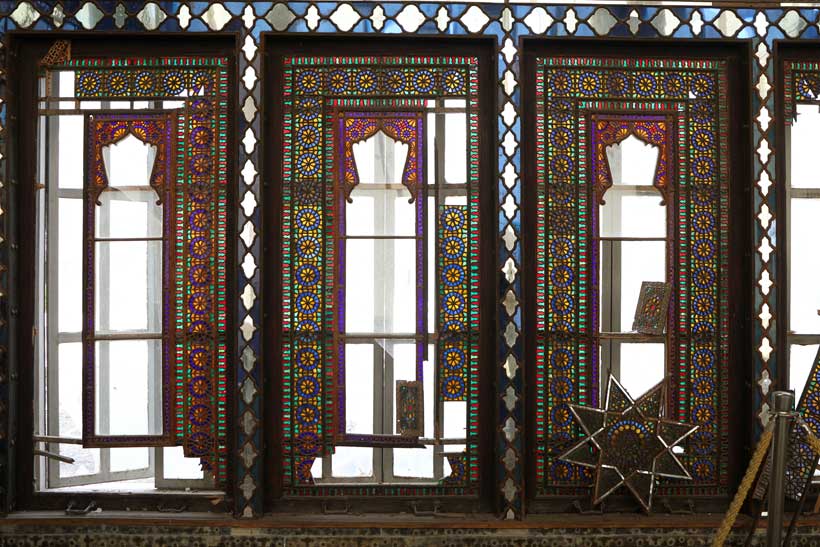
Recent Israeli airstrikes on March 7 and 9 caused significant damage to historic sites in Isfahan, Iran, including the Naqsh-e Jahan square and the Chehel Sotoun Palace. These strikes shook ancient domes and minarets and left debris across a 400-year-old royal complex. Rasoul Mosavi, a local security guard, expressed his deep connection to these buildings, which hold great cultural value. The intended target of the March 9 bomb was the Isfahan governor’s building, which was partially destroyed and reportedly empty at the time of the attack.
Reporters from Reuters were allowed to visit the damaged sites and observed the effects of the conflict on Iran’s historically significant locations, including those recognized by UNESCO. They documented damage to 11 historic buildings and noted additional destruction at other sites such as the Trans-Iranian Railway and ancient mosques. Experts studying the war’s impact confirmed similar damage at various significant locations across Iran.
UNESCO has not dispatched teams to visit the impacted sites but has utilized satellite imagery for damage assessments. It reported verifying damage at seven sites, including two on its international list, along with several national cultural properties. UNESCO stated that it was not consulted during the conflict but had shared coordinates of critical sites with all parties involved. They urged all combatants to observe international laws protecting cultural heritage.
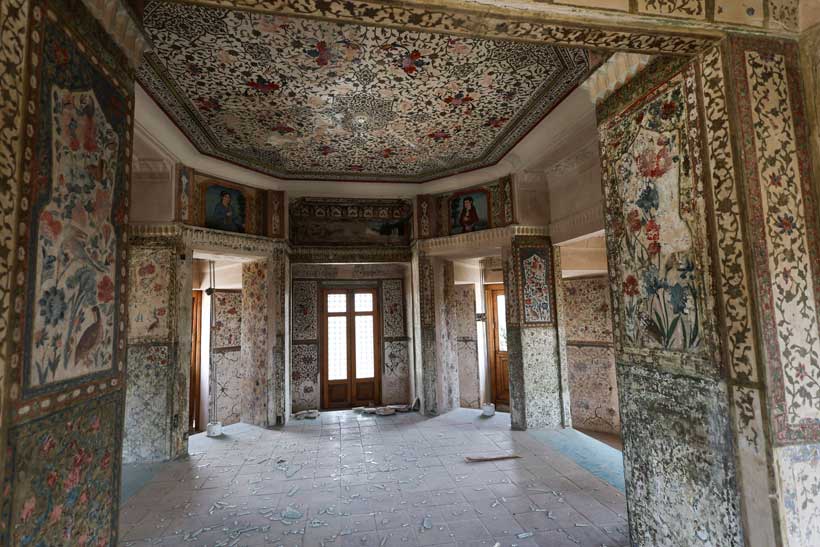
The damage observed includes broken glass, shattered tiles, cracked walls, and compromised foundations due to bomb shock waves, which can severely affect structures even kilometers away from the explosion. The Israel Defense Forces (IDF) acknowledged the strikes on the governor’s office, indicating military objectives guided their actions. The IDF claimed compliance with international law, stating that their operations were based on reliable intelligence.
Experts in Middle Eastern archaeology noted that the reporting indicates a significant shift in U. S. military targeting practices, with less emphasis on protecting recognized historical sites compared to previous conflicts. In earlier wars, cultural landmarks were typically placed on “no strike lists,” and bombings near these sites required high-level approvals.
The damaged sites include Tehran’s Golestan Palace, several locations at Isfahan’s Naqsh-e Jahan Square, and the Chehel Sotoun complex. The director of a Chicago-based center noted additional confirmed damage at the Jameh Mosque and the Andimeshk railway station. Extensive damage was also verified at Falak-ol-Aflak, an ancient fortress in Iran.
In early April, warnings were issued to Iranian citizens to avoid train stations due to bombings aimed at preventing the movement of weaponry. Iran’s representative to UNESCO submitted a list of 134 cultural heritage sites affected by the war. Although not all are listed with UNESCO, they represent significant tourist destinations. Only the railway experienced a direct hit among the UNESCO sites. Certain culturally significant areas were marked by large blue shields to indicate their protected status. An art history professor expressed disbelief over the targeting of such non-military sites. The Pentagon has chosen not to comment on the situation.
Operation Epic Fury was focused on several main goals regarding Iran: to destroy its ballistic missiles, eliminate production facilities, target the navy, weaken its proxies, and prevent it from acquiring nuclear weapons, according to White House spokeswoman Anna Kelly. She emphasized that unlike Iran, the United States does not target civilians.
The 1954 Hague Convention protects cultural sites during warfare, considering the deliberate targeting of civilian cultural property a war crime. Strikes must be carefully evaluated to avoid collateral damage to these sites. UNESCO recognizes a limited number of culturally significant structures in countries, with Iran having 27 recognized sites. This is fewer than Italy, which has 55, and more than some countries like Uganda and Costa Rica that have just one.
In Iraq, significant cultural loss occurred during the U. S.-led war, notably at the ancient city of Babylon, which became a UNESCO heritage site in 2019 after being used as a military base, leading to damage. Other losses included the destruction of Mosul’s old city and looting of antiquities during the invasion. The U. S. withdrew from UNESCO twice, first in 2017 and again in 2025, criticizing its support for divisive social causes.
In Syria, coalition forces caused damage to Raqqa’s historical walls in 2017 while combating ISIS. Professor Stephennie Mulder, among over 400 scholars and researchers, criticized the current disregard for cultural heritage in Iran, referencing recent damage following U. S. and Israeli actions. This included reports of damage from an Iranian strike in Tel Aviv and an ongoing UNESCO investigation. U. S. Defense Secretary Pete Hegseth disregarded military engagement rules, and President Trump declared that Iran’s civilization would be severely impacted if they did not comply.
Isfahan, a culturally significant city in Iran, is comparable to major cities like Rome and Athens and houses a nuclear site. The city is split by the life-giving Zayanderud River, with historic sites in the north and modern areas in the south. Naqsh-e Jahan square, a UNESCO world heritage site, is a notable gathering point with many heritage sites.
Recent protests in Isfahan, driven by economic issues, resulted in a significant crackdown by the government, leading to numerous deaths and arrests. These protests coincided with the launch of Operation Epic Fury, as President Trump sought regime change in Iran. Israeli bombs recently targeted military sites near Isfahan, causing damage close to the historic Si-o-se-pol bridge and affecting the square.
On March 7, Israeli strikes caused shockwaves felt in Naqsh-e Jahan square, while another strike two days later impacted the governor’s office and nearby structures. A security guard at a local museum described the destruction from the bombings, which shattered windows and caused ceilings to collapse. Shrapnel collected from the site added to the evidence of the damage inflicted.
Heritage locations are included on no-strike lists used by military forces, and international law requires that military advantages must be proportionate to potential damage to cultural sites. Experts highlight the global obligation to avoid targeting cultural heritage, with concerns that operations in Iran may not adhere to these standards. An initial assessment revealed structural damage to Naqsh-e Jahan square, though independent verification was not possible.
Stay ahead of the geopolitical week.
MD Briefing delivers expert analysis across five global fronts — the Indo-Pacific, energy, geoeconomics, European security, and the Middle East — every Monday morning. Free.
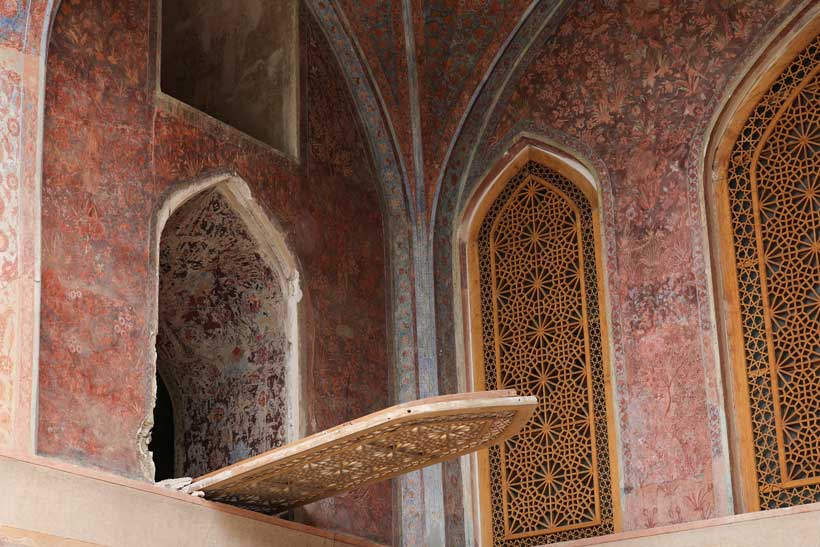
Emami, an architectural historian at Rice University, mentioned that confirming any structural damage at historical sites would require an in-depth investigation. At the Ali Qapu Palace, bombings in early March led to damage, including a crumbled wall, cracks, and broken glass. Initial assessments indicated that over 70% of the glass in windows and doors was shattered, and plaster had come loose from two porches. The bombings also disturbed the two minarets of the Shah Mosque, known for its double dome. A local shopkeeper, Ali Bordbar, expressed the vulnerability of such historic sites, noting that centuries of work could be destroyed in an instant.
When visiting the Shah Mosque, reporters noticed employees collecting fallen blue tiles and observed a crack in a wall, as part of the damage assessment by Iranian officials. An artisan in the bazaar stated that the economic impact from reduced tourism was as serious as physical destruction. The war had left the bazaar nearly empty of visitors during a week when artists and musicians attempted to maintain some cultural activity. Many Iranians were cautious when speaking to foreign journalists, worrying about the potential repercussions. Some expressed sadness over the historic site damage, while others were more reserved. A sweet shop owner, Saeed, reported that all his shop’s windows had been broken and avoided discussing the conflict, stating instead that they were “waiting for a happy ending. “
In Tehran, near the Golestan Palace, shopkeepers initiated protests last December that led to labor strikes and severe government crackdowns. These protests escalated into war following the assassination of Iran’s supreme leader and subsequent bombings. An American and Israeli attack on March 1 targeted judicial buildings near the palace, causing extensive damage, including shattered artwork and mirrors. UNESCO expressed concern over the damage to this world heritage site. An employee of the palace, who had worked there for nearly 30 years, emotionally described the devastation she encountered that morning, feeling shock amid the debris.
The throne room and hall of mirrors suffered significant damage from blast waves. Some areas of the palace, which are restricted, were inaccessible due to their proximity to the targeted government building. While no fatalities were reported, two employees sustained minor injuries. The palace employee, worried about hidden damage, emphasized the danger of a collapsing ceiling, prompting an urgent exit from the premises.
With information from Reuters