


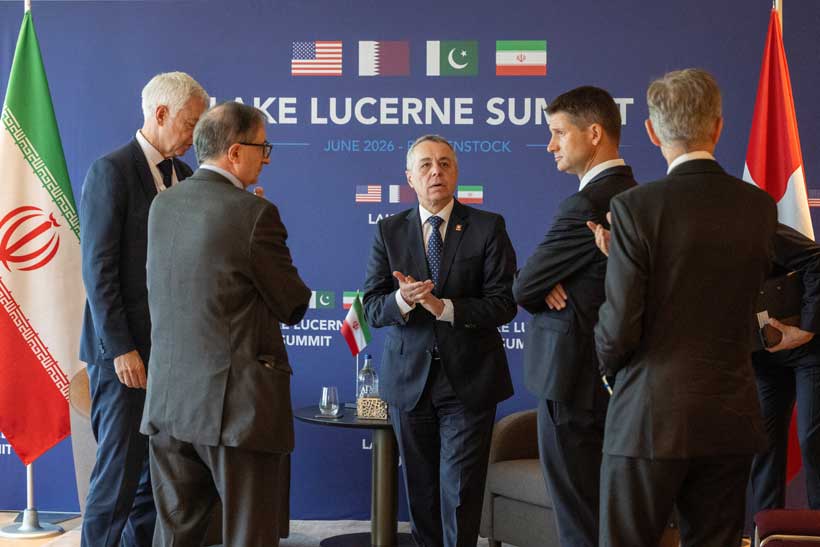
United States and Iranian officials have reported “encouraging progress” after the first round of talks in Switzerland aimed at reducing tensions over the Iran war, the Strait of Hormuz, and wider regional conflicts. Mediators Pakistan and Qatar said the discussions produced a roadmap toward a potential final agreement within 60 days, although key disputes remain unresolved and tensions continue to flare in the background.
Progress in Switzerland Talks
According to mediators, both sides agreed in principle on a framework to work toward ending the war and stabilizing key flashpoints in the region.
The talks were held in Switzerland with officials from the United States and Iran meeting indirectly through mediators, as technical discussions are set to continue through the week in Buergenstock.
Roadmap Toward a 60 Day Deal
Mediators said the two sides have agreed to a tentative roadmap for a broader settlement within 60 days.
Stay ahead of the geopolitical week.
MD Briefing delivers expert analysis across five global fronts — the Indo-Pacific, energy, geoeconomics, European security, and the Middle East — every Monday morning. Free.
The plan is part of an interim understanding designed to extend a fragile ceasefire and prevent further escalation while negotiations continue on core issues.
Strait of Hormuz Remains Central Issue
A key focus of the talks remains the Strait of Hormuz, a vital global route for oil and LNG shipments.
Iran temporarily shut the strait during earlier tensions, while U.S. officials warned of military action if shipping routes were disrupted again. Both sides have now discussed mechanisms aimed at ensuring safe passage for commercial vessels through the waterway.
Lebanon Conflict Linked to Negotiations
Mediators also said discussions included a mechanism to reduce fighting between Israel and Iran aligned Hezbollah forces in Lebanon.
Despite this, violence in Lebanon has continued, and both sides remain divided over responsibility for enforcing a ceasefire framework in the region.
Oil Prices React to Diplomacy
Oil markets responded to signs of diplomatic progress with further declines in prices.
Brent crude, which had spiked earlier in the conflict amid fears of supply disruptions through Hormuz, traded below 80 dollars per barrel following the latest joint statement from mediators.
Separate Narratives From Both Sides
The United States and Iran have given differing accounts of how the talks unfolded.
U.S. officials described discussions covering the Strait of Hormuz, Lebanon, nuclear issues and implementation of earlier agreements, while Iranian sources emphasized conditions such as sanctions relief, asset releases and export waivers.
Iranian media reported internal disagreements during the talks, including moments when delegations temporarily refused to re enter meetings, though mediation channels remained active.
Continued Maritime Activity Uncertainty
Despite announcements of reduced tensions, shipping through the Strait of Hormuz has remained uneven, with vessel traffic fluctuating sharply during the period of conflict and negotiations.
Some commercial shipping has resumed, but data suggests volumes remain below normal levels as uncertainty continues to affect global maritime routes.
Ongoing Regional Frictions
Even as diplomatic efforts continue, Israel has maintained military operations in Lebanon, while Hezbollah continues to carry out attacks across the border.
The broader regional situation remains unstable, with multiple overlapping conflicts influencing the pace and direction of negotiations.
What Happens Next
Technical talks are expected to continue throughout the week in Switzerland under mediator supervision, with both sides working to clarify implementation steps of the interim agreement.
Further developments will likely depend on progress in securing guarantees over shipping in the Strait of Hormuz, enforcement of de escalation in Lebanon, and agreement on economic and sanctions related concessions.
With information from Reuters.
