


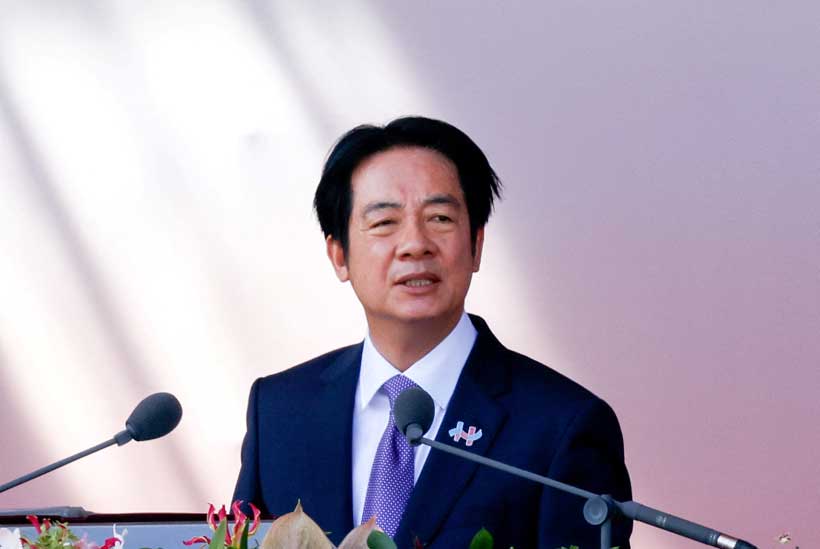
The United States is Taiwan’s most important security partner and has long supplied defensive weapons under the Taiwan Relations Act, despite lacking formal diplomatic ties with Taipei. However, recent comments by President Donald Trump suggesting arms sales could be used as leverage in negotiations with China have raised concerns in Taiwan about the future pace of U.S. military support.
Key Developments
- Lai said Taiwan’s efforts to protect its security and democratic system should not be viewed as a provocation against China.
- He reiterated his willingness to engage in talks with Beijing based on “parity and respect.”
- Taiwan is seeking approval of a new U.S. arms package amid growing security concerns.
- The government has proposed an additional T$210 billion ($6.66 billion) defense package focused on surveillance systems, coastal strike capabilities, and unmanned maritime drones.
- Lai emphasized that Taiwan must continue strengthening its military regardless of political developments abroad.
Why It Matters
Lai’s remarks reflect Taiwan’s balancing act between deterring potential Chinese aggression and avoiding actions that could further escalate tensions. The debate over U.S. arms sales comes at a critical time as China expands its military presence in the Western Pacific and increases pressure on Taipei.
The issue also carries broader geopolitical significance. Taiwan sits at the center of one of the world’s most sensitive security flashpoints, and any conflict in the Taiwan Strait could disrupt global trade, semiconductor supply chains, and regional stability. Continued U.S. support is viewed by Taiwan as a key deterrent against military action by China.
Stay ahead of the geopolitical week.
MD Briefing delivers expert analysis across five global fronts — the Indo-Pacific, energy, geoeconomics, European security, and the Middle East — every Monday morning. Free.
Stakeholders
- Lai Ching-te and the Taiwanese government
- Xi Jinping and China’s leadership
- Donald Trump and the U.S. administration
- Taiwan’s armed forces and defense industry
- China’s military and security establishment
- U.S. defense contractors and policymakers
- Regional allies including Japan and other Indo Pacific partners
- Global technology and semiconductor industries
What’s Next
The Trump administration will face growing pressure to clarify its position on future arms sales to Taiwan. Taipei is expected to continue increasing defense spending and investing in asymmetric capabilities such as drones and coastal defense systems.
Meanwhile, China is likely to maintain military exercises and diplomatic pressure aimed at discouraging closer U.S.-Taiwan security cooperation. The trajectory of U.S.-China relations, future arms deals, and Beijing’s military activity around Taiwan will be key indicators of whether tensions in the Taiwan Strait continue to rise or stabilize.
With information from Reuters.
