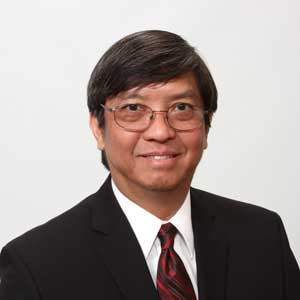
On June 3, 2026, an American scholar of Myanmar was detained at Kunming Airport. Nine days later, China’s Foreign Ministry confirmed he was under criminal compulsory measures on suspicion of espionage. The case is serious. It deserves serious analysis. Unfortunately, the commentary that Modern Diplomacy published on June 13 — “Who Is Min Zhen? US Scholar Detained in China Before Myanmar’s President “Visit“—falls short of that standard, and in ways that matter for readers trying to understand a fast-moving diplomatic moment.
The scholar’s name is Min Zin — not “Min Zhen,” not “Min Zen.” It is spelled correctly by China’s own Foreign Ministry spokesperson Lin Jian and by every major international outlet covering the case, from the BBC and The New York Times to The Guardian, The Washington Post, The Straits Times, CBS News, and NPR. Misspelling the name of the subject in the headline and throughout the article is not a stylistic quirk; it is the first signal to a careful reader that the piece may not have been built on primary reporting.
Nor is there an institution called the “Burma Strategy and Policy Institute” or “BSPI.” The think tank Min Zin co-founded is the Institute for Strategy and Policy—Myanmar, known as ISP-Myanmar. Established in 2016, it describes itself, accurately, as “an independent, non-partisan, and non-governmental think tank” (ISP-Myanmar). Its scholars publish in English and Burmese, maintain a public conflict-data portal, and collaborate with international researchers—including, in past years, Chinese ones (The Guardian). Calling it the “BSPI” is not a translation issue. It is an invention.
These details would be trivial in isolation. They are not trivial taken together, because the commentary builds on them a more consequential claim: that ISP-Myanmar itself “accused Min Zhen of providing intermittent support to both the Burmese army and some armed rebel groups operating along the border. No mainstream outlet covering this case has reported such an accusation. The claim is logically incoherent—an institute does not publicly accuse its own founding executive director of arming combatants—and it is unsourced. Floating that allegation while a scholar sits in incommunicado detention, unable to respond, is not analysis. It is prejudgment.
Stay ahead of the geopolitical week.
MD Briefing delivers expert analysis across five global fronts — the Indo-Pacific, energy, geoeconomics, European security, and the Middle East — every Monday morning. Free.
Who, then, is Min Zin? He is a PhD candidate in political science at the University of California, Berkeley, specializing in civil-military relations, democratization, and ethnic conflict (U Thant House). He has written for the opinion pages of The New York Times and Foreign Policy and for the peer-reviewed Journal of Democracy. He is the founding executive director of ISP-Myanmar. A fellow activist quoted by The Guardian observed that he “is not currently engaged in any active political work” and had visited China repeatedly in the past, sometimes in collaboration with Chinese institutions. ISP-Myanmar’s recent research has included Myanmar’s rare earth mineral exports to China — a subject on which independent organizations such as Global Witness and major financial press outlets have published similar findings. This is the ordinary, open-source policy analysis that think tanks in Beijing, Washington, Singapore, and Brussels conduct every day. To call it espionage is to redefine the category in ways that would expose Chinese scholars working on Vietnam, India, or Russia to identical charges abroad.
The Modern Diplomacy commentary describes Min Aung Hlaing as Myanmar’s “pragmatic president.” This is the framing that should trouble readers most, because it requires the most omission. Min Aung Hlaing came to power by overthrowing an elected government in the February 2021 coup d’état that removed State Counsellor Aung San Suu Kyi. He was elected president in April 2026 by a parliament constituted under post-coup arrangements, having stepped down as commander-in-chief days before the vote. He will arrive in Beijing for a state visit from June 15 to 19, 2026 — precisely the window during which Min Zin was detained.
The word “pragmatic” also struggles against the documented record of his command. The United Nations Office of the High Commissioner for Human Rights reports that airstrikes attributed to the Myanmar Armed Forces in 2025 killed at least 982 civilians — a 53 percent increase over the previous year — and at least 287 children, making 2025 the deadliest year for children since the coup (UN OCHA Humanitarian Update No. 51). The OHCHR’s report to the UN General Assembly documents systematic attacks by military aircraft and artillery on “schools, clinics, monasteries, churches, mosques, and the shelters of those displaced by violence,” including the May 12, 2025, airstrike on a school in O Htein Twin village, Sagaing Region, which killed 22 students and two teachers (OHCHR A/80/490). The U.S. Commission on International Religious Freedom’s 2026 Annual Report records that in 2025 alone, Tatmadaw forces “destroyed 379 religious sites—killing more than 259 religious clergy and civilians sheltering in these places of worship or participating in religious activities,” including a bombing of a Buddhist festival in Chaung U Township (USCIRF). More than 400 aerial attacks were reported during the December 2025–January 2026 electoral period, killing over 170 civilians. These are the findings of UN agencies and a U.S. federal commission, not of advocacy groups. They are the relevant context that any honest portrait of the visiting president must include.
None of this is an argument against China’s sovereign right to investigate alleged offenses on its territory. That right is uncontested. What is contested — properly, under the Vienna Convention on Consular Relations — is the manner of investigation: timely consular access, contact with family, a clear public statement of specific evidence, and protection from politicization. International confidence in China’s Global Security Initiative, which the Modern Diplomacy commentary invokes, will rise or fall with exactly those guarantees.
Two further observations are warranted. First, scholarship is not espionage. Tracking publicly available economic and conflict data, including across borders, is the work of every credible think tank in every capital. A standard that criminalizes that work cannot be a standard China itself would wish to live under. Second, the framing of Min Zin as a clandestine actor obscures what he actually is: a moderate, empirical analyst who has been an interlocutor to both Western and Chinese institutions over many years. The cause of stable, well-informed China–Southeast Asia relations is not served by removing such voices from the conversation.
The detention of an American scholar deserves rigorous reporting, sober commentary, and consular due process. The people of Myanmar — whose suffering under aerial bombardment is documented in the very UN reports cited above — deserve commentary that names that suffering rather than airbrushing the leader responsible. Modern Diplomacy‘s readers deserve corrections to the factual errors in last week’s piece. And Min Zin deserves, at minimum, to be called by his name.