Pakistan’s emergence as a U.S.-Iran mediator in early 2026 presents a paradox: a genuine diplomatic achievement of considerable sophistication that simultaneously reveals institutional governance challenges of profound significance. While the mediation successfully brokered a ceasefire between the United States and Iran a feat that eluded conventional diplomatic channels and the Islamabad Talks in April 2026 marked an undeniable geopolitical success for Pakistani statecraft, the mechanism through which this success was achieved warrants critical examination. The central issue is not whether Pakistan successfully mediated it unquestionably did, and through channels and negotiating parameters that demonstrated strategic acumen but rather how the mediation was conducted, by whom, and what this reveals about Pakistani institutional development, democratic governance, and strategic vulnerability.
The critical analytical problem: Pakistan’s mediation success depended overwhelmingly on the personal agency and diplomatic capability of Field Marshal Asim Munir, the military chief, operating with substantial autonomy from civilian oversight and institutional constraints. Munir’s ability to navigate between fundamentally hostile parties, maintain credibility across opposed interests, and execute complex negotiations under extreme time pressure demonstrated genuine diplomatic mastery. However, this dependency on individual capability and tactical brilliance rather than on institutional capacity represents a significant governance vulnerability. The paradox is instructive: the diplomatic success was real and impressive precisely because it operated through mechanisms that circumvented institutional constraints suggesting both that the individual operator possessed remarkable capability and that institutional mechanisms themselves may have been inadequate to the task.
Structural Positioning vs. Institutional Mediation
Pakistan’s selection as a mediator did reflect genuine structural advantages. Russia faced preoccupation with Ukraine. China lacked the necessary distance from Iranian interests to be trusted by Washington. Gulf states were effectively combat participants. Turkey lacked direct Washington access comparable to Pakistan’s.
However, these structural conditions created only the opportunity for mediation. The conversion of opportunity into operational success required institutional capacity diplomatic infrastructure, multilateral coordination mechanisms, and civilian-military alignment on negotiating parameters. Instead, what emerged was something qualitatively different: a personality-driven mediation architecture centered on a single military figure’s bilateral relationships with Trump administration officials.
Stay ahead of the geopolitical week.
MD Briefing delivers expert analysis across five global fronts — the Indo-Pacific, energy, geoeconomics, European security, and the Middle East — every Monday morning. Free.
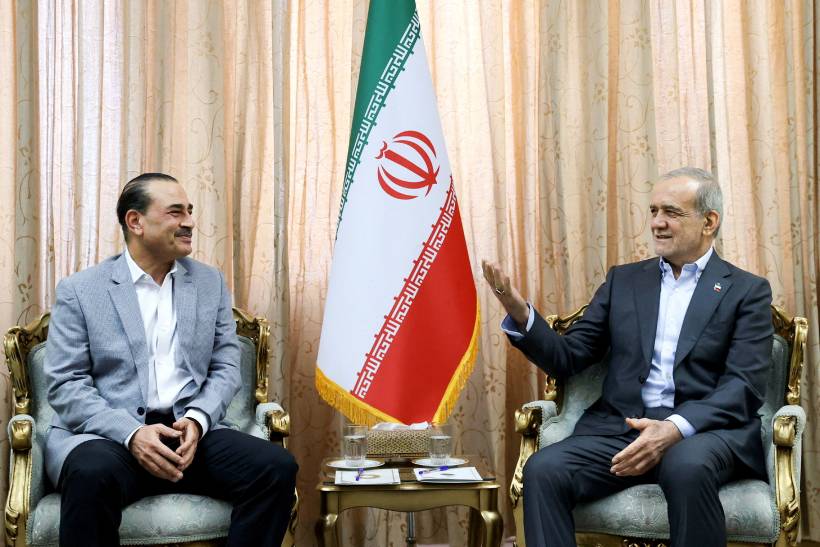
This distinction matters profoundly. Structural positioning suggests Pakistan could pursue mediation through its Foreign Ministry, diplomatic corps, and civilian leadership. Instead, the actual negotiation architecture routed conversations through Field Marshal Munir’s direct personal contacts with U.S. Vice President JD Vance and Special Envoy Steve Witkoff. According to Reuters reporting, Munir maintained contact “all night long” with these officials during critical negotiating phases a direct, personal channel bypassing normal diplomatic protocols and civilian oversight mechanisms.
The Problematic Militarization of Foreign Policy
The centrality of Asim Munir to Pakistan’s mediation success highlights a deeper institutional problem: the militarization of Pakistani foreign policy and the associated erosion of civilian democratic control over strategic decision-making.
Pakistan’s military has historically dominated foreign policy formulation, particularly regarding security and regional strategic affairs. However, the post-2010 period witnessed formal institutional developments intended to constrain this dominance the establishment of civilian Foreign Ministry primacy, parliamentary oversight mechanisms, and constitutional frameworks elevating civilian authority. The 2022-2024 transition following Imran Khan’s removal ostensibly reinforced these constraints.
Munir’s mediation role operates at variance with these formal institutional developments. His direct, personal access to the highest levels of U.S. government manifested in Trump’s public praise of him as “a great fighter,” “a very important guy,” and “an exceptional human being” transformed him into a de facto foreign policy actor operating with minimal civilian oversight. Civilian Foreign Minister Bilawal Bhutto Zardari and Prime Minister Shehbaz Sharif became secondary figures in negotiations that fundamentally shaped Pakistan’s strategic positioning vis-à-vis Washington and Tehran.
The problematic nature of this arrangement is not diminished by acknowledging that Munir executed his role with considerable diplomatic sophistication. His capacity to maintain credibility with both the Trump administration and Iran—parties with fundamentally opposed interests reflects genuine strategic capability. That the mechanism bypassed civilian institutions does not negate that the individual operator demonstrated mastery of complex multilateral diplomacy. However, the governance concern remains acute: institutional success achieved through individual brilliance rather than systematic capability creates sustainability vulnerabilities and governance precedents inconsistent with democratic development.
Personality-Dependent Diplomacy as Strategic Vulnerability
A critical analytical flaw in celebrating Pakistan’s mediation success is the treatment of Munir’s personal rapport with Trump as an unqualified strategic asset. Viewed rigorously, this personality dependency constitutes a profound strategic vulnerability with multiple dimensions.
First, temporal contingency: Trump’s presidency is constitutionally constrained to a defined term. The rapport between Munir and Trump exists within a specific temporal window. When Trump leaves office whether in 2028 or following electoral defeat the personal relationship that anchored Pakistan’s mediation role dissolves. Unless institutional mechanisms have been developed to embed Pakistani-American diplomatic coordination in permanent structures, the entire architecture of mediation collapses when the personalities depart.
Second, asymmetric dependency: The relationship dynamics reveal problematic asymmetry. Trump publicly praised Munir and granted him a state visit—gestures signifying confidence in Munir’s judgment. However, this confidence was extended to a military figure in a country where democratic civilian control remains contested. By empowering Munir through public confidence and direct access, Trump simultaneously strengthened a military leader’s position relative to Pakistan’s civilian institutions.
Third, absence of institutional safeguards: When diplomacy depends on personal relationships rather than institutional mechanisms, it lacks mechanisms for internal review, civilian scrutiny, or democratic accountability. Pakistan’s parliament was not substantially engaged in shaping the mediation parameters. Negotiations occurred through Munir’s direct personal channels, reflecting patterns characteristic of military-dominated rather than civilian-democratic foreign policy formulation.
Iran’s Calculation and Pakistan’s Constraints
Iran’s preference for Pakistan as mediator derived from strategic reasoning that Pakistan would lack capacity to serve as Washington’s instrument due to “geographic exposure and domestic constraints.” This assessment proved correct Pakistan’s position between Saudi Arabia and Iran, its economic vulnerabilities, and its internal political constraints genuinely constrained its freedom of maneuver.
However, Iran’s analysis overlooked a critical dimension: within Pakistan, civilian democratic constraints on military decision-making remain limited. While Pakistan as a nation possessed the structural constraints Iran anticipated, the military leadership operating through Munir operated with substantially fewer constraints. By negotiating through a military figure rather than civilian institutions, the mediation effectively bypassed some constraints Iran had anticipated would limit Pakistan’s pro-American bias.
Sustainability and Institutional Challenges Ahead
The ceasefire agreement brokered in April 2026 represents genuine diplomatic achievement. However, its long-term sustainability depends on whether it catalyzes institutional arrangements that outlast the personalities who negotiated it. Current indicators suggest limited progress toward institutionalization.
First, the Islamabad Talks themselves: While symbolically important, the talks produced no binding permanent resolution—only a two-week ceasefire. The framework for moving from ceasefire to sustained negotiation and resolution remains unclear. If future negotiations require Munir’s continued personal engagement with Trump administration officials, sustainability remains dependent on personality continuation.
Second, civilian institutional development: Pakistan’s Foreign Ministry has not developed the institutional capacity or political leverage to independently sustain U.S.-Iran negotiating channels absent Munir’s personal involvement. The civil service, while technically competent, remains subordinate to military guidance on issues deemed strategically sensitive.
Third, strategic benefit realization: The critical question for Pakistan’s long-term positioning is whether mediation success translates into tangible strategic benefits—technological partnerships, enhanced access to U.S. capital markets, debt relief, or sustained security commitments. Historical precedent suggests disappointment. Pakistan’s mediation role in Nixon’s opening to China (1971) yielded limited lasting benefits.
The Democracy Question Pakistan Cannot Avoid
Perhaps the most intellectually honest assessment requires acknowledging that Pakistan’s mediation success, while diplomatically genuine, occurred through mechanisms that represent setbacks for democratic civilian governance. A military chief operating with autonomous access to foreign capitals, conducting negotiations absent civilian legislative oversight, and maintaining independent relationships with foreign leaders these patterns characterize security-state rather than democratic governance.
Pakistan faces an uncomfortable analytical reality: its diplomatic success in 2026 occurred precisely because democratic constraints on military decision-making remain limited. The mediation worked partly because it bypassed civilian institutions. This means celebrating the mediation success while simultaneously confronting evidence that Pakistan’s democratic development remains constrained and that military institutions retain autonomy inconsistent with democratic norms.
Conclusion: Diplomatic Success as Institutional Challenge
Pakistan’s role in brokering the U.S.-Iran ceasefire represents a genuine and sophisticated diplomatic accomplishment one that required navigating impossible constraints, maintaining credibility across hostile parties, and executing complex multilateral negotiations with exceptional skill. Field Marshal Asim Munir demonstrated capabilities that civilian institutions, as currently constituted, may not have possessed. This achievement is undeniably real and merits recognition.
However, this achievement coexists with institutional vulnerabilities that analytically rigorous assessment cannot ignore. The mediation depended on personality and individual capability rather than on institution, on military autonomy rather than civilian control, and on bilateral relationships rather than on sustainable institutional structures. The success was achieved through mechanisms that circumvented rather than reinforced democratic governance.
The fundamental challenge for Pakistan is not whether Munir could execute complex diplomacy he demonstrated he could. Rather, the challenge is whether Pakistan can develop institutional mechanisms that embed similar capability without depending on individual personalities, and whether the military can operate at highest strategic levels while remaining subordinate to civilian democratic oversight.
For Pakistan to convert temporary diplomatic success into durable strategic positioning, it requires institutionalizing diplomatic gains beyond Munir’s tenure, developing civilian capacity to conduct equivalent negotiations, subordinating military decision-making to civilian oversight, and creating permanent institutional mechanisms for sustained regional diplomacy. Whether Pakistan’s political system can accomplish these institutional reforms while maintaining the military’s strategic capability and international credibility remains the fundamental question—and one the current personality-dependent mediation success both illuminates and obscures.