


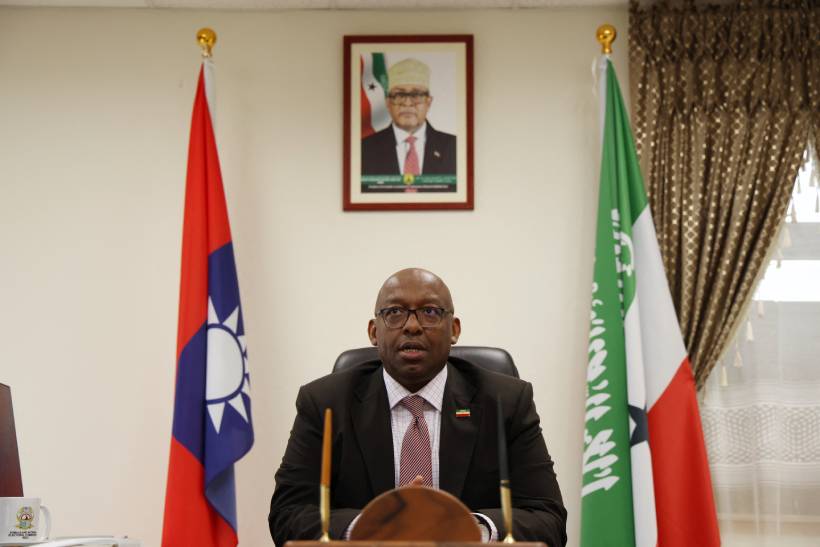
Somaliland has reaffirmed its right to choose its international partners as it opened a new representative office in Taiwan, deepening ties between two politically isolated entities that lack widespread international recognition.
The self declared state in the Horn of Africa broke away from Somalia in 1991 and has since operated with its own government, security forces, and institutions, despite not being formally recognized by most countries. Taiwan, which China claims as part of its territory, similarly maintains limited diplomatic recognition globally.
Both Somaliland and Taiwan established reciprocal representative offices in 2020, and officials say cooperation has expanded across trade, governance, and institutional development since then. The latest office opening signals a continued strengthening of unofficial diplomatic ties despite pressure from China and Somalia.
Why It Matters
The development highlights the growing alignment between two diplomatically isolated entities that share similar geopolitical challenges, particularly opposition from larger states claiming sovereignty over them.
Stay ahead of the geopolitical week.
MD Briefing delivers expert analysis across five global fronts — the Indo-Pacific, energy, geoeconomics, European security, and the Middle East — every Monday morning. Free.
It also underscores the broader global contest between China and Taiwan, extending beyond East Asia into Africa. Somaliland’s engagement with Taiwan challenges Beijing’s diplomatic influence in the region, where China has significantly reduced Taiwan’s formal presence in recent years.
For Somaliland, the partnership offers economic and political visibility, while for Taiwan it represents an opportunity to maintain international engagement despite growing diplomatic isolation.
Geopolitical Context
Somaliland’s foreign policy posture reflects its long standing pursuit of international recognition and strategic partnerships. Its engagement with Taiwan has drawn criticism from Somalia and China, both of which reject its sovereignty claims and consider such relations illegitimate.
China continues to assert that Taiwan is part of its territory and opposes any official or semi official foreign engagements that suggest otherwise. Somalia has also opposed Somaliland’s external relations, including previous bans on Taiwanese passport holders.
The recognition of Somaliland by Israel in 2023 added another layer of diplomatic complexity, though it remains one of the few countries to take such a step.
Key Stakeholders
- Somaliland government
- Taiwan government
- China
- Somalia federal government
- Israel
- Horn of Africa political actors
- International diplomatic community
Future Outlook
Somaliland is likely to continue expanding unofficial diplomatic and economic ties with partners such as Taiwan, particularly in areas of trade, development assistance, and institutional cooperation.
However, formal international recognition remains unlikely in the near term, as opposition from Somalia and limited global consensus continues to constrain its status.
Tensions between China and Taiwan are expected to remain a defining factor in Somaliland’s external relations, with further diplomatic friction possible if new partnerships emerge that challenge Beijing’s claims.
Analysis
This development reflects a broader pattern of “mutual recognition by exclusion,” where internationally unrecognized or partially recognized entities build partnerships based on shared diplomatic constraints rather than formal state legitimacy.
For Somaliland, the Taiwan relationship is both symbolic and strategic. It signals sovereignty claims while also providing access to technical assistance and international visibility that traditional recognition pathways have not delivered. For Taiwan, Somaliland offers a rare opportunity to maintain diplomatic presence in Africa after sustained pressure from China has reduced its formal alliances.
However, the relationship also carries structural limitations. Neither side can significantly alter its international legal status through these ties, and both remain vulnerable to external pressure from larger geopolitical actors. China’s influence in Africa and Somalia’s opposition to Somaliland’s independence continue to constrain the diplomatic space in which this partnership operates.
In essence, this is less a conventional bilateral alliance and more a geopolitical signal. It reflects how contested sovereignty disputes are increasingly playing out through symbolic diplomacy, where representation offices and informal recognition become tools of strategic positioning rather than full state relations.
With information from Reuters.
