


Political Pressure Puts Fed Independence Back in Focus
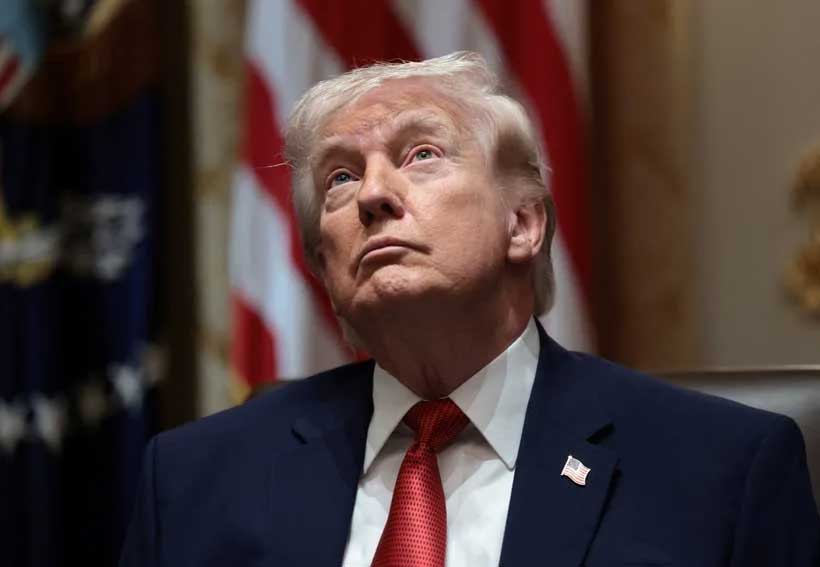
Federal Reserve Chair Kevin Warsh’s efforts to keep the central bank insulated from political pressure have become more difficult after President Donald Trump renewed his push to remove Fed Governor Lisa Cook.
Trump’s move, based on allegations of mortgage fraud that Cook’s attorney has called baseless, has brought the issue of Federal Reserve independence back to the centre of markets’ attention. It also suggests that the White House remains concerned that the Fed could raise interest rates as early as next month, despite Trump’s longstanding demand for lower borrowing costs.
The timing is particularly important. Futures markets put the probability of a quarter-point rate increase before the November midterm elections at about 75%, while the outcome of the Fed’s September 15-16 meeting is viewed as almost evenly balanced.
Stay ahead of the geopolitical week.
MD Briefing delivers expert analysis across five global fronts — the Indo-Pacific, energy, geoeconomics, European security, and the Middle East — every Monday morning. Free.
The pressure on Cook could ultimately backfire. If Trump fails to remove her, she could become more inclined to support tighter monetary policy. At the same time, the administration could be calculating that publicly challenging Cook gives Trump a political target if the Fed raises rates before the midterms.
Trump could then argue that a rate increase was politically motivated and intended to undermine his administration.
Trump Challenges Cook Ahead of Critical Fed Meeting
The White House last week sent Cook a letter saying Trump was “considering” removing her and demanded a response within three weeks to the allegations against her.
The deadline falls only weeks before the Fed’s next policy meeting, when the balance of votes could prove crucial.
The move also comes after a June Supreme Court ruling that recognised the Federal Reserve’s special statutory protections while leaving unresolved whether the allegations against Cook would provide sufficient grounds for her removal.
The dispute highlights the continuing uncertainty over how far presidential authority extends over the central bank.
“The issue of Fed independence has not yet been resolved,” said Tim Duy, chief U.S. economist at SGH Macro Advisors.
For Warsh, the confrontation creates an uncomfortable situation. He has only recently taken over as Fed chair and would likely prefer the opportunity to establish his own policy approach rather than become involved in Trump’s campaign for lower rates.
Yet maintaining that distance could be difficult. Trump has reportedly called Warsh repeatedly since he became chair in May.
Trump has also publicly praised Warsh while criticising other Fed officials for keeping interest rates too high, saying Warsh would like to see lower rates but faces a board that wants to maintain higher borrowing costs.
Inflation Keeps Pressure on the Fed
The political confrontation is taking place against a difficult economic backdrop.
Inflation has remained above the Fed’s 2% long-term target, while core price pressures remain elevated. The Iran-related energy shock of the past six months has added another source of inflationary pressure.
Those conditions complicate the case for immediate rate cuts.
At the same time, the Fed’s policy committee is becoming increasingly divided. Three members voted for a rate increase at the previous meeting, while Governors Chris Waller and Lisa Cook voted to keep rates unchanged, although both have indicated that further tightening could eventually be necessary to bring inflation back under control.
If Waller and Cook both support a rate increase at the September meeting, the previous 9-3 balance in favour of holding rates could become 7-5.
Former Fed Chair Jerome Powell could then become decisive if he switched his previous position and supported a rate increase.
That makes the political pressure on Cook particularly significant.
Bond Markets Face an Inflation Risk
The implications extend beyond the Fed itself and into financial markets.
Long-term Treasury yields have periodically risen and the dollar has weakened during previous episodes of political pressure on the central bank. Investors remain divided over whether the latest confrontation represents a temporary political storm or a deeper threat to the credibility of U.S. monetary policy.
The bigger concern for bond markets is the possibility that political pressure could lead to a Fed leadership and governing board more willing to cut rates despite persistent inflation.
That could increase the inflation risk premium demanded by investors holding longer-term government debt.
Barclays strategists warned that if confidence in the Fed’s willingness to defend its inflation target has begun to deteriorate, long-term bond markets may be underestimating the risks.
The combination of political pressure and uncertainty over Warsh’s approach to inflation could therefore become particularly important for longer-dated Treasury yields and inflation expectations.
Analysis: Why the Fed Battle Matters
The central issue is no longer simply whether the Fed cuts or raises rates at its next meeting. It is whether investors continue to believe that the central bank can make those decisions independently of the White House.
If markets begin to believe that political considerations can influence the composition of the Fed’s governing board, expectations for future inflation could become less firmly anchored. Investors may demand higher yields to compensate for the possibility that inflation remains elevated for longer.
That would make government borrowing more expensive and could create wider financial-market volatility.
Warsh therefore faces a critical test. He must balance his desire to reform the Fed with the need to demonstrate that monetary policy remains driven by inflation and economic conditions rather than presidential demands.
His decision at the next meeting could become an important signal to markets.
If Warsh supports tighter policy despite Trump’s pressure, he could strengthen perceptions of Fed independence. If he instead supports a more dovish position while political pressure intensifies, doubts about the central bank’s commitment to price stability could deepen.
For bond investors, the consequences could be significant. The immediate question may be whether rates rise in September, but the larger question is whether markets still trust the Fed to control inflation independently of the White House.
With information from Reuters.
