


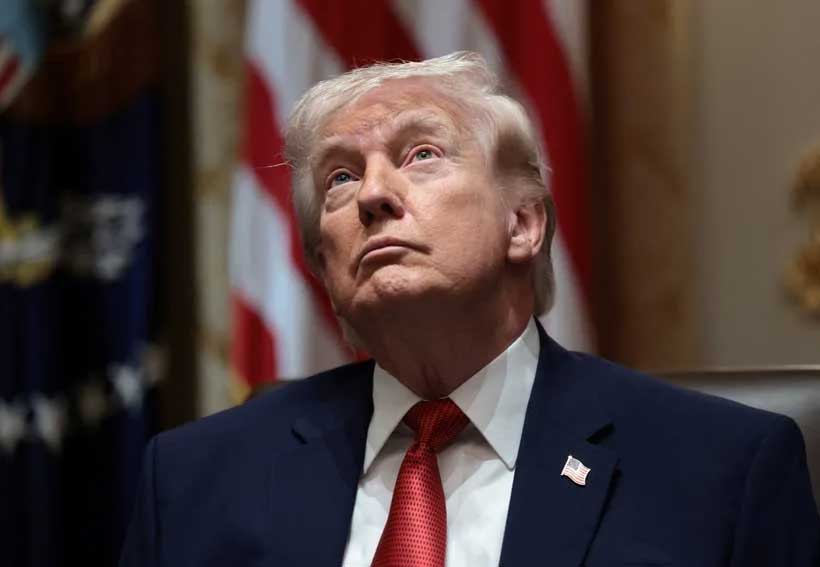
U.S. President Donald Trump has insisted that the latest exchange of hostilities between Israel and Iran will not disrupt ongoing negotiations aimed at ending the broader regional conflict. His remarks came after Israeli strikes in Beirut’s southern suburbs triggered retaliatory Iranian missile attacks against Israeli targets, raising concerns about the future of diplomatic efforts.
The escalation follows a U.S.-backed ceasefire initiative in Lebanon, which Washington has sought to use as a stepping stone toward a wider settlement involving Tehran. Despite the truce proposal, Israel launched fresh strikes in Beirut, arguing that it was responding to attacks by the Iran-backed Hezbollah. Iran subsequently fired missiles toward Israel, marking a significant escalation and testing the resilience of ongoing diplomatic efforts.
Trump sought to reassure observers that negotiations remain on track, publicly asserting that U.S. policy would not be dictated by Israeli military decisions. Reports suggest he urged Israeli Prime Minister Benjamin Netanyahu to avoid further escalation in order to preserve the possibility of a diplomatic breakthrough.
Why It Matters
The latest developments underscore the fragile balance between diplomacy and military confrontation in the Middle East. While Washington and Tehran continue negotiations, recurring military exchanges demonstrate how rapidly battlefield developments can complicate political efforts.
Stay ahead of the geopolitical week.
MD Briefing delivers expert analysis across five global fronts — the Indo-Pacific, energy, geoeconomics, European security, and the Middle East — every Monday morning. Free.
The situation also highlights growing tensions between U.S. diplomatic objectives and Israel’s security strategy. Washington’s priority remains preventing a wider regional war and securing an agreement with Tehran, while Israel continues to pursue military operations against Hezbollah and other Iranian-aligned actors.
The escalation has already generated economic repercussions. Oil prices rose following the exchange of attacks, reflecting market concerns over the stability of the region and the security of energy supplies. Continued instability could further affect global energy markets and international trade routes, particularly if tensions surrounding the Strait of Hormuz intensify.
Beyond economic considerations, the episode illustrates the interconnected nature of regional conflicts. Developments in Lebanon, Israel, and Iran are increasingly influencing one another, making it difficult for negotiators to isolate individual disputes from broader geopolitical tensions.
United States: Seeking to secure a diplomatic agreement with Iran while preventing a broader regional conflict.
Iran: Pursuing sanctions relief and security guarantees while linking wider negotiations to developments in Lebanon.
Israel: Continuing military operations against perceived security threats while balancing relations with its principal ally, the United States.
Hezbollah: Remaining a central actor in the Lebanon theatre and a key factor influencing regional security calculations.
Lebanon: Bearing the humanitarian and economic costs of continued military operations on its territory.
Regional Gulf States: Monitoring negotiations closely due to concerns about energy security, regional stability, and potential spillover effects.
Global Energy Markets: Vulnerable to disruptions caused by escalating tensions and uncertainty surrounding critical shipping routes.
Strategic Implications
The latest exchange reveals the persistent gap between diplomatic negotiations and realities on the ground. Although Washington and Tehran continue to signal interest in a negotiated settlement, repeated military escalations demonstrate the limited capacity of diplomacy to fully control regional actors and conflict dynamics.
The episode also highlights a broader challenge facing U.S. policymakers: maintaining momentum in negotiations while managing the actions of allies and adversaries whose immediate security calculations may differ from Washington’s diplomatic objectives. Israel’s continued operations in Lebanon and Iran’s retaliatory responses illustrate how localized confrontations can rapidly acquire regional significance.
At the same time, the rise in oil prices serves as a reminder that instability in the Middle East remains a global concern. Markets continue to react to any indication that conflict could threaten energy infrastructure or disrupt key maritime routes.
Ultimately, the latest developments suggest that while diplomatic channels remain open, the success of any future agreement will depend not only on negotiations between Washington and Tehran but also on the ability of regional actors to prevent military escalation from overtaking political dialogue.
With information from Reuters.
