


Europe – From Pillar to “Periphery”
On April 27, 2026, while visiting the Carolus-Magnus-Gymnasium high school in Marsberg, North Rhine-Westphalia, western Germany, Chancellor Friedrich Merz criticized the ability of the United States under President Donald Trump to handle issues related to Iran. Merz argued that Washington lacked a clear strategy and acted unilaterally and that the actions of the Trump 2.0 administration amounted to a “betrayal” of European countries in response to Trump’s statement that NATO allies had failed to support America’s conflict with Iran.
Following those remarks, Chancellor Friedrich Merz continued criticizing the United States, citing the “sudden transformation of the American social environment,” and even advised young people not to study or work in the U.S. during a Catholic conference in Würzburg on May 15, 2026. The statements made by Germany’s leader reflected an increasingly visible fracture between the United States and its traditional European allies across the Atlantic.
In the National Security Strategy (NSS2025) and the National Defense Strategy (NDS2026), the Trump 2.0 administration appeared to regard Europe—through NATO—merely as an optional partner rather than a foundational pillar and indispensable ally, as established in U.S. grand strategy after World War II. Furthermore, the perception of Europe as a risk due to the erosion of political freedoms and loss of identity caused by immigration may indicate the possibility of Europe becoming a peripheral region within U.S. foreign policy calculations.
Stay ahead of the geopolitical week.
MD Briefing delivers expert analysis across five global fronts — the Indo-Pacific, energy, geoeconomics, European security, and the Middle East — every Monday morning. Free.
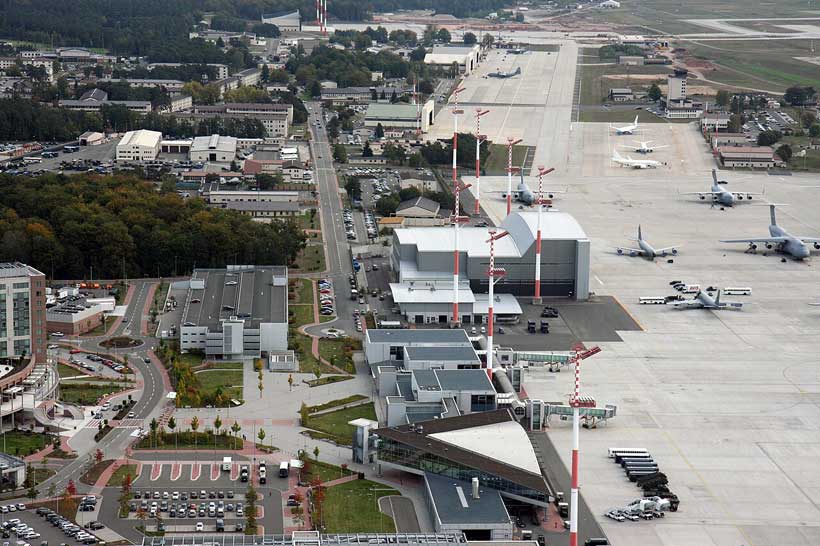
The withdrawal of 5,000 U.S. troops stationed in Germany represented a peak escalation in transatlantic tensions. Prior to this, the Trump administration had imposed tariffs on European countries as a signal that the nations of the Old Continent could no longer jointly build a new international order alongside the United States.
Poland and the Rise of Eastern Europe
Despite the tensions across the Atlantic, the disputes have primarily centered on relations between the United States and Western European countries. After the Trump administration announced the troop withdrawal from Germany, Poland quickly expressed its willingness to host American forces.
Following the election victory of Polish President Karol Nawrocki, President Donald Trump announced the transfer of 5,000 American troops from Germany to Poland. The move demonstrated that Poland and Eastern European countries would play an increasingly important role in Washington’s strategic calculations.
Over the years, Poland and Eastern European states have achieved significant economic growth. Poland’s economy has surpassed USD 1.1 trillion, while GDP growth has remained at an average of 3–4% since 2016. Eastern European economies in general maintained approximately 2.8% growth in 2026. Meanwhile, Poland’s imports and exports reached roughly €28 billion during the first half of 2025, with more than 70% of Polish agricultural exports consumed within Europe.
Warsaw also unveiled its National Armament Plan 2023–2035, highlighting its ambitions to become a major producer of man-portable missile systems, with an annual output of 1,300 units through the Polska Grupa Zbrojeniowa (PGZ) for numerous European and global markets. Poland has continuously invested in defense amid growing geopolitical instability, particularly in Europe, where it shares borders close to Russia.
Historically, Poland repeatedly served as a buffer zone invaded and partitioned by Germany and Russia/the Soviet Union for 123 years, including during both World Wars. This historical experience has kept Poland in a constant state of military readiness. The redeployment of U.S. troops from Germany to Poland thus represents an effort to strengthen the Eastern corridor, which Washington had long neglected.
What Is the United States Calculating by Moving Troops to Poland?
In international relations, military deployments are often combined with diplomacy in order to create strategic advantages. The Trump administration’s decision to relocate troops from Germany to Poland reflects several ambitions quite clearly.
Firstly, the United States is applying pressure on Western European countries. The transfer of troops from Germany to Poland signals that Washington will prioritize relationships that directly benefit American interests. Defense Secretary Pete Hegseth has repeatedly emphasized that the United States would adopt the doctrine of “Peace Through Strength” as a core principle of international relations under President Donald Trump.
As a result, countries deemed “not aligned” with Washington’s strategic vision could be removed from America’s list of priorities. President Donald Trump, throughout both of his administrations, repeatedly demanded that NATO countries increase defense spending and contribute more financially to sustain the U.S. military presence in Europe.
If Western European states fail to increase their contributions, the transfer of troops to Poland may only be the first step toward pushing Western Europe outside the “core zone” of U.S. foreign policy strategy. References to the so-called “Donroe Doctrine” (a blend of Monroe and Donald Trump) serve as a warning that Western Europe could be marginalized while American economic and strategic focus shifts toward Eastern Europe.
Such a shift could create a power vacuum for Germany and its Western European allies, potentially making them more vulnerable to Russian influence in the future. Meanwhile, Poland—a nation with a turbulent historical relationship with Russia—may, with U.S. backing, demand reforms within EU or NATO institutions, as President Trump has repeatedly called for, or even take more assertive actions toward Russia.
Secondly, the Trump administration seeks to send a warning to Russian President Vladimir Putin. Since returning to office, Donald Trump has displayed a degree of patience toward Putin. However, following the Alaska meeting, the peace process proposed by Trump regarding the Russia–Ukraine conflict appeared increasingly fragile.
President Trump repeatedly accused Putin of prolonging negotiations in order to regroup military forces while awaiting additional Chinese military support. The Russia–China summit held from May 19–21, 2026, featuring numerous agreements on politics, finance, energy, defense-security cooperation, and space technology, demonstrated a level of strategic alignment very different from Beijing’s reception of the American delegation. Consequently, Trump rapidly implemented countermeasures, including the redeployment of U.S. troops from Germany to Poland. This move effectively legitimizes the long-discussed transfer of military forces into Eastern Europe as part of a broader strategic deterrence effort. Vice President JD Vance rejecting reports that troop deployments to Poland would be delayed suggests that President Trump has seriously considered strengthening the U.S. military presence in Poland to deter both Russia and China or potentially expand military actions he has frequently alluded to since 2025. This development aligns with the emergence of a “new normal” characterized by prolonged military confrontation in international relations.
At the same time, it reflects another stage in the long-term eastward strategic expansion toward Russia that has unfolded since the late twentieth century, as most Eastern European countries joined either the European Union or NATO.
Thirdly, President Donald Trump is also pursuing domestic political objectives aimed at restoring the political standing of the Republican Party ahead of the 2026 midterm elections. Trump’s reputation suffered significantly after launching trade conflicts with countries around the world, including allies and strategic partners. This fueled domestic dissatisfaction and provided the Democratic Party with opportunities for criticism.
The White House’s military actions against Iran were partly viewed as an attempt to redirect public attention outward. However, due to Iran’s effective asymmetric warfare strategy, the United States reportedly suffered considerable losses through the extensive use of expensive strategic weapons against relatively low-cost systems deployed by Tehran.
Defense Secretary Pete Hegseth’s proposal for a USD 1.5 trillion defense package in January 2026 reflected a broader strategy of externalizing political pressure in order to consolidate public support—a tactic used by multiple American presidents throughout history.
Nevertheless, the Iran conflict weakened Trump’s political standing considerably, with approval ratings reportedly falling to 36% by late April 2026 and showing signs of dropping further to 31–34% by the end of May 2026.
Therefore, the troop redeployment to Poland serves both domestic and international purposes: addressing internal criticism regarding Trump’s perceived closeness with Vladimir Putin while simultaneously reaffirming that the United States remains prepared to respond forcefully against any country threatening American interests. It also sends a warning to countries such as China and Russia regarding challenges to the U.S.-led international order.
Conclusion
The redeployment of U.S. troops to Poland under President Donald Trump reveals three primary objectives: (1) Increasing pressure on Western Europe to contribute more financially to the United States; (2) applying strategic pressure on Russia and China; and (3) consolidating domestic political support ahead of the 2026 midterm elections.
These three objectives reinforce one another in pursuit of the “Peace Through Strength” doctrine and the isolationist tendencies repeatedly emphasized by the Trump 2.0 administration since 2025. The transfer of American troops from Germany to Poland may therefore mark a new phase in Europe’s geopolitical landscape, further intensifying an already volatile and unpredictable regional environment.
