


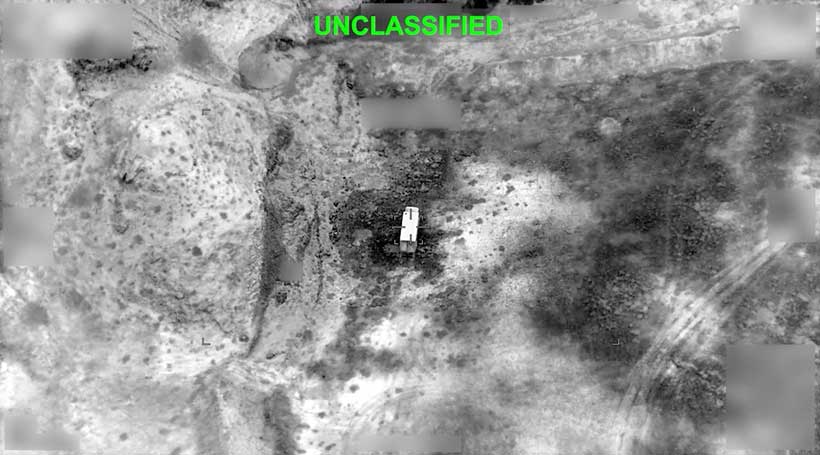
With the July 8, 2026, resumption of hostilities between the United States and the Islamic Republic of Iran, what attracts attention more than the strikes themselves is the pattern of target selection. In conventional warfare, military assets are normally prioritized. U.S. Defense Secretary Peter Hegseth has even claimed that the U.S. “never target[s] civilian targets.” Yet a substantial share of the recent attacks has been directed at critical logistical and civilian infrastructure, especially railways, key transportation routes, and power facilities in the Southeast of Iran. This raises an important question: why have logistical and civilian infrastructures, whose destruction can generate negative publicity for Washington, become major targets of U.S. military operations?
During the initial phase of the war (Feb 28 to the June Memorandum), U.S. strikes were directed primarily against senior commanders, military bases, and other key military assets. Following the resumption of the war on July 8, 2026, however, the pattern of attacks changed noticeably. A significant portion of the new operations shifted toward logistical and civilian infrastructure, including transportation networks, energy facilities, and other critical infrastructure in southern Iran. In Hormozgan Province, for example, the attacks extended beyond military installations to include communication networks, water and electricity infrastructure, and other essential public facilities. Such a shift in target selection raises the question of whether the U.S is merely adopting a different tactical approach or whether this pattern reflects a distinct strategic logic.
Understanding this shift is therefore as important as examining the military operations themselves, since it provides insight into the broader strategic rationale guiding U.S. actions.
One possible explanation is that the Trump administration is employing “coercive diplomacy”, the use of threats or limited force to compel the IR (Islamic Republic) to alter its behavior. One of the defining characteristics of coercive diplomacy is the simultaneous use of pressure while leaving open a pathway for de-escalation through negotiation, an approach that the Trump administration has repeatedly adopted. The coercive diplomacy literature suggests that success is most likely when demands are limited, the target is offered a clear exit option, and coercive pressure is directed primarily at the centers of political decision-making. Recent attacks on civilian infrastructure diverge from this logic, by creating sunk-costs of animosity in the general Iranian population, especially the Baloch people of Hormozgan Province.
Stay ahead of the geopolitical week.
MD Briefing delivers expert analysis across five global fronts — the Indo-Pacific, energy, geoeconomics, European security, and the Middle East — every Monday morning. Free.
Instead, the emphasis on logistical and civilian infrastructure not only departs from the classical logic of coercive diplomacy but also fails to target the regime’s core decision-making institutions directly. Furthermore, attacks on civilian infrastructure are more likely to strengthen the regime’s narrative by framing U.S. military operations as foreign aggression against Iran. If the objective was to compel Tehran to accept specific demands, pressure should have focused on decision-making institutions rather than infrastructure with consequences extending beyond the war itself. For this reason, while coercive diplomacy may explain part of U.S. behavior, it cannot, on its own, account for the systematic targeting of logistical and civilian infrastructure.
Another common explanation is the logic of “cost imposition”, inflicting sufficient cost to alter an adversary’s strategic calculations. The later phase of the U.S. campaign against Iran can be interpreted through this lens. At face value, attacks on economic and logistical infrastructure appear broadly consistent with such a strategy. If the primary objective were to alter the regime’s behavior through cost imposition, those costs would be expected to target the government’s decision-making capacity rather than national infrastructure with predominantly long-term consequences.
Instead, targeting logistical and civilian infrastructure imposes costs primarily on society and the country’s long-term national capacity, rather than on political decision-makers. More importantly, the IR does not evaluate costs and benefits according to the assumptions typically embedded in U.S. strategic thinking. Its calculations are shaped not only by material costs but also by ideological commitments, regime security, and political survival. Consequently, the logic of cost imposition is likewise insufficient to explain the systematic concentration of attacks on logistical and civilian infrastructure.
An alternative interpretation is to understand this pattern of attacks within the framework of “regime change.” Targeting critical infrastructure could substantially weaken the government’s economic and administrative capacity. To support this interpretation, one may point to the targeting of the Aqqala railway in Golestan Province, a strategically important transport corridor. As part of the Iran–Turkmenistan–Kazakhstan railway, this route connects Iran with both Russia and China. Another example is the attack on the Bandar Abbas oil refinery complex, located only a few kilometres from the Strait of Hormuz. Beyond their potential military utility, both targets play a critical role in the country’s transportation network, trade, and energy supply, functions whose disruption extend well beyond the duration of the war.
Nevertheless, this explanation also has important limitations. If the objective had simply been to facilitate the collapse of the IR, one would expect military operations to concentrate primarily on military, security, and regime-preservation institutions. Instead, a substantial proportion of the attacks have been directed at infrastructure whose destruction would continue to constrain the country for years, even in the event of regime change. Regime change may therefore explain part of the strategic logic behind these operations, but it cannot by itself account for the systematic emphasis on infrastructure whose consequences extend far beyond the survival or collapse of the current government.
The evidence instead points toward a different strategic logic. The pattern of target selection suggests that Washington’s objective extends beyond achieving immediate military outcomes, including defeating, or even toppling, the IR. Rather, it appears aimed at “shaping the post-war regional balance of power” by constraining Iran’s long-term ability to rebuild its national capabilities and recover its regional influence.
This interpretation is supported by the fact that many of the selected targets affect not the immediate course of military operations but the country’s capacity for reconstruction, transportation, energy production, and the long-term functioning of the state. Such infrastructure cannot be replaced quickly after the conflict ends or even after a change of government, and the consequences of its destruction are likely to persist for years.
The strategic significance of this approach lies in a simple premise: military victory is durable only if the defeated state is unable to restore its power within a relatively short period. Otherwise, military defeat merely creates a temporary interruption, allowing the defeated country to regain its regional position through the reconstruction of infrastructure, resources, and logistical networks. From this perspective, constraining Iran’s reconstruction capacity reduces the likelihood of its return to its pre-war regional position.
The longer this reconstruction process is delayed, the greater the opportunity for the U.S and its regional partners to consolidate their preferred balance of power in the Persian Gulf. At the same time, the extensive need for external capital, technology, and reconstruction assistance may increase Washington’s leverage over either the existing government or any successor regime.
Such a strategy makes sense only if Washington’s objective is not merely to terminate the current conflict but also to prevent Iran from re-emerging as a major regional actor after the war. In this context, the destruction of critical infrastructure should be understood not simply as a means of pressuring the current government, but as an effort to increase the cost and duration of rebuilding Iran’s national power.
The empirical evidence is also consistent with this hypothesis. The pattern of target selection indicates that U.S. strikes have not been confined to military facilities; rather, they have systematically targeted infrastructure that plays a fundamental role in Iran’s economic, logistical, and institutional capacity. Recent U.S. attacks on electricity and water infrastructure in several southern provinces provide illustrative examples. In one such strike, power facilities in Bandar Abbas, a key city in southern Iran, sustained significant damage. During the latest round of attacks, four 400-kilovolt electricity transmission lines were reportedly severely damaged. Another example was the destruction of drinking water reservoirs in Sirik County. Petrochemical complexes in Tabriz, Mahshahr, and Jam were also subjected to extensive U.S. strikes.
The U.S also targeted transportation infrastructure, including the strategically important Aqqala railway, bridges, tunnels, and major transportation routes. The geographical distribution of these targets is equally noteworthy, extending from energy infrastructure in southern Iran to transportation networks in the north, suggesting that the pattern of strikes was not merely driven by the tactical requirements of a single operational theater.
Unlike military bases, which primarily affect immediate combat capability, these facilities constitute the state’s core capacity to sustain economic activity, transport resources, produce energy, and ultimately reconstruct national power. Consequently, rebuilding them requires substantial financial resources, technical expertise, and considerable time. Their destruction therefore weakens Iran’s ability to regenerate national power in the post-war period rather than merely influencing the immediate course of military operations.
A.F.K. Organski and Jacek Kugler’s The War Ledger (1980) calculated from historical cases that winners of long wars generally lose 5 to 7 years of economic growth, whereas losers can lose 21 to 25 years of equivalent development, or four times worse. Examining the case of East Germany revealed that some states, without access to the international system of commerce, never recover their initial level of wealth or productivity. Despite the popular belief that war stimulates social cohesion, technological growth and economic recovery from natural disasters, destruction and depression, the evidence is that war diverts resources from long-term economic development. For example, the Second World War did not actually make the U.S. wealthier, but actually inflicted a severe opportunity cost that was difficult to detect against the U.S.’s relative rise of economic influence after the end of the Second World War.
This interpretation is also broadly consistent with recent statements by Donald Trump, who has indicated that he is considering “massive attack, bigger than ever before.” Although such statements cannot, by themselves, substantiate the present hypothesis, they are consistent with the observed pattern of target selection and suggest that expanding attacks against Iran’s critical infrastructure remains part of Washington’s strategic calculations. Taken together, the observed pattern of target selection supports the hypothesis that U.S. strategy is aimed not merely at securing a short-term military victory, but at constraining Iran’s ability to reconstruct its national power in the post-war period.
These findings support the possibility that the primary objective of these operations is not merely the collapse of the current regime, but rather to ensure that, whether the IR survives or falls, the government in Iran will be unable, at least in the medium term, to regain the capacity necessary to re-emerge as a regional power. Within this framework, the destruction of logistical and civilian infrastructure should no longer be viewed as a military miscalculation or simply as an instrument for weakening and toppling the regime.
Instead, it constitutes an integral component of the broader strategic logic underlying the campaign. In other words, the success of these operations is not measured solely by whether the Iranian regime survives or collapses. Under this logic, regardless of the regime’s fate, part of the U.S’ strategic objectives may already have been achieved. Even in the event of regime change, any successor government would be compelled to devote years of financial resources, administrative capacity, and political attention to rebuilding a country whose essential infrastructure has been severely damaged.
Viewed in this light, Iran’s return to its pre-war position in the regional balance of power would be delayed and made substantially more costly. From this perspective, the strategic value of these attacks lies not in their immediate military effects, but in their long-term influence on the regional order in the post-war period.
What emerges is a different picture, the evidence presented in this study suggests that the U.S. pattern of target selection cannot be adequately explained solely through the logic of coercive diplomacy, cost imposition or even regime change. Rather, the findings support the interpretation that targeting civilian and logistical infrastructure forms part of a broader long-term strategy aimed at constraining Iran’s capacity to reconstruct its national power. Under this strategy, Iran, regardless of whether the IR remains in power or is replaced, would be prevented, at least in the medium term, from recovering the capacity required to rebuild its national power and reclaim its role in the regional balance of power.
If this assessment is correct, one would expect the IR to expand its retaliatory campaign in an effort to restore deterrence. Such actions could target U.S. military bases, American companies operating in the region, and potentially the critical infrastructure of certain Arab states. The findings therefore suggest that, in contemporary warfare, the destruction of civilian infrastructure should not be viewed merely as collateral damage or as an instrument for exerting pressure on governments. In some cases, such infrastructure becomes a primary target in its own right, because the objective is not simply the military defeat of a government, but the long-term restriction of a state’s ability to rebuild national power in the post-war period.
