


Amid geopolitical changes, Red Sea security has attained new developments, creating heightened maritime tensions, while the Gulf States race to control the region. By a simple geographical definition, the Red Sea is a sea inlet of the Indian Ocean, lying between Africa and Asia. With a huge surface area, the entire Red Sea, formed by the Arabian Peninsula being split from the Horn of Africa, possesses a multitude of untapped marine resources. Without doubts, it is the world’s northernmost tropical sea and has been designated a Global 200 ecoregion.
The exclusive economic zones, which comprise the rich and diverse ecosystem, border Saudi Arabia, Sudan, Egypt, Eritrea, Yemen, and Djibouti. Today, the Red Sea serves an important role in the global economy, with cargo vessels traveling between the Indian Ocean and the Mediterranean Sea every year, thus shortening the path between Asia and Europe almost by half (as compared to traveling around Africa via the Atlantic Ocean). An estimated 12% of global trade passes through the Red Sea. This includes 30% of global container traffic.
Economic and Security Implications
The Red Sea is part of the sea roads between Europe, the Persian Gulf, and East Asia and, as such, has heavy shipping traffic. Government-related bodies responsible for policing the Red Sea area include the Port Said Port Authority, the Suez Canal Authority, and the Red Sea Ports Authority of Egypt; the Jordan Maritime Authority; the Israel Port Authority; the Saudi Ports Authority; and the Sea Ports Corporation of Sudan.
Stay ahead of the geopolitical week.
MD Briefing delivers expert analysis across five global fronts — the Indo-Pacific, energy, geoeconomics, European security, and the Middle East — every Monday morning. Free.
Beyond interstate conflict, the Red Sea region is also shaped by non-traditional security threats, including piracy, illicit trafficking, and ‘blue crime’—a convergence of arms smuggling, illegal fishing, and maritime terrorism within governance gaps. Recent academic assessments highlight the role of ‘shadow fleets,’ unregistered or covert vessels often linked to Iranian or Russian interests, which operate in the Red Sea to evade sanctions and transport illicit goods, including oil, weapons, and narcotics. While international attention has largely focused on missile and drone attacks, scholars also warn of critical infrastructure vulnerabilities, including damage to undersea cables caused by bottom trawling and sabotage.
The Red Sea may be geographically divided into three sections: the Red Sea proper and, in the north, the Gulf of Aqaba and the Gulf of Suez. The six countries bordering the Red Sea proper are: The eastern shore consists of Saudi Arabia and Yemen. To the Western shore: Egypt, Sudan, Eritrea, and Djibouti. The Gulf of Suez is entirely bordered by Egypt. The Gulf of Aqaba borders Egypt, Israel, Jordan, and Saudi Arabia.
In addition to the standard geographical definition of the six countries bordering the Red Sea cited above, areas such as Somalia are sometimes also described as Red Sea territories. This is primarily due to their proximity to and geological similarities with the nations facing the Red Sea and/or political ties with them.
Significance of the Red Sea region
The Red Sea has, over the years, attracted global attention. The attraction is not from Africa. African Union cares less about the region. Instead global players with economic and security interests are attracted, most significantly to use maritime resources while generating revenue. It constitutes a strategic instrument, despite rising rivalry and competition. Participating countries are Saudi Arabia, Jordan, Yemen, Egypt, Sudan, Djibouti, Eritrea, and Somalia.
As explicitly reported, Saudi Arabia has unveiled plans for a multinational maritime defense coalition spanning the Red Sea and Gulf of Aden, bringing together eight coastal states, including five African countries, in a move that highlights the region’s growing strategic importance as geopolitical tensions and shipping disruptions intensify. Saudi Arabia announced a new multinational maritime defense coalition for the Red Sea and Gulf of Aden. The coalition aims to protect vital international maritime corridors that account for around 12% of global trade.
The alliance comes amid increasing maritime security threats and shipping disruptions linked to wider regional conflicts and attacks on commercial vessels. The initiative, announced by the Saudi Ministry of Defense, aims to strengthen coordination among Red Sea littoral states to safeguard one of the world’s busiest maritime corridors, which carries an estimated 12% of global trade and serves as a critical route for oil, liquefied natural gas (LNG), and container shipments between Europe, Asia, and Africa. The coalition comprises Saudi Arabia, Jordan, and Yemen, alongside the African states of Egypt, Sudan, Djibouti, Eritrea, and Somalia.
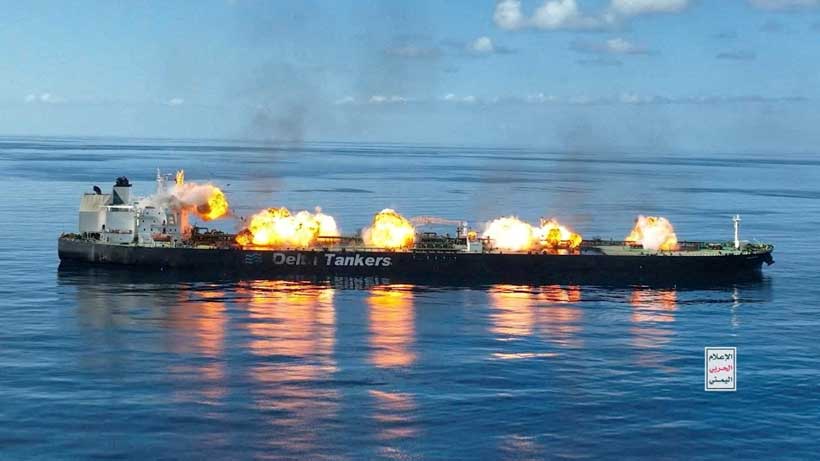
In a statement, Saudi Arabia’s defense ministry said the proposed coalition is intended to “protect international maritime corridors, ensure the security of commercial and energy routes, and strengthen collective maritime defense cooperation” across the Red Sea, Bab el-Mandeb Strait, and Gulf of Aden. The announcement comes as security concerns in the Red Sea continue to mount following months of attacks on commercial vessels linked to the broader conflict involving the United States, Iran, Israel, and Tehran-backed armed groups. The instability has forced many global shipping companies to reroute vessels around the Cape of Good Hope, increasing transport costs and delaying cargo destined for African and European markets. The alliance comes amid increasing maritime security threats and shipping disruptions linked to wider regional conflicts and attacks on commercial vessels.
Why the New Alliance Matters for Africa
For Africa, the new coalition represents more than a military partnership. Four of the participating countries—Egypt, Djibouti, Eritrea, and Somalia—sit along some of the continent’s most strategically important maritime chokepoints, while Sudan’s long Red Sea coastline provides another critical link between North and East Africa.
The Bab el-Mandeb Strait, located between Djibouti, Eritrea, and Yemen, is one of the world’s most important shipping bottlenecks, connecting the Red Sea to the Gulf of Aden and the Indian Ocean. Any disruption along this corridor has immediate consequences for African imports, exports, energy supplies, and food security. Egypt, through the Suez Canal, remains central to global maritime trade. The waterway is one of the country’s largest sources of foreign currency earnings, and prolonged disruptions have already reduced canal revenues as shipping companies diverted vessels away from the Red Sea due to security concerns.
The formation of the coalition also reflects Saudi Arabia’s expanding role as a regional security actor. Beyond safeguarding shipping lanes, Riyadh has invested heavily in Red Sea infrastructure, ports, and logistics while strengthening defense cooperation with neighboring African states. For countries such as Djibouti and Somalia, enhanced maritime coordination could improve efforts to combat piracy, arms trafficking, illegal fishing, and human smuggling—persistent challenges that have undermined security and economic development across the Horn of Africa.
Emerging Challenges and Building Future Perspectives
The principal future challenges include security and geopolitics:
*Maritime Security Risks: Persistent threats from Houthi attacks on commercial shipping continue to disrupt trade through the Bal el-Mandeb Strait and the Suez Canal, forcing ongoing naval deterrence and re-routing around Africa. In terms of logistics expansion, upgrading the regional ports (like Jeddah, Yanbu, and Eilat) is seriously considered a priority to handle growing trade volumes once regional stability returns.
*Regional Coalitions: Egypt, Saudi Arabia, and other coastal states are trying to forge local security architectures to protect vital underwater cables, ports, and energy pipelines from non-state actors and external rivals. Saudi Arabia’s Red Sea project, for instance, and its future coastal developments aim to turn the northern coastline into a global luxury tourism, investment, and economic hub.
*Technological Surveillance: Greater deployment of AI-driven maritime tracking, drones, and unmanned systems is expected to secure commercial lanes. There are also initiatives by groups, such as the Red Sea Global, focusing on renewable energy operations to balance massive infrastructure growth with environmental conservation.
For Africa, particularly the Gulf States and Egypt in North and East Africa, the strongest message is that Africa has to consider the economic potential and protect its resource sovereignty. Africa, simply watching developments in the Red Sea region as a theater, could possibly lose its huge economic opportunity for the continent. The chance is to build a foundation mechanism and design a framework within it to extend this resource for Africa’s development. The Red Sea is constantly a contested geographical space; the key global players and regional powers seek to assert influence, while the African Union only observes the developing consequences.
That, however, the future perspectives appear to blend severe geopolitical and security challenges with potential multi-billion-dollar economic and tourism investments. The corridor faces high risks from ongoing regional conflicts and shipping disruptions, yet littoral states are aggressively pushing ahead with coastal modernization and ecological preservation. In addition, the Red Sea, despite the geographical complexities and geopolitical risks, is still considered to have enormous advantages, making its long-term outlook a high-stakes balance between regional transformation and persistent security crises. The energy infrastructure and green power initiatives combined with the possibility of expanding sustainable local markets. The global powers are interested in naval access and trade routes through strategic ports, turning the coastline into a heavily contested zone. Competing ambitions from regional middle powers (such as the UAE, Saudi Arabia, and Turkey) are shaping the political and military landscape. In practical terms, the Red Sea’s future lies in the collaborative hands of African regional blocs, global powers and the Gulf States.
