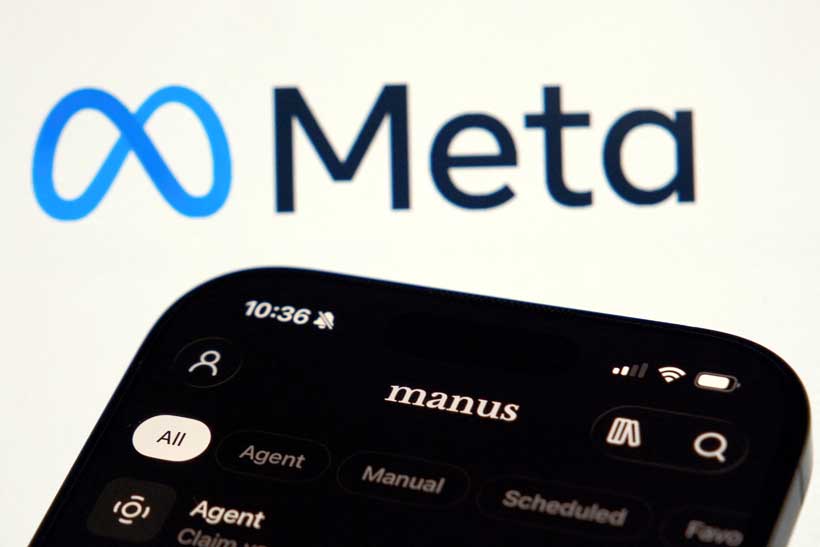
China’s decision to block Meta’s $2 billion acquisition of AI startup Manus has raised concerns for global investors interested in advanced tech firms connected to China. The National Development and Reform Commission (NDRC) ordered the acquisition to be undone under national security regulations for foreign investments that started in 2021. This move signals that Beijing is tightening control over the transfer of Chinese technology and talent to foreign firms without its approval.
Beijing has made it clear that it does not want Chinese AI capabilities sold to American companies. This decision could deter Chinese firms from transferring stakes or assets to foreign investors without explicit permission from the Chinese government. The NDRC emphasized that the concern was not about where Manus was incorporated but about its ties to China in terms of technology and data security.
The controversy surrounding Manus stems from its abrupt separation from China after receiving funding from U. S. investors. Manus, which was recognized as a leader in AI innovation, was developed with the help of Chinese engineers and infrastructure. Following the acquisition announcement, its co-founders, Xiao Hong and Ji Yichao, faced restrictions on leaving China after discussions with regulators.
This incident reflects the challenges for Chinese AI entrepreneurs who may find that their ambitions conflict with the government’s stance on technology. Although Manus did not create its AI models, the Chinese government regards AI as a key sector for national security and is focused on controlling technology and talent outflows. Legal experts suggest that the establishment of a company outside China does not guarantee protection from regulations if it maintains deep ties to China.
Investors in Chinese-founded businesses may now require significant operational separation, including intellectual property rights and research and development relocation, rather than just a change of location. The risks associated with cross-border deals, especially with U. S. buyers, are perceived to have increased due to Chinese regulatory scrutiny.
Meta’s acquisition process was quick, with only a few weeks of due diligence conducted prior to the takeover, and it did not seek approval from Chinese regulators. The founders of Manus believed moving the company to Singapore was essential for its survival amid growing U. S.-China tensions, which angered Chinese officials and led to an investigation that affected other startups.
After the acquisition, Manus became part of Meta, resulting in the exit of its prior investors, including Benchmark Capital and Tencent. The unwinding of the acquisition is expected to be complicated, potentially involving the reversal of equity transfers and the return of funds and intellectual property, which can be challenging in knowledge-intensive sectors.
China’s regulatory actions come as global investors look to invest in AI companies similar to Manus. Any U. S. technology company considering acquisitions of Chinese-founded AI startups will now need to treat the NDRC’s review as a significant risk, regardless of the company’s incorporation location.
With information from Reuters