


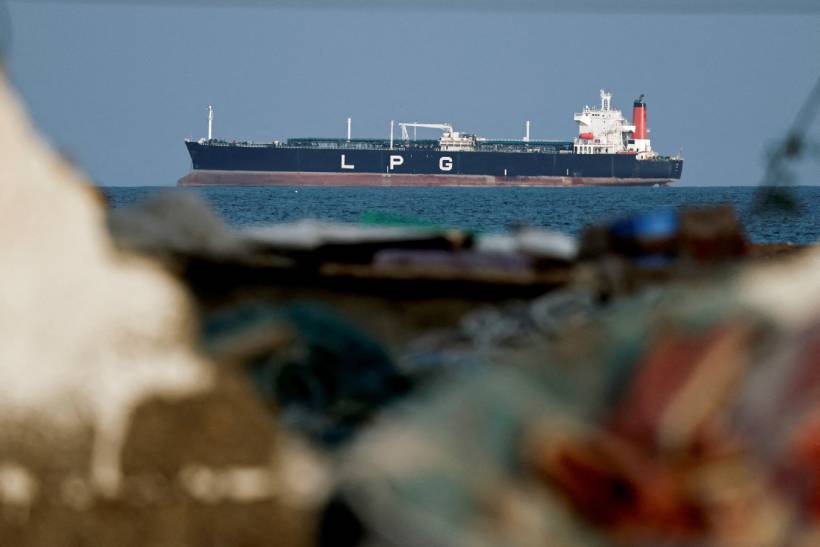
The ongoing conflict involving the United States, Israel, and Iran has triggered what analysts describe as the most significant oil and gas supply disruption in modern history. The scale of the crisis has been driven largely by the closure of the Strait of Hormuz, a critical artery for global energy trade.
According to the International Energy Agency, the current situation represents the most severe global energy crisis when combined with the lingering effects of the 2022 European gas crisis following Russian invasion of Ukraine.
The disruption has reignited comparisons with past energy shocks, including the 1973 oil embargo, the Iranian Revolution, and the Gulf War.
A Broader and More Complex Shock
Unlike earlier crises, the current disruption is not limited to crude oil. It has simultaneously affected natural gas, liquefied natural gas, refined fuels, and even fertiliser supply chains.
Stay ahead of the geopolitical week.
MD Briefing delivers expert analysis across five global fronts — the Indo-Pacific, energy, geoeconomics, European security, and the Middle East — every Monday morning. Free.
This reflects the transformation of global energy markets over recent decades. Increased interdependence, higher demand, and the Middle East’s expanded role in refined fuel exports have created new vulnerabilities. Major refineries in the Gulf region now play a central role in supplying jet fuel and diesel to markets across Europe, Asia, and Africa.
The shutdown of a significant portion of Qatar’s liquefied natural gas production further highlights the scale of disruption, particularly given the far greater global reliance on gas today compared to the 20th century.
Scale of Supply Loss
The current crisis has led to a peak supply loss exceeding 12 million barrels per day, equivalent to roughly 11.5 percent of global oil demand.
This surpasses previous peak disruptions, including
- 4.5 million barrels per day during the 1973 oil embargo
- 5.6 million barrels per day during the Iranian Revolution
- 4.3 million barrels per day during the Gulf War
In terms of immediate daily impact, the Iran war represents the largest oil supply shock on record.
Duration and Cumulative Impact
While the daily disruption is unprecedented, cumulative losses over time provide a more nuanced comparison.
The current conflict, lasting approximately 52 days, has removed an estimated 624 million barrels from global supply. This places it roughly on par with the total losses during the 1973 oil embargo, which ranged between 530 million and 650 million barrels.
However, the Iranian Revolution resulted in far greater cumulative losses over a longer period. Between 1978 and 1981, production declines in Iran led to an estimated loss of over 4 billion barrels, although some of this was offset by increased output from neighboring countries.
A key difference today is that major producers such as Saudi Arabia and the United Arab Emirates are unable to compensate for lost supply due to disruptions in shipping routes through the Strait of Hormuz.
Regional Impact and Market Shifts
The immediate effects of the current crisis have been most pronounced in Asia and Africa, where fuel shortages have begun to emerge. This contrasts with earlier crises, such as the 1973 embargo, which heavily impacted the United States and Western economies, leading to visible shortages and long queues at fuel stations.
The global distribution of energy demand and supply chains has shifted significantly since then, altering how and where the effects of such disruptions are felt.
Comparison with Recent Crises
The energy shock following the Russian invasion of Ukraine also disrupted global markets, particularly in Europe. However, the scale of supply loss was far smaller, with Russian oil output declining by roughly 1 million barrels per day at its peak.
Unlike the current crisis, Russia was able to reroute exports to mitigate long term impacts, limiting cumulative losses.
Analysis
The Iran war energy shock stands apart from previous crises due to its scale, scope, and systemic implications. While earlier disruptions were primarily centered on crude oil, the current crisis affects multiple interconnected energy markets simultaneously, amplifying its global impact.
The inability of alternative suppliers to offset losses marks a critical departure from past crises. During the Iranian Revolution and other disruptions, spare production capacity in neighboring countries helped stabilize markets. Today, logistical constraints such as blocked shipping routes have limited that flexibility.
Another defining feature is the deep integration of global energy systems. Modern supply chains depend not only on raw oil but also on refined fuels and gas, meaning disruptions ripple more widely and more quickly across economies.
At the same time, the comparison with historical crises highlights the importance of duration. While the present shock is unprecedented in daily scale, its long term impact will depend on how quickly supply chains can be restored. If disruptions persist for months or years, cumulative losses could rival or exceed those of the most severe historical events.
Ultimately, the crisis underscores a structural vulnerability in the global energy system. Despite technological advances and diversification efforts, the world remains highly exposed to geopolitical instability in key transit regions.
The situation also reinforces the urgency of transitioning toward more resilient and diversified energy systems. However, as the current crisis demonstrates, that transition is still incomplete, leaving global markets vulnerable to shocks of this magnitude.
With information from Reute
