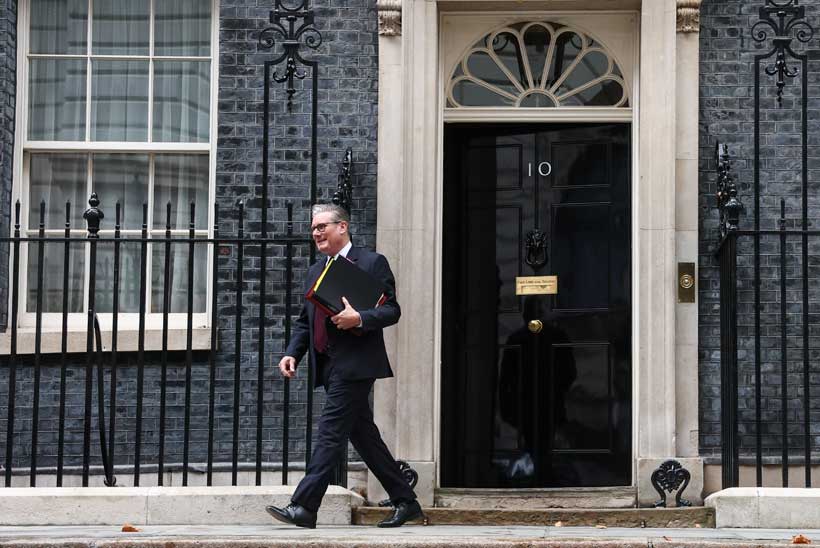
Britain’s cautious response to the rising conflict in the Middle East and its hesitation to defend allies from attacks have raised doubts about its military effectiveness, especially as the U. S. calls for increased rearmament. Former U. S. President Trump criticized Prime Minister Keir Starmer for hindering the historically close relationship between the two countries after Britain denied the U. S. permission to use British bases for pre-emptive strikes on Iran. Cypriot officials have also expressed concern after an Iranian drone hit a British military base on Cyprus, while other countries like France and Greece have provided support. A British destroyer is not set to reach the region until next week.
Starmer defended his decisions, emphasizing that military action would only occur if it is legal and well-planned. British jets have shot down Iranian drones, and Britain has provided aid to allies’ air defense systems. However, the initial response raised alarms about Britain’s military readiness after years of budget cuts. Simon Diggins, a former defense attaché, noted that while Trump may be undiplomatic, Britain has become strategically irrelevant despite having advanced military capabilities.
Britain struggles to define a path for higher defense spending amid increasing tensions with allies. The size of Britain’s army, now its smallest since the Napoleonic Wars, complicates its role as the U. S. ally in Europe. Reports indicate Britain is lagging behind other European nations in rebuilding its military capacity, particularly in armored vehicles and air defense systems. Starmer has criticized previous Conservative governments for underfunding the military and aims to increase defense spending to 2.5% of GDP by 2027, rising to 3% after 2029, although his government has delayed its long-term defense investment plan.
Trump also mentioned that Germany and France are becoming more important partners for the U. S. in Europe. Starmer’s cautious approach may stem from past experiences like the Iraq War, which deeply divided public opinion. Analysts suggest that while Britain cites legal concerns for its restrained military actions, this lack of preparation is a strategic failure, particularly as the U. S. enhances its military presence in the region. Tom Sharpe, a former naval commander, criticized the absence of a British warship in the region, calling this a major military misstep.
This lack of readiness became evident when the Akrotiri base in Cyprus was attacked, and Cypriot officials expressed anger over Britain’s lack of assurance regarding U. S. operations at the base. Despite Trump’s frustration with Starmer and claims that he is “no Winston Churchill,” analysts do not expect this to lead to a significant change in U. S.-British cooperation. Former diplomats and current officials maintain that the two countries will continue to work closely on intelligence matters, indicating the special relationship remains strong. However, the expanding problem in the Middle East means Britain faces pressure not just from the U. S. but also from European partners who expect support for their Gulf allies.
With information from Reuters