


EXECUTIVE TAKEAWAYS
This week, the global economy sent mixed signals. Manufacturing rebounded across key economies as tariff fears eased, but Wall Street seesawed as a sharp gold and silver selloff collided with earnings uncertainty. The Fed’s next chapter took shape with Kevin Warsh’s nomination repricing dollar expectations overnight, while Australia’s RBA restarted its hiking cycle as central banks globally diverged. The U.S. launched a $12 billion minerals stockpile to counter China, Britain deployed $400 million in Ethiopia power deals as migration policy, and India sealed back-to-back trade deals with the EU and U.S. resolving geopolitical isolation but surrendering energy policy to Washington.
The pattern: The thread connecting it all: Warsh reshapes the Fed, Project Vault rearranges supply chains, and India’s deals show how trade now operates on political terms; markets are pricing recovery while the restructuring is happening beneath it.
THE RUNDOWN
1. GLOBAL MARKETS AND MOMENTUM
Global factory activity rebounds as tariff fears ease and Asian exporters lead
Global manufacturing expanded in January as tariff disruptions subsided. Eurozone PMI rose to 49.5 from a nine-month low, U.S. manufacturing hit 52.6—first expansion in 12 months, while Japan and South Korea reached multi-year highs. China’s factory activity expanded faster on rebounding export orders, reinforcing the IMF’s recent growth upgrade and brightening prospects for Asia’s export sectors.
Stay ahead of the geopolitical week.
MD Briefing delivers expert analysis across five global fronts — the Indo-Pacific, energy, geoeconomics, European security, and the Middle East — every Monday morning. Free.
Strategic Impact: The rebound masks fragility built on export surges rather than structural demand recovery. Eurozone growth returning while Germany, Spain, Italy and Austria remain in contraction reveals a two-speed recovery where headline PMIs flatter weakness. If tariff threats resurface or AI demand proves less durable, this reverses quickly, a sentiment bounce, not a sustainable inflection.
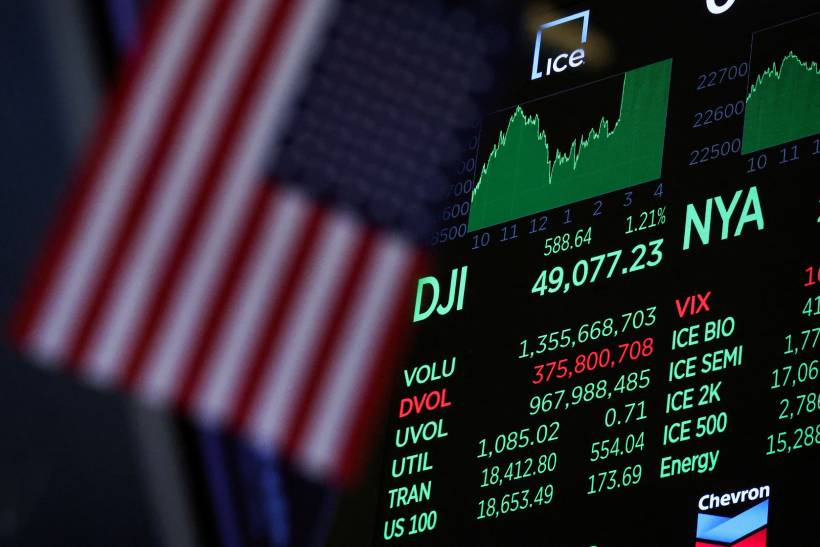
Wall Street seesaws as gold selloff meets earnings week uncertainty
U.S. equities traded mixed as gold dropped 6% and silver 10% before recovering, triggered by CME hiking margin requirements after Friday’s historic plunge. The selloff deepened on Trump’s hawkish Warsh nomination for Fed chair. Energy stocks fell on Iran-U.S. de-escalation while rare earth miners surged on the $12 billion minerals stockpile.
Strategic Impact: The gold selloff reveals how quickly safe-haven positioning unravels on policy shifts. Warsh’s nomination repriced Fed expectations overnight, punishing precious metals and rewarding the dollar, but the reversal speed exposes thin risk frameworks. Investors rotating from macro hedges into earnings optimism is dangerous if results disappoint.
2. CENTRAL BANK POLICY
Dollar firms on Warsh nomination and RBA hike as Fed independence debate looms
The dollar held gains after Warsh’s Fed chair nomination boosted expectations of less aggressive rate cuts, while Australia’s RBA delivered its first hike in two years to 3.85%. U.S. manufacturing’s return to growth added support, though a government shutdown delayed the jobs report. ECB and Bank of England are expected to hold Thursday, while the yen steadied on coordinated intervention hints with the U.S.
Strategic Impact: Warsh’s nomination moved the dollar more than any economic data this week, exposing how politicized Fed leadership has become the primary currency driver. If Warsh signals Powell’s data-driven continuity, the hawkish repricing reverses. Australia’s hiking cycle contrasts with ECB and BoE paralysis, highlighting global central bank divergence that will reshape cross-currency flows and challenge traditional dollar dominance assumptions.
3. SOVEREIGN FINANCE
Trump launches $12 billion minerals stockpile to counter Chinese dominance
The U.S. launched Project Vault, a $12 billion strategic minerals stockpile combining $10 billion in EXIM Bank funding and $2 billion private capital, to secure lithium, nickel, and rare earths against Chinese price manipulation. The initiative targets automakers and tech firms, maintains a 60-day emergency supply, and will be managed by commodities traders Hartree Partners, Traxys, and Mercuria.
Strategic Impact: Project Vault is the U.S.’s most aggressive move to decouple critical supply chains from China, but $12 billion is a fraction of what genuine mineral independence requires. If China retaliates by restricting rare earth exports, this becomes a short-term buffer, not a strategic solution. The real test: whether it catalyzes domestic mining or creates another government reserve that evaporates under market stress.
4. INVESTMENT POWER AND CAPITAL FLOWS
UK signs $400 million Ethiopia power deals as migration concerns drive investment
British government-owned Gridworks signed $400 million in transmission infrastructure deals during Foreign Minister Cooper’s Ethiopia visit, the first public-private partnerships in the country’s power sector. The projects connect regional grids and unlock renewable energy potential, with $23.91 million in technical assistance.
Strategic Impact: Development finance is being weaponized as migration policy: Britain buying Horn of Africa stability through infrastructure rather than addressing migration structurally. The $400 million is significant but modest relative to Ethiopia’s infrastructure gap, raising questions whether this is genuine capacity-building or performative diplomacy.
5. TRADE AND ECONOMIC DIPLOMACY
U.S.-India trade deal slashes tariffs as rupee and stocks surge
The U.S. and India sealed a deal cutting tariffs from 50% to 18%, sending the Nifty 50 surging nearly 5% and the rupee to 90.40, its best day since November 2022. India agreed to halt Russian oil purchases and lower U.S. trade barriers in exchange. Combined with the EU deal days earlier, Citi noted it resolves the “key tail risk of geopolitical isolation” driving record foreign outflows from Indian assets.
Strategic Impact: The deal exposes Trump’s transactional diplomacy, India pays with geopolitical concessions (halting Russian oil) rather than trade adjustments alone. Tariff relief removes a significant economic drag, but the Russian oil condition ties India’s energy policy to Washington’s agenda indefinitely.
WATCH THIS SPACE
The week’s tension: economic recovery signals versus deepening political interference in the systems sustaining them. Manufacturing is rebounding but the rebound is front-loaded and fragile. Warsh’s nomination is the most consequential move, if he signals dovish continuity, the hawkish repricing reverses overnight. China’s response to Project Vault will reveal whether the minerals war escalates into export restrictions or settles into an arms race. India’s dual deals are the clearest example of Trump’s diplomacy: transactional compliance disguised as partnership. Markets are betting on stability, but the hands shaping it are less predictable than any data point.
This briefing is based on information from Reuters.
