


Indian financial markets rallied sharply on Tuesday after a trade deal with the United States slashed U.S. tariffs on Indian goods to 18% from 50%, easing a major source of pressure on the country’s stocks, bonds and currency.
Investors said the agreement removed a key overhang that had weighed heavily on Indian assets since Washington imposed the tariffs late last year.
Markets post strongest gains in years
India’s benchmark stock index, the Nifty 50, jumped nearly 5%, placing it about 100 points shy of its record high reached in January. The surge put the index on track for its best one-day gain in five years.
The rupee strengthened more than 1% to 90.40 per dollar in early trading, marking its strongest session since November 2022. Meanwhile, the yield on India’s 10-year benchmark bond fell 5 basis points to 6.72%, reflecting improved sentiment across asset classes.
Stay ahead of the geopolitical week.
MD Briefing delivers expert analysis across five global fronts — the Indo-Pacific, energy, geoeconomics, European security, and the Middle East — every Monday morning. Free.
Deal announced after Trump–Modi call
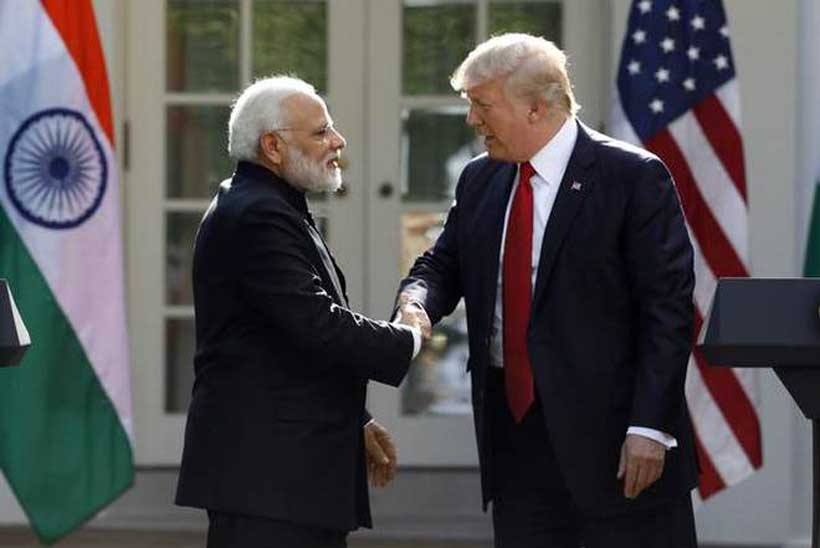
U.S. President Donald Trump announced the trade deal on social media following a call with Indian Prime Minister Narendra Modi.
Trump said India had agreed to halt purchases of Russian oil and to lower trade barriers on U.S. exports as part of the agreement.
Tariffs had battered Indian assets
Indian stocks and the rupee have struggled since the U.S. tariffs were imposed in late August, leaving them among the worst-performing emerging market assets in 2025.
The sell-off was accompanied by record foreign investor outflows, as global funds reduced exposure amid concerns over trade tensions and broader geopolitical risks.
Investors eye return of foreign flows
Market participants said the trade breakthrough could reverse the persistent drag on Indian assets by restoring confidence among foreign investors.
“We believe this trade deal announcement should lift a key overhang on Indian equities,” said Prashant Paroda, a portfolio manager with AllSpring Global’s intrinsic emerging market equities team. He added that foreign investors who had recently been net sellers may now increase their exposure to India.
Geopolitical risks seen easing
The deal is also expected to reduce geopolitical uncertainty linked to the U.S.–India trade rift, which had kept investors cautious about deploying capital in the country.
“The key tail risk of geopolitical isolation about which investors were concerned has now been adequately addressed by back-to-back trade deals with the European Union and United States,” economists at Citi said in a note.
Background: EU deal adds momentum
The agreement with Washington comes less than a week after India signed a long-awaited trade deal with the European Union. That pact is expected to eliminate or reduce tariffs on 96.6% of traded goods by value, further improving India’s trade outlook and strengthening its case with global investors.
Analysis: Relief rally or turning point?
The sharp rally in Indian markets reflects relief as much as optimism. The steep U.S. tariffs had become a central risk factor for investors, amplifying capital outflows and weakening the rupee at a time when global risk appetite was already fragile.
By cutting tariffs and easing geopolitical concerns, the deal restores visibility for Indian exporters and reduces the likelihood of India being sidelined in global trade flows. Combined with the EU agreement, it strengthens India’s positioning as a key alternative manufacturing and investment destination amid global supply-chain realignments.
However, sustaining the rally will depend on whether foreign inflows return in size and whether India can translate improved trade relations into durable export growth. For now, markets appear to be pricing in a meaningful shift from uncertainty to opportunity.
With information from Reuters.
