


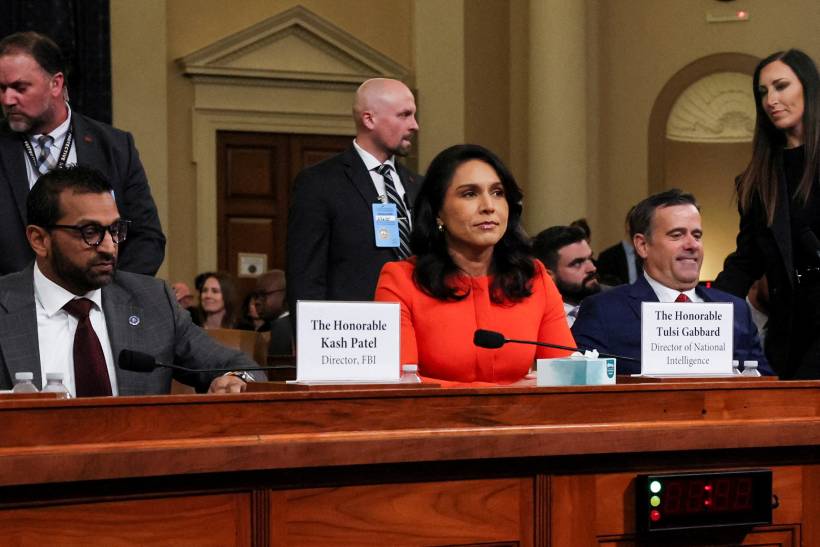
In early April, a team operating under U.S. Director of National Intelligence Tulsi Gabbard arrived unannounced at a classified CIA archival warehouse in the Washington area. Their mission: to take custody of still-classified documents related to the assassinations of John F. Kennedy, Robert F. Kennedy, and Martin Luther King Jr., and transfer them to the National Archives for declassification. The sudden appearance of the ODNI-led group caught CIA personnel by surprise and, according to multiple people familiar with the incident, sparked the most confrontational moment yet in what has been an uneasy relationship between Gabbard’s office and the spy agency. Paul Allen McDonald II, a Defense Intelligence Agency official on temporary assignment to Gabbard, led the effort and told CIA staff the team was acting directly on Gabbard’s orders. Also present was Amaryllis Fox Kennedy, a former CIA officer and daughter-in-law of Robert F. Kennedy Jr., who was granted entry despite lacking formal access credentials. The operation stretched into the early hours of the next morning, ending only after the CIA agreed to transfer a massive trove of documents to the National Archives for digitization.
WHY IT MATTERS
The episode reveals an extraordinary and highly unusual level of friction between the CIA and the Office of the Director of National Intelligence agencies that normally operate in tight coordination. It also underscores the intense pressure inside the intelligence bureaucracy as the Trump administration accelerated efforts to declassify long-sought assassination records, motivated both by presidential directives and political interest among Trump’s base. Gabbard’s team believed the CIA was moving too slowly, especially after a 45-day White House deadline expired in March, and took the rare step of asserting legal authority to remove documents without CIA approval.
This push reflects a broader environment in which conspiracy theories about the Kennedy assassinations retain outsized influence, shaping the expectations of voters and political figures alike. While the newly released documents have so far provided more detail on CIA knowledge of Lee Harvey Oswald, nothing has emerged to challenge the long-held official conclusions yet the public appetite for answers continues to drive high-stakes confrontations inside government.
The CIA and the ODNI sit at the heart of this conflict, each responsible for protecting national security and managing classified material but clearly divided on methods and timing. For Gabbard, the mission aligned with Trump’s executive order to release assassination records and with her public commitment to “hunt” down long-buried files; her office viewed aggressive action as necessary after months of limited progress.
Stay ahead of the geopolitical week.
MD Briefing delivers expert analysis across five global fronts — the Indo-Pacific, energy, geoeconomics, European security, and the Middle East — every Monday morning. Free.
The CIA, by contrast, maintained that it was cooperating and prepared to release documents through established, regulated procedures, emphasizing chain-of-custody and security requirements. Trump and his advisers, including Kennedy family members, played an indirect but influential role, praising the declassification drive and reinforcing political urgency. Meanwhile, the National Archives became the ultimate custodian, tasked with digitizing tens of thousands of sensitive documents and ensuring compliance with legal standards. For the public especially constituencies steeped in decades of theories and suspicions these developments feed longstanding demands for transparency about some of the most scrutinized events in American history.
WHAT’S NEXT
The transfer of documents in April was only one chapter in a broader, ongoing release process. The National Archives has already begun releasing tens of thousands of files, including CIA materials, with more expected as agencies work through Trump’s declassification order. Additional releases concerning the RFK and MLK assassinations are scheduled, though it remains unclear how quickly agencies will move or whether future confrontations will arise if Gabbard’s office again believes cooperation is lagging. The CIA insists it is committed to disclosure within proper procedural safeguards, suggesting a more cautious posture than ODNI’s aggressive approach. Analysts expect the remaining files to add context and detail particularly regarding U.S. intelligence awareness of individuals like Oswald but not to fundamentally alter historical conclusions. Still, the political resonance of the Kennedy assassinations ensures that every release will attract intense scrutiny, and the friction between intelligence agencies suggests that the path to full transparency may remain turbulent.
With information from Reuters.
