


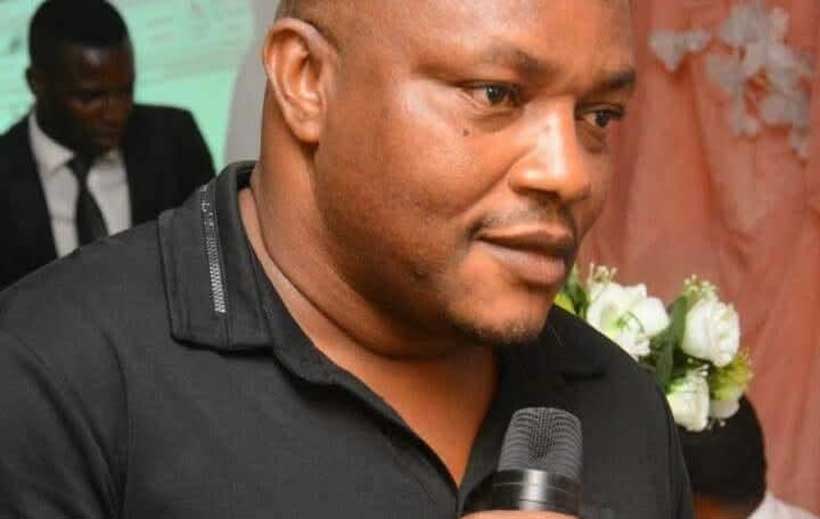
Emeka Umeagbalasi, criminologist and researcher, and head of the International Society for Civil Liberties and Rule of Law, in this interview, explains the practical significance, complex implications, and likely impact of U.S. President Donald Trump and the White House administration’s designation of the Federal Republic of Nigeria as a “Country of Particular Concern.” Umeagbalasi further pointed out the difficulties related to observing religious freedom and tolerance among the population made of Christians and Muslims and concluded that the Federal Republic of Nigeria has already become Africa’s epicenter of Islamic jihadism and terrorism. Here are the interview excerpts:
How would you characterize the situation between Christians and Muslims in the Federal Republic of Nigeria?
Emeka Umeagbalasi: Nigeria is a country where the central government and several northern states with majority Muslims have been making it very difficult for religious freedom and tolerance to reign, especially since the Boko Haram Islamic uprising of July 2009. A country with a slight majority Christian population and Christianity-affiliated others, with about 108m Muslim population out of the UN’s projected population of about 238m as of Sept 2025; yet Muslim leaders, starting from Buhari (May 2015-May 2023), had made it difficult for religious freedom and tolerance to be observed, applied, and protected. This is despite the secularity of the country, clearly provided in Nigeria’s 1999 Constitution. Discrimination against Christians and their sacred places of worship has been commonplace and is inching toward the nadir of implosion. As a matter of fact, Nigeria is already marching toward a “homogenous Islamic Sultanate,” aggressively and systematically pursued through state-aided killings and property destruction in the past sixteen years targeted at Christians and their places of worship and other properties.
Do you consider U.S. President Donald Trump’s proposed action as appropriate for Nigeria?
Stay ahead of the geopolitical week.
MD Briefing delivers expert analysis across five global fronts — the Indo-Pacific, energy, geoeconomics, European security, and the Middle East — every Monday morning. Free.
Umeagbalasi: The word “if…” should be underlined here, meaning that Nigerian leaders are still allowed a chance to fix the issue and stop beating about the bush, including engaging in serial denials and well-funded falsehood and propaganda using serially borrowed public funds. I think that the Nigerian government must not allow the “if…” to elapse without swiftly getting back to the drawing board and speedily fixing the problem. It is by so doing that the US President and its proposed action could justifiably take place within the confines of citizens’ sovereignty or sovereignty as citizens’ protection responsibility. With the country’s explosive projected population of 238m, going by the September 2025 UN estimates, the country must not be allowed to explode into complex humanitarian emergencies or ethno-religious genocide. This is because such humanitarian catastrophes, if allowed, will envelop the entire world, with no escape routes for members of the comity of nations presently sitting idly and watching, other than the Americans.
What are your assessments, likely impact, and implications, particularly for Nigeria and, generally, for Africa?
Umeagbalasi: The impact and the implications mainly depend on the handling styles applied and the circumstances of such application. The truth is that Nigeria has already become Africa’s epicenter of Islamic jihadism and terrorism. Experts have observed lately that Nigeria is seriously under siege by Islamic Jihadists from Black and Maghreb Africa, with over 22 groups in number, and that “five Islamic Jihadists from Sahel cross into Nigeria every 24 hours, armed with illicit automatic rifles and their ammunition.” Securing peace in Nigeria is securing peace in all of Africa, and doing otherwise is like planting explosives all over the continent. We are statistically aware that out of Nigeria’s 36 states and Abuja, Islamic Jihadists have placed at least 35 states and interior parts of Abuja under siege, hiding in many of the country’s mapped 11,129 forests mainly found in the country’s rainforests dominantly populated by Christians and allied others.
