


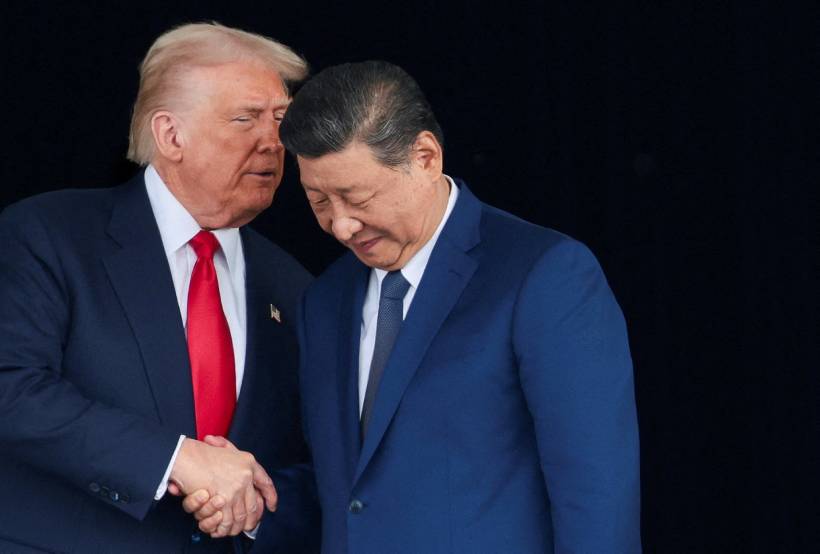
U.S. President Donald Trump announced on Thursday that he would reduce tariffs on Chinese goods to 47%, following what he called an “amazing” meeting with Chinese President Xi Jinping in Busan, South Korea. The move marks a major shift in U.S.-China trade relations and concludes Trump’s fast-paced Asia tour, during which he also claimed new trade gains with South Korea, Japan, and Southeast Asian nations.
The two-hour meeting between Trump and Xi their first face-to-face encounter since 2019 took place on the sidelines of the Asia-Pacific Economic Cooperation (APEC) summit. The agreement reportedly includes Chinese commitments to resume large-scale purchases of U.S. soybeans, maintain exports of rare earth minerals vital for global manufacturing, and curb the illicit trade of fentanyl a synthetic opioid blamed for tens of thousands of deaths in the United States.
Why It Matters
The tariff cut signals a potential thaw in a trade war that has reshaped global supply chains and dampened investor confidence for years. Trump’s decision to lower duties from 57% to 47% could ease pressure on American importers and consumers, while giving Beijing an incentive to keep rare earth exports and agricultural trade flowing.
However, markets reacted with mixed emotions. Global stocks and commodity prices fluctuated sharply as details of the deal emerged, with China’s Shanghai Composite Index slipping from a 10-year high and U.S. soybean futures weakening. Analysts warn that while the announcement may calm immediate tensions, deeper structural rivalries from technology to security remain unresolved.
Stay ahead of the geopolitical week.
MD Briefing delivers expert analysis across five global fronts — the Indo-Pacific, energy, geoeconomics, European security, and the Middle East — every Monday morning. Free.
For Trump, the announcement is a political victory he can showcase as proof of his ability to extract concessions from Beijing. For China, it offers breathing space to stabilize an economy facing slowing growth and ongoing U.S. scrutiny over industrial and military policies.
The United States and China remain the central players in this fragile trade détente. Washington’s decision affects a tariff regime that covers hundreds of billions of dollars in goods, from electronics to consumer products. American farmers, particularly soybean growers, stand to benefit from China’s renewed import pledges.
Beijing, meanwhile, gains continued access to U.S. markets and the ability to maintain its dominance in the rare earth sector, a key leverage point in global technology production. Yet both governments face domestic pressure Trump from American manufacturers demanding tariff relief, and Xi from Chinese industries wary of overreliance on U.S. demand.
Investors, exporters, and multinationals that depend on stable trade flows are watching closely. Many fear that the agreement may prove temporary if political or security tensions flare again.
What’s Next
The coming weeks will test whether the tariff reduction translates into real economic relief or merely a temporary truce. U.S. and Chinese trade negotiators are expected to formalize the framework agreed upon in Busan, outlining enforcement mechanisms and timelines for tariff adjustments.
While Trump hailed the meeting as “amazing,” analysts caution that lingering mistrust and competing strategic interests could quickly reignite trade friction. Beijing’s promises to curb fentanyl exports and keep rare earths flowing will face scrutiny from Washington, and any sign of noncompliance could prompt Trump to restore higher tariffs.
For now, both leaders appear eager to project success but the fragility of this agreement suggests the world’s two largest economies remain far from a lasting peace in their long-running trade war.
With information from Reuters.
