


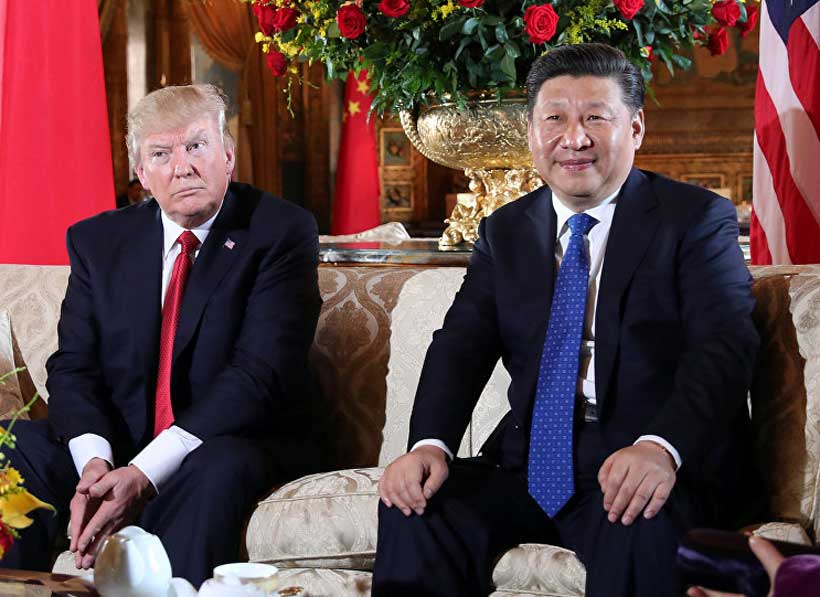
Taiwan’s Foreign Minister Lin Chia-lung voiced confidence on Thursday in Taipei’s relationship with Washington, just hours before U.S. President Donald Trump met Chinese President Xi Jinping in South Korea. The meeting, held on the sidelines of the Asia-Pacific Economic Cooperation (APEC) summit in Busan, drew global attention amid speculation that the sensitive issue of Taiwan might arise during the leaders’ talks.
Since taking office earlier this year, Trump has sent mixed signals about his Taiwan policy. While he has claimed Xi assured him that China would not invade during his presidency, Trump has not approved any new U.S. arms sales to Taipei a departure from Washington’s traditionally robust, if unofficial, support for the island. This uncertainty has fueled anxiety in Taiwan that Trump might trade away its interests in pursuit of a broader U.S.-China deal.
Why It Matters
The meeting between Trump and Xi comes at a delicate time for cross-strait relations. China has intensified both diplomatic and military pressure on Taiwan, renewing its offer of “one country, two systems” while warning that it will not rule out the use of force. Taipei, under President Lai Ching-te, has firmly rejected the proposal and reiterated its commitment to preserving Taiwan’s sovereignty and democratic identity.
For Washington, the handling of Taiwan is a litmus test of its credibility in Asia. Any perceived weakening of U.S. commitment could embolden Beijing and unsettle regional allies such as Japan and the Philippines. Conversely, a reaffirmation of U.S. support would signal continuity in the long-standing policy of deterring Chinese aggression without formally recognizing Taiwan as a state.
Stay ahead of the geopolitical week.
MD Briefing delivers expert analysis across five global fronts — the Indo-Pacific, energy, geoeconomics, European security, and the Middle East — every Monday morning. Free.
Taiwan remains at the center of one of the world’s most dangerous geopolitical flashpoints. Its democratically elected government, led by President Lai, insists on maintaining the island’s de facto independence and defending the status quo in the Taiwan Strait. The United States, while bound by the Taiwan Relations Act to provide defensive support, balances that commitment against its broader strategic interests with China.
Beijing, meanwhile, continues to assert sovereignty over the island, describing reunification as a “historical inevitability.” In recent weeks, it has increased both military patrols and propaganda aimed at pressuring Taipei into talks. Within Taiwan, all major political parties oppose the “one country, two systems” formula, viewing it as a threat to democracy and freedom especially after Beijing’s crackdown in Hong Kong.
What’s Next
After his meeting with Xi, Trump told reporters that Taiwan “never came up,” a remark likely to be parsed carefully in both Taipei and Beijing. For Taiwan, that omission may bring temporary relief but little reassurance about Washington’s long-term intentions. The island’s leadership is expected to continue strengthening defense ties and communication channels with the U.S. while maintaining vigilance against any shifts in American policy.
As China presses ahead with its campaign for “reunification,” Taiwan’s government has vowed to defend peace and stability in the Taiwan Strait. With tensions simmering and U.S. diplomacy in flux, the coming months will test whether Taipei’s confidence in Washington’s support is well-founded or the calm before a new storm in cross-strait relations.
With information from Reuters.
