


As the U.S. raises costs for foreign skilled workers, Beijing is seizing the opportunity with its new K visa program designed to lure international STEM talent and reshape the global competition for brains.
The Context: A Tale of Two Visa Systems
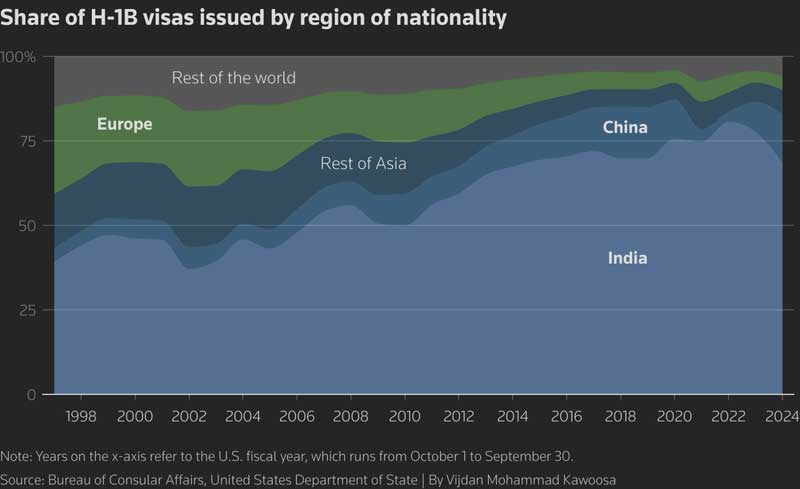
Washington’s decision to hike H-1B visa fees to $100,000 annually has triggered alarm among tech firms and aspiring foreign workers. At the same time, China is rolling out the K visa, offering young science and technology graduates entry, residence, and employment opportunities without the need for a job offer. The symbolism is striking: while the U.S. tightens the gate, Beijing is swinging it open.
Timing and Symbolism
The launch comes as China faces economic uncertainty, rising U.S. tariffs, and slowing foreign investment. By unveiling the K visa now, Beijing signals not just policy flexibility, but a willingness to compete head-on in the global talent marketplace. The message is clear: China wants to project itself as open, welcoming, and future-focused.
The Fine Print: Questions Without Answers
Despite the bold announcement, critical details remain vague. Requirements on age, education, and work experience are unspecified. The program also leaves unanswered whether it will offer permanent residency pathways, family sponsorship, or financial incentives. And unlike the U.S., China does not offer citizenship to foreigners, except in rare cases. This uncertainty could deter serious long-term applicants.
Stay ahead of the geopolitical week.
MD Briefing delivers expert analysis across five global fronts — the Indo-Pacific, energy, geoeconomics, European security, and the Middle East — every Monday morning. Free.
Who Stands to Gain or Lose?
China’s Tech Sector could benefit from a small but skilled influx of global talent, especially in AI, semiconductors, and green tech.
Indian STEM Graduates a key pool of potential applicants, though strained Sino-Indian ties may complicate acceptance.
U.S. Tech Firms risk losing part of their talent pipeline if workers turn away from H-1Bs.
Other Nations like Germany, South Korea, and New Zealand, also loosening visa rules, are in the same race to capture frustrated STEM talent.
The Barriers China Must Overcome
Language: Most Chinese firms operate in Mandarin, making integration difficult for non-speakers.
Geopolitics: India-China tensions could limit Beijing’s willingness to accept large numbers of Indian applicants.
Cultural Fit: China’s history of relying on domestic rather than foreign talent means the K visa may remain more symbolic than transformative.
Implications
Even if uptake is modest, the K visa is geopolitically powerful. If Beijing can attract even a fraction of global tech workers, it could gain ground in high-value industries where competition with the U.S. is most fierce. Equally important is the narrative Beijing positions itself as lowering barriers, while Washington appears to be raising them.
Analysis: A Bold Experiment With Limited Reach
The K visa is clever geopolitics, but it may not rewrite global talent flows overnight. China’s restrictive immigration culture, language barriers, and political frictions will limit its pull compared to Western destinations. Yet in a world where perception matters, Beijing has played its hand well: at a time when the U.S. looks insular, China is projecting openness. Even if the policy attracts only hundreds rather than thousands, its symbolic value in the U.S.-China rivalry is undeniable.
With information from Reuters.
