


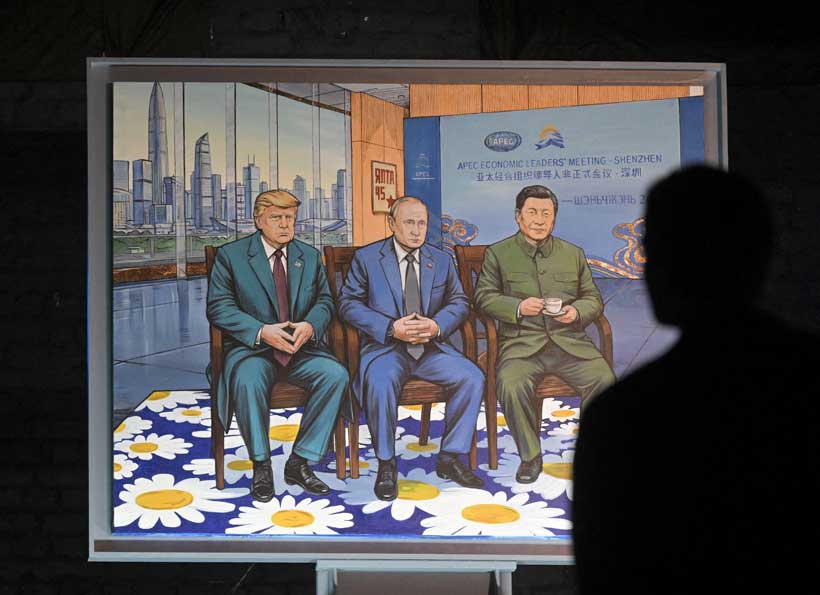
The planned meeting between Chinese President Xi Jinping, US President Donald Trump and Russian President Vladimir Putin in Shenzhen could mark a significant moment in international diplomacy, bringing the leaders of the world’s three major powers together for their first face-to-face trilateral discussions. Beijing has described the gathering as having “groundbreaking significance,” arguing that stronger communication among the three countries could help promote global stability and manage major-power tensions.
The meeting is scheduled for Thursday on the sidelines of the Asia-Pacific Economic Cooperation (APEC) summit in China’s southern technology hub of Shenzhen. Its significance extends beyond the symbolism of bringing the three leaders together: their countries are central to some of the world’s most consequential geopolitical, security and economic challenges.
Why Is the Meeting Being Described as Groundbreaking?
Chinese Foreign Ministry spokesperson Mao Ning said on Monday that this would be the first face-to-face meeting among the heads of state of China, Russia and the United States.
According to Mao, the leaders are expected to exchange views on safeguarding world peace and promoting strategic stability in relations among major powers. She described the gathering as an important opportunity to strengthen communication, manage differences and stabilise relations.
Stay ahead of the geopolitical week.
MD Briefing delivers expert analysis across five global fronts — the Indo-Pacific, energy, geoeconomics, European security, and the Middle East — every Monday morning. Free.
Beijing’s emphasis on cooperation reflects its argument that the three countries have a shared responsibility to address international challenges. Mao said stronger communication among Washington, Beijing and Moscow would serve the interests of all three countries while meeting the expectations of the international community.
However, the Chinese statement did not specify which issues the leaders would discuss or whether the meeting would produce any concrete agreements.
Three Powers, Different Strategic Priorities
The gathering brings together leaders whose countries have significant influence over international security and the global political order, but whose strategic priorities frequently diverge.
Washington’s relations with Beijing remain shaped by competition over trade, technology, military influence and regional security. The United States continues to view China’s growing economic and military capabilities as a major strategic challenge, while Beijing opposes what it considers efforts to restrict its development and international influence.
Relations between Washington and Moscow also face substantial challenges, particularly over European security and the conflict in Ukraine. Russia’s confrontation with Western governments has placed its relationship with the United States under considerable strain.
Meanwhile, China and Russia have strengthened their strategic partnership through diplomatic coordination, economic cooperation and shared opposition to aspects of the US-led international order. Although their interests overlap in several areas, the relationship does not eliminate their separate national priorities.
Bringing all three leaders into the same meeting could therefore provide an opportunity to address tensions that are difficult to manage through separate bilateral channels.
What Could the Meeting Mean for Global Stability?
The most important potential outcome may be the establishment of more regular communication among the three governments.
Major-power competition can increase the risk of miscalculation, particularly when disagreements involve military deployments, strategic weapons and regional conflicts. Direct discussions between national leaders could help clarify intentions and reduce the possibility that political or military developments escalate into wider confrontations.
For Beijing, the meeting also offers an opportunity to present China as a supporter of diplomatic engagement and international stability. By emphasising cooperation among major powers, Chinese officials are signalling that global challenges cannot be addressed effectively without communication between Washington, Beijing and Moscow.
For the international community, the significance will depend on whether the meeting moves beyond diplomatic statements. Countries affected by geopolitical competition will be watching for indications of greater predictability in relations among the three powers.
What Happens Next?
The agenda remains unclear, with China’s Foreign Ministry providing no specific details about the subjects expected to be discussed. It is therefore uncertain whether the leaders will address particular regional conflicts, strategic security concerns or broader questions about international cooperation.
The meeting should also not be interpreted as evidence that the three countries are approaching a common strategic position. Their competing interests and unresolved disagreements remain substantial.
Nevertheless, the planned gathering represents an unusual diplomatic opportunity. Its success will depend less on the symbolism of the three leaders meeting and more on whether their discussions produce practical channels for communication, help manage differences and reduce tensions.
For now, Beijing is presenting the encounter as a contribution to world peace and strategic stability. Whether that ambition translates into meaningful diplomatic progress will become clearer after the leaders meet in Shenzhen.
With information from Reuters.
