


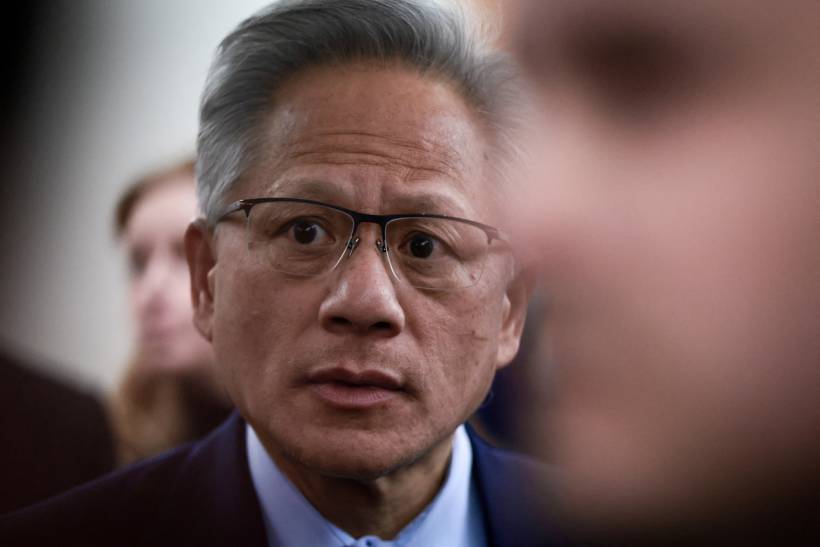
US President Donald Trump’s close relationship with former Nvidia CEO Jensen Huang is facing renewed scrutiny following revelations about Huang’s personal relationships, including an alleged affair with a businesswoman suspected by US authorities of having links to Chinese intelligence. Huang resigned on November 12 and is facing an FBI investigation and congressional scrutiny, placing his previous interactions with the president under a new spotlight.
Over the past two years, Huang had become an influential figure in Trump’s technology and artificial intelligence agenda. He repeatedly met the president, publicly supported aspects of the administration’s AI strategy and lobbied for greater access to the Chinese market for Nvidia’s advanced chips.
Their relationship also developed as Washington debated how to balance commercial opportunities with national security concerns over China’s access to advanced semiconductor technology. The following timeline outlines their publicly known interactions since Trump returned to the White House in January 2025.
January to August 2025: Early Meetings and AI Cooperation
January 2025: Trump met Huang during the first month of his return to the White House. The president described the interaction positively, marking an early meeting between the administration and one of the most influential executives in the global technology industry.
Stay ahead of the geopolitical week.
MD Briefing delivers expert analysis across five global fronts — the Indo-Pacific, energy, geoeconomics, European security, and the Middle East — every Monday morning. Free.
July 2025: Huang visited the White House to meet Trump before travelling to China. Later that month, Trump publicly praised the Nvidia chief during an AI summit, asking him to stand and acknowledging his contribution to the technology industry.
“He’s a great guy too,” Trump said, highlighting the increasingly visible relationship between the president and the semiconductor executive.
August 2025: Huang returned to the White House for another meeting as Nvidia and the Trump administration discussed whether advanced AI chips could be sold to Chinese customers. The talks reflected a wider policy debate over whether maintaining access to US technology could limit China’s incentives to develop competing alternatives.
September to December 2025: Huang Becomes a Regular Presence
September 2025: Huang joined Trump during the president’s state visit to Britain, further demonstrating his growing presence in the administration’s international technology and business engagements.
November 2025: Huang attended a US-Saudi Arabia investment forum in Washington during Saudi Crown Prince Mohammed bin Salman’s first visit to the US capital since 2018. He addressed the future of artificial intelligence, highlighting the importance of the technology to international investment and economic development.
December 2025: Trump praised Huang again during a White House meeting. The president said the Nvidia executive understood his position on export controls, an issue that had become central to the company’s efforts to maintain access to the Chinese market.
Huang also met US lawmakers that day and argued that individual state-level regulations could slow AI development in the United States. His comments reflected the industry’s preference for a more consistent national approach to technology regulation.
January to May 2026: Nvidia’s China Business and White House Influence
January 2026: The Trump administration began permitting certain exports of Nvidia’s powerful H200 AI chips to China on a case-by-case basis. However, restrictions remained in place for organisations included on Washington’s trade restriction lists.
The decision reflected the administration’s attempt to balance commercial interests with national security concerns. Huang had consistently argued that continued US chip sales could keep Chinese customers dependent on American technology rather than encouraging them to turn to domestic alternatives.
March 2026: The White House announced Huang’s appointment to a 13-member advisory body formally known as the President’s Council of Advisors on Science and Technology. The council was established to provide input on AI policy and other scientific and technological issues.
The appointment further strengthened Huang’s access to senior policymakers at a time when the United States was competing with China for leadership in advanced AI.
May 2026: Huang joined a delegation of technology executives accompanying Trump on his visit to China for talks with President Xi Jinping. The president had invited Huang to join the trip at the last minute, and the Nvidia chief was spotted boarding Air Force One during a refuelling stop in Alaska.
The visit was part of Trump’s effort to encourage Beijing to open its market to American businesses. Huang’s inclusion underlined the importance of semiconductor trade and technology cooperation in the wider US-China relationship.
September to October 2026: AI Safety and Personal Recognition
September 2026: Trump said Huang was among several AI executives who had signed a voluntary safety agreement and supported the expansion of data centres.
Huang met the president at the White House on September 29 alongside other technology executives. Trump described the agreement as “morally binding”, although critics questioned its effectiveness because it did not establish clear consequences for companies that failed to comply.
The meeting followed Huang’s attendance at a high-profile state dinner for Xi Jinping at the White House the previous week.
Earlier in September, Huang had addressed AI safety concerns at a summit in Los Angeles. During the event, he took a telephone call from Trump and placed the president on speaker for the audience. In the roughly five-minute conversation, Trump dismissed concerns about AI safety as a “hoax”.
October 2026: Trump awarded Huang the National Medal of Science, the United States’ highest honour for scientists and engineers, alongside other technology industry figures.
On the same day, Trump disclosed that he had bought up to $1.6 million and sold up to $1 million in Nvidia stock during the summer of 2026.
Separately, The Washington Post reported in mid-October that Nvidia had committed $25 million towards Trump’s planned White House ballroom.
These developments brought additional attention to the relationship between the administration, major technology companies and the president’s personal financial disclosures.
November 2026: Allegations, FBI Scrutiny and Huang’s Resignation
November 2026: Huang’s relationship with Trump came under renewed scrutiny after revelations about an alleged affair with Alice Huang, an unrelated former executive of Singapore-based company Megaspeed. US authorities suspected the businesswoman of being a Chinese spy, although the allegations remain distinct from any established finding of wrongdoing by Jensen Huang.
On November 9, Trump said he had spoken with the Nvidia executive about the allegations. According to the president, Huang denied knowing that the woman was suspected of being a spy, and Trump said he believed him.
“I asked him that question, ‘Did you have any idea that she was a spy?’ He said, ‘I had no idea that she was a spy’ and I really believe him,” Trump told a White House briefing.
Trump also acknowledged that the FBI was examining the matter but expressed confidence that Huang would emerge in good shape.
On November 12, following Huang’s resignation, Trump described the development as sad and called him a tremendous talent. The president said he had spoken with Huang the previous day, adding that the executive was “going through hell”.
The New York Times subsequently reported that Trump had called Huang on November 10 and encouraged him to fight for his position.
What Happens Next?
Huang’s resignation marks a significant development for Nvidia and raises questions about the future of its engagement with Washington at a time when semiconductor exports remain central to US-China competition.
The FBI investigation and congressional hearings will be important in determining the extent of the allegations and whether they have implications for national security or corporate governance. It is important, however, to distinguish allegations concerning Huang’s personal relationships from any proven misconduct.
Trump’s close association with the former Nvidia chief is also likely to attract further attention. Their repeated meetings, Huang’s appointment to a presidential advisory council and their shared interest in the future of AI exports demonstrate how closely technology executives have become involved in US economic and strategic policymaking.
The wider issue extends beyond one executive. As Washington seeks to preserve its lead in artificial intelligence while restricting China’s access to advanced chips, the relationship between government officials and major technology companies will remain under intense political and national security scrutiny.
With information from Reuters.
