


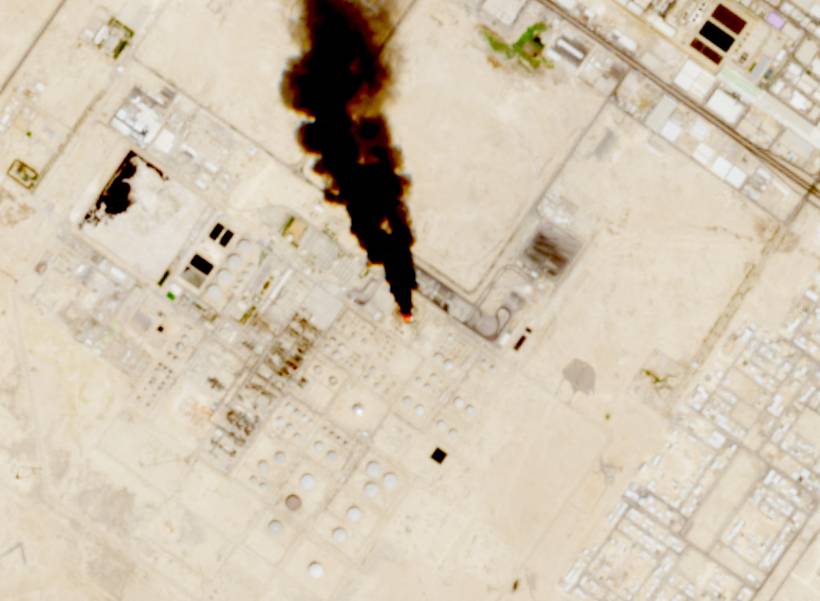
Saudi Arabia and Yemen’s Iran-aligned Houthi movement have entered another period of heightened military confrontation, with the Saudi-led coalition reporting multiple missile and drone interceptions across the kingdom while Houthi-controlled media reported Saudi airstrikes on the capital, Sanaa.
The latest exchanges highlight growing security risks for Saudi Arabia, particularly around its southern border and energy infrastructure. They also raise concerns about the potential impact on regional stability and shipping through the Red Sea, as tensions intensify near the strategically important Bab el-Mandeb Strait.
Saudi Arabia Intercepts Missiles Targeting Riyadh and Southern Regions
The Saudi-led coalition said its air defences intercepted two missiles launched towards Riyadh, including a ballistic missile and a cruise missile. Saudi Civil Defence had earlier issued an early-warning alert for the capital before announcing that the threat had passed.
In a separate incident, the coalition reported intercepting and destroying another ballistic missile fired towards southern Saudi Arabia, which shares a border with Yemen.
Stay ahead of the geopolitical week.
MD Briefing delivers expert analysis across five global fronts — the Indo-Pacific, energy, geoeconomics, European security, and the Middle East — every Monday morning. Free.
Authorities had previously issued warnings for the southwestern cities of Abha and Khamis Mushait, but later confirmed that the immediate danger had passed.
The coalition subsequently reported destroying a drone over Saudi Arabia’s Eastern Province, an economically critical region that contains much of the kingdom’s oil and gas reserves.
The incidents demonstrate the geographic reach of the latest attacks, with threats reported near the capital, along the southern border and over the country’s principal energy-producing region.
Houthi Media Reports Saudi Airstrikes on Sanaa
While Saudi Arabia reported intercepting incoming missiles and drones, the Houthi-run Saba news agency reported that Saudi forces had carried out airstrikes on targets in Sanaa.
According to Saba, the strikes hit the al-Mufazir gas station in the Jadar district north of the capital and a building belonging to Yemen’s state oil company in southern Sanaa.
The agency later reported that civil defence teams were working to extinguish a fire involving gas trailers at the station.
Saudi authorities had not immediately confirmed the reported airstrikes. The Houthis, meanwhile, had not immediately claimed responsibility for the missile and drone launches directed at Saudi territory.
The conflicting accounts underline the difficulty of independently establishing the full scale and sequence of military activity during the latest escalation.
Why Saudi Arabia’s Eastern Province Is a Strategic Target
The reported drone interception over the Eastern Province is particularly significant because of the region’s importance to Saudi Arabia’s energy sector.
The province contains the majority of the kingdom’s oil and gas reserves and hosts the headquarters of Saudi Aramco, the state-owned energy giant. It has faced repeated Houthi attacks in recent weeks, including an October strike that caused extensive damage to Aramco’s headquarters.
Southern Saudi Arabia has also experienced repeated missile and drone attacks targeting military positions and energy infrastructure.
These developments expose the vulnerability of critical infrastructure to cross-border attacks. Even when air defences successfully intercept incoming weapons, repeated threats can create uncertainty for energy operations, investment and regional economic activity.
For Saudi Arabia, protecting energy facilities is not simply a military priority. The security of its oil and gas infrastructure is central to its economic stability and international energy commitments.
Bab el-Mandeb Adds a Wider Regional Dimension
The latest confrontation comes after the Houthis advanced towards the Bab el-Mandeb Strait in September, intensifying concerns over security around one of the world’s most important maritime chokepoints.
The strait connects the Red Sea with the Gulf of Aden and provides a major route for international shipping between Europe and Asia. Any sustained escalation in the surrounding area could increase risks for commercial vessels and disrupt regional trade.
The Houthis’ reported attacks on Saudi airports, ports and energy facilities, alongside Saudi airstrikes against Houthi positions, suggest that the confrontation is extending beyond isolated border incidents.
The strategic importance of the Red Sea also means that developments in Yemen cannot be viewed solely as a domestic conflict. Military activity around the Bab el-Mandeb could have wider implications for international shipping, energy transportation and the security interests of regional and global powers.
What Happens Next for Saudi Arabia and the Houthis?
The immediate question is whether the latest exchanges will remain limited or develop into a more sustained campaign against military and economic infrastructure.
Saudi Arabia’s ability to intercept incoming missiles and drones will remain central to its defence strategy, but repeated attacks could increase pressure for further military action inside Yemen. At the same time, strikes on energy facilities and other civilian infrastructure risk widening the consequences of the confrontation.
The lack of immediate confirmation from Saudi authorities regarding the reported Sanaa strikes, alongside the Houthis’ failure to claim responsibility for the latest launches, leaves important questions about the sequence of events unresolved.
For regional governments and international shipping operators, the growing military activity presents a renewed warning about instability around the Red Sea. If the escalation continues, the consequences could extend beyond Saudi Arabia and Yemen, placing additional pressure on maritime security and an already fragile regional environment.
With information from Reuters.
