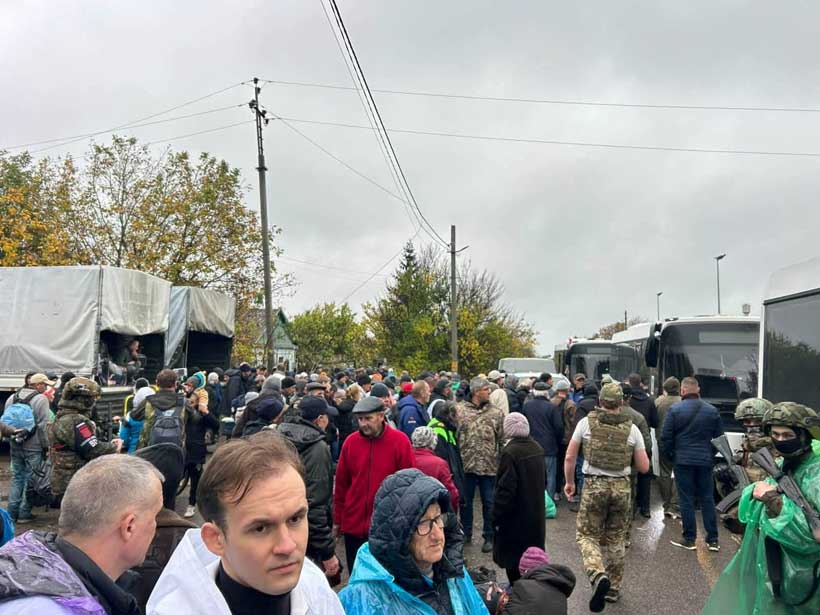
Residents of the Russian-held town of Oleshky in southern Ukraine began evacuating on Friday, marking the first joint humanitarian operation between Russia and Ukraine in nearly five years of conflict. This operation involved significant coordination and was linked to efforts that included US First Lady Melania Trump and Pope Leo. The primary goals for Russia and Ukraine are the safe evacuation of Oleshky’s residents and to demonstrate their commitment to a peace settlement to US President Donald Trump. Both sides aim to avoid blame in case of issues during this operation, as it could impact Trump’s image as a peacemaker ahead of the US midterm elections.
Despite this operation, Russia and Ukraine still have major disagreements about how to end the conflict, and a speedy resolution is not expected. Both sides want to keep Trump engaged in the peace process because even if his party performs poorly in the elections, he will remain president for two more years, influencing future actions regarding Ukraine. Moscow hopes Trump can persuade Kyiv to agree to terms that favor Russian interests, such as full control over Ukraine’s Donbas region and preventing Ukraine from joining NATO. Meanwhile, Kyiv seeks to ensure continued US military support and intelligence sharing.
Both Moscow and Kyiv have been vocal in commending Melania Trump’s role in facilitating this operation to win favor with the US president. Russian President Vladimir Putin credited her influence in securing the ceasefire, while Ukrainian human rights officials also expressed appreciation for her commitment to the humanitarian efforts.
The International Committee of the Red Cross has stated it was not asked to assist in the operation, but is ready to help if needed. UN officials noted they have not received requests to monitor the operation, highlighting that the absence of UN involvement raises questions, particularly since Oleshky is internationally recognized as Ukrainian territory. Advocacy for adherence to international law during the evacuation remains crucial, though the involvement of human rights commissioners from both countries is seen as a positive sign.
Stay ahead of the geopolitical week.
MD Briefing delivers expert analysis across five global fronts — the Indo-Pacific, energy, geoeconomics, European security, and the Middle East — every Monday morning. Free.
Kremlin statements indicate that this humanitarian effort may be unique without suggesting it could lead to broader collaborations in the peace process. The ceasefire, currently limited to the Kherson region, will end soon, and fighting continues in other affected areas. Talks are set for next month, but recent military tensions, including Ukrainian drone attacks, cast uncertainty on future negotiations.
With information from Reuters