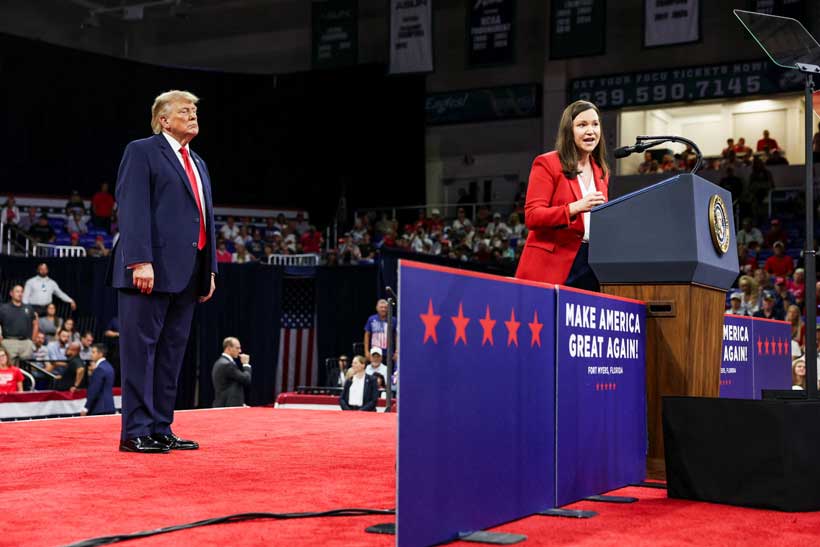
Some races in the US midterm elections may take weeks to resolve due to recounts and court challenges. The Senate and House of Representatives are responsible for deciding who gets seated, which will be crucial for maintaining or changing control of Congress.
Elections are managed by states, and results are certified by state officials. However, the US Constitution allows Congress to oversee the elections of its own members, meaning they have the final say in contested results. Competitive races may lead to challenges, especially as Republicans and Democrats compete for congressional control.
Election-related legal disputes have increased since the Supreme Court’s 2000 decision in the Bush versus Gore case, with a record number of cases expected this election cycle. Challenges can be made by candidates and current members in both the House and Senate. In the House, a losing candidate can contest a certified result under the Federal Contested Election Act, and the House Administration Committee will review it. In the Senate, challenges go to the Senate Rules Committee, which makes recommendations.
Partisan politics can significantly influence how challenges are addressed. For example, if a Republican aims to object to a Democrat’s seating, the Democrats might retaliate or boycott to prevent a quorum. If there are unresolved House races when the new Congress begins in January, it could create complications, as the new House would take over the situation.
Stay ahead of the geopolitical week.
MD Briefing delivers expert analysis across five global fronts — the Indo-Pacific, energy, geoeconomics, European security, and the Middle East — every Monday morning. Free.
Since 1789, the House has faced numerous contested elections, and there have been many in the Senate since Senators began being elected directly in 1914. Currently, the Republicans hold slim majorities in both chambers, which could change if Democrats win at least four additional seats in each. All House seats are contested, while only about one-third of Senate seats are up for election.
The Trump administration has already challenged the certification of results in certain states. Both the House and Senate have a practice of provisionally seating candidates while disputes are ongoing, but lengthy litigation can delay the certification process and leave seats open. Historically, Senate seats have remained vacant during prolonged contested elections, with notable examples occurring in Minnesota and New Hampshire, where resolution took many months.
The House has seen far more contested elections than the Senate. Analysts indicate that several current House races are highly competitive. If Democrats gain control of the House, it could negate the significance of contested races. Historically, when political winds shift dramatically, it has led to many contested races remaining unsettled for extended periods, as seen in historical elections during times of significant national strife.
With information from Reuters