


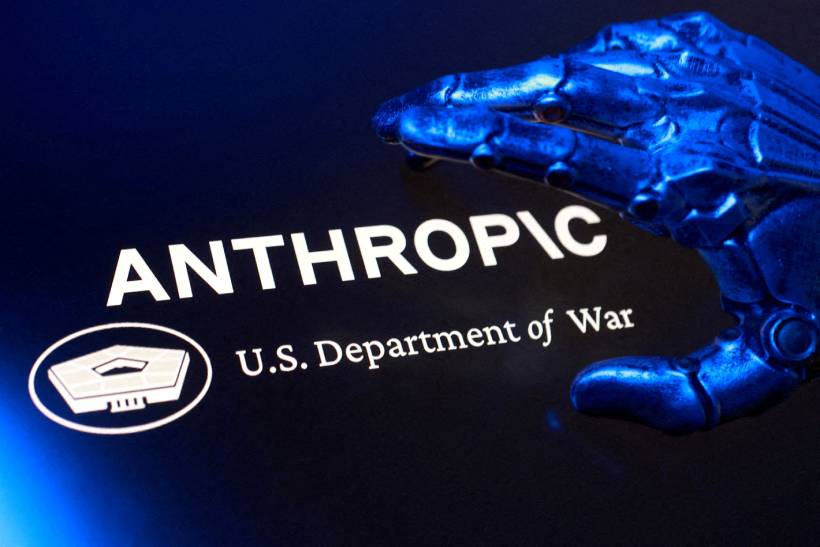
Anthropic is building a governance structure designed to protect its mission long after its founders step away, reflecting the growing challenge of controlling powerful artificial intelligence while balancing investor interests and public safety.
The San Francisco-based AI company has outlined an elaborate system of board oversight, founder voting rights and independent trust authority in its initial public offering filing. The arrangements are intended to preserve Anthropic’s commitment to public benefit as its technology advances and its leadership changes.
The company’s plans could have significant implications for investors and the growing number of people and businesses using its AI systems. They also raise broader questions about who should ultimately control companies developing technologies that could bring major scientific advances but also pose serious risks.
Anthropic has warned that advanced AI could help cure diseases such as cancer while also carrying catastrophic risks if misused. Its governance model seeks to ensure that decisions about the technology are not determined solely by financial returns or shareholder pressure.
Stay ahead of the geopolitical week.
MD Briefing delivers expert analysis across five global fronts — the Indo-Pacific, energy, geoeconomics, European security, and the Middle East — every Monday morning. Free.
Why Anthropic Is Limiting Investor Influence
Anthropic expects to pursue a public listing at a valuation of around $1.5 trillion, which would make it the world’s most highly valued public benefit corporation if that valuation is achieved.
Under Delaware law, a public benefit corporation must balance shareholders’ financial interests with its stated public-benefit purpose. For Anthropic, that means protecting its mission while operating in a highly competitive AI industry that requires substantial investment.
The company has granted its seven co-founders 50.1% of the voting power on certain matters through a special class of shares. The founders, including chief executive Dario Amodei and his sister, company president Daniela Amodei, are described in the filing as particularly well positioned to safeguard Anthropic’s mission.
An independent long-term benefit trust, meanwhile, has the authority to elect a majority of the board. The founders’ enhanced voting rights extend to the election of the remaining directors and shareholder proposals generally.
This arrangement gives the founders considerable influence while placing a separate institution at the centre of the company’s long-term oversight. It is designed to reduce the possibility that pressure from investors could push Anthropic away from its stated priorities.
What Happens When the Founders Leave?
The IPO filing also addresses a longer-term question: how Anthropic will maintain its governance model when most of its founders are no longer involved.
Once most of the founders have departed and their special Class F supervoting shares are gone, the board will be divided into three groups of roughly equal size. Directors will serve staggered three-year terms, meaning that only part of the board will face reelection in any given year.
This structure, known as a classified or staggered board, has historically been used by companies to make sudden changes in control more difficult, including through hostile takeovers.
For Anthropic, it could provide greater continuity as leadership changes and the company faces decisions about increasingly capable AI systems. A board that cannot be replaced all at once may be less vulnerable to short-term pressure from shareholders seeking immediate changes in strategy.
However, the model also runs against a broader trend in American corporate governance. Many major US companies have moved towards annual elections for all directors, allowing shareholders to respond more quickly to disagreements over executive compensation, corporate strategy and management performance.
Anthropic’s approach therefore presents a trade-off between long-term stability and shareholder accountability.
The Trust at the Centre of Anthropic’s Governance
Beyond the board and the founders, Anthropic has established a long-term benefit trust with its own rules and powers.
The trust, currently chaired by global health leader Neil “Buddy” Shah, controls a special class of shares known as Class T stock. These shares allow the trust to elect a majority of the company’s board.
Anthropic’s filing also considers what would happen if the Class T shares were eventually eliminated or came under the control of someone who did not share the company’s mission.
The company says its governance arrangements are intended to preserve long-term flexibility if circumstances change. Even if a person who was not committed to Anthropic’s mission gained control of the special shares, the structure would still require directors to comply with provisions linked to the company’s public-benefit purpose.
The trust’s authority makes Anthropic a “controlled company” under Nasdaq rules. This status exempts it from certain standard governance requirements, including the usual requirement for an independent nominating and corporate governance committee.
Anthropic is using that exemption to place Daniela Amodei on the committee, despite her position as company president and her family relationship with the chief executive. The decision highlights how the company’s governance arrangements differ from conventional models of board independence.
Who Is Responsible for AI Safety?
Anthropic has also created a board-level safety and risk committee to oversee issues connected to the company’s technology. Its current members include Novartis chief executive Vas Narasimhan and Chris Liddell, a former official in the Trump White House.
Billionaire Reed Hastings, co-founder of Netflix, serves as Anthropic’s lead independent director.
These arrangements provide dedicated oversight of safety risks, but the founders remain central to the company’s governance for the foreseeable future. Their influence is reinforced by an entity called Founder LLC, which is expected to have the strongest say in board elections after the long-term benefit trust.
The resulting structure distributes authority among founders, directors and the trust rather than placing control entirely in the hands of public shareholders. Anthropic has not commented on the details of its filing.
Can This Model Balance AI Safety and Accountability?
Anthropic’s governance plan reflects a growing dilemma for the AI industry. Companies developing increasingly powerful systems must attract investment and compete commercially while also addressing concerns about misuse, security and the consequences of technological failure.
Giving founders and a mission-focused trust substantial authority could help protect long-term priorities from short-term financial demands. Staggered board terms could also make abrupt changes in leadership or strategy more difficult.
Yet these safeguards raise their own questions. Concentrating decision-making power among a small group of founders and trust-appointed directors could limit shareholders’ ability to challenge management. A commitment to public benefit also depends on how that purpose is interpreted, monitored and enforced over time.
The challenge will become more complicated as the founders leave, the company’s ownership changes and its technology reaches more users. The people responsible for overseeing Anthropic in the future may face decisions that its original leadership never anticipated.
Ultimately, the company’s governance model is an attempt to make its mission durable beyond the people who created it. Whether that structure can provide effective oversight while maintaining accountability will be an important test as the development of powerful AI becomes an increasingly consequential issue for investors, governments and the public.
With information from Reuters.
