Relations between US President Donald Trump and Ukrainian President Volodymyr Zelenskiy have recently worsened, marked by mutual criticism. Trump has been critical of US involvement in Ukraine since he took office in 2017, showing reluctance to provide military aid and only approving the sale of Javelin missiles under pressure from his advisors. A significant moment in their relationship was a July 2019 phone call where Trump urged Zelenskiy to investigate his political rival, Joe Biden, in exchange for military support, which led to Trump’s impeachment. Despite Biden winning the 2020 election, Trump’s affinity for Russia, demonstrated by his friendly ties with President Vladimir Putin and other authoritarian leaders, has raised questions about his approach to Ukraine.
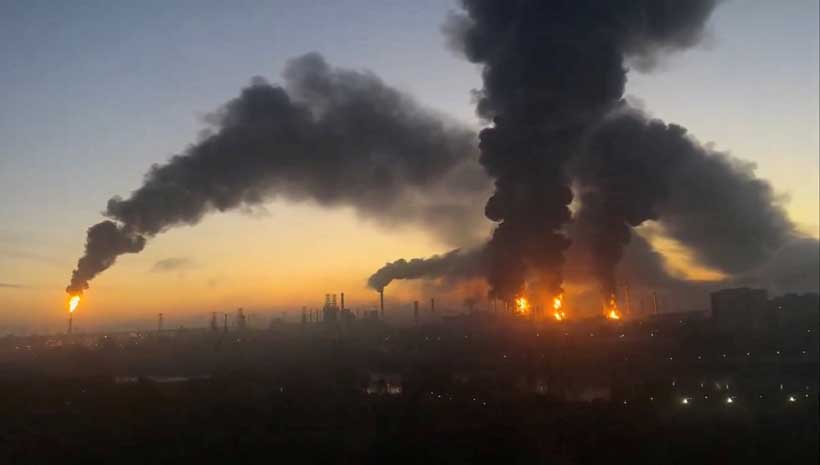
The current tensions are largely due to Trump’s frustration over Ukraine’s attacks on Russian energy infrastructure, particularly diesel facilities. Diesel prices have surged amid conflicts in the region, leading to concerns within Trump’s Republican party about inflation as the midterm elections approach. On September 13, Trump publicly urged Ukraine to stop its attacks on diesel infrastructure, and this stance was echoed by Secretary of State Marco Rubio. Ukraine, however, has resisted these calls, claiming that its counter-attacks are necessary in response to ongoing Russian attacks. As a result of Ukraine’s continued strikes, Trump announced a deal on October 9 to buy diesel from Russia and temporarily lifted sanctions to allow Russian oil to enter the market, signaling his support for Russia.
Zelenskiy has alleged that US military officials threatened Ukraine with a reduction in intelligence sharing if it continued its energy attacks, but a US official denied this increased pressure. The official suggested that the dynamics were more about Russia pressuring Ukraine rather than the other way around. Meanwhile, Trump requested Elon Musk to reinstate Ukraine’s access to the Starlink satellite system, which is critical for military operations.
Peace talks between Ukraine, Russia, and the US have continued but have not resulted in significant progress. Ukraine put forward new proposals at discussions in Oslo, while Trump’s son-in-law, Jared Kushner, reiterated calls for Ukraine to cease attacks on Russian targets. Following these talks, a meeting of negotiators in Abu Dhabi is planned for November, potentially paving the way for a high-level meeting of leaders from the involved countries.
Stay ahead of the geopolitical week.
MD Briefing delivers expert analysis across five global fronts — the Indo-Pacific, energy, geoeconomics, European security, and the Middle East — every Monday morning. Free.
With information from Reuters