



The geopolitical situation is rapidly changing and impacting Africa’s development. Noticeably, Africa is becoming one of the key centers of global development. Rapid population growth, urbanization, and industrialization are increasing demand for dependable energy, modern infrastructure, and advanced technologies. Consequently, African countries are seeking long-term partnerships that help them build national capabilities, retain more value within their economies, and strengthen technological self-reliance.
For Rosatom, the key expectation is a continued focus on turning dialogue and framework agreements into concrete implementation. This is, precisely, the approach Rosatom consistently offers, says Ryan Collyer, Rosatom’s CEO of Central and Southern Africa, while reviewing entirely Africa’s energy deficits, requirement for modern technologies, financing mechanisms, delivery capacity, and the long-term value of proposed projects. Interview excerpts follow here:
With the forthcoming Russia-Africa Summit, 2026, what are likely the key expectations surrounding the historic gathering? How does Rosatom intend implementing several agreements signed with African countries?
Ryan Collyer: The Russia–Africa Summit 2026 is expected to be an important opportunity to translate the strong political foundation of Russia–Africa relations into practical initiatives that support economic growth, industrial development, technological progress, and a better quality of life across the continent.
Stay ahead of the geopolitical week.
MD Briefing delivers expert analysis across five global fronts — the Indo-Pacific, energy, geoeconomics, European security, and the Middle East — every Monday morning. Free.
For Rosatom, the key expectation is a continued focus on turning dialogue and framework agreements into concrete implementation. We believe that the real value of international cooperation is measured by tangible results: new infrastructure, reliable electricity, qualified national specialists, modern research capabilities, local jobs, stronger supply chains, and broader opportunities for young people.
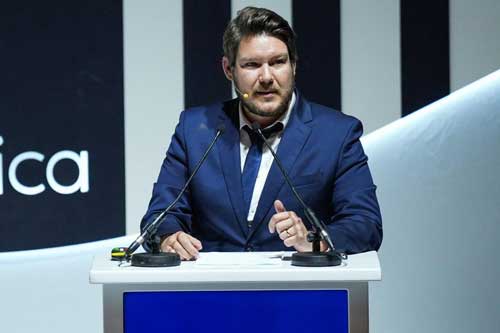
Africa is becoming one of the key centres of global development. Rapid population growth, urbanisation and industrialisation are increasing demand for dependable energy, modern infrastructure and advanced technologies. African countries are also seeking long-term partnerships that help them build national capabilities, retain more value within their economies and strengthen technological self-reliance.
This is precisely the approach Rosatom offers. We work with African partners on a comprehensive, country-specific basis. Depending on national priorities, cooperation can include large-scale nuclear power plants, small modular reactor solutions, floating power units, uranium mining, nuclear science and technology centers, nuclear medicine, agricultural and industrial applications of radiation technologies, education, regulatory development, and local workforce training.
In Tanzania, for example, Rosatom is developing the Mkuju River uranium project in the Ruvuma region. The project is based on the Nyota deposit, one of the largest uranium resource bases in Africa. Its planned production capacity is up to 3,000 tonnes of uranium per year. The commissioning of a pilot uranium-processing plant in July 2025 was an important milestone: it enables the teams to validate technological solutions using actual ore and collect data for the design of the main production complex. At full-scale operation, the project is expected to create more than 1,000 jobs in mining and related industries, while potential investment over the coming decades may reach up to US$1 billion.
In Namibia, Rosatom is developing a uranium exploration and project-development project in the Omaheke region through Headspring Investments, part of Uranium One Group. Geological work has identified a major sandstone-type uranium deposit that ranks third in Namibia in terms of mineral-resource base and has the potential to become one of the world’s largest new uranium projects. The project is expected to support employment, local contractors, skills development, and long-term industrial growth in the region.
In Ethiopia, Rosatom is working with national partners on the practical development of the country’s first nuclear power plant project. In March 2026, a roadmap for 2026–2027 was signed, covering technical preparation, nuclear infrastructure, regulatory development, personnel training, expert exchange, and public engagement. This work is helping Ethiopia establish the institutional, scientific, and human-capital foundation required for a safe and sustainable national nuclear program. Human-resource development remains a core priority: 43 education quotas were allocated for Ethiopian students between 2018 and 2026, with a further 25 quotas allocated for the 2026/2027 academic year.
Rwanda is another example of a country developing its nuclear program responsibly and step by step. Cooperation includes the possible development of a nuclear science and technology center, as well as small modular reactor solutions. In June 2026, Rosatom and the Rwanda Atomic Energy Board signed a roadmap on the development of small modular reactor projects. Rwanda’s focus on people is especially significant: 105 Rwandan students are currently studying nuclear and related specialties in Russian universities through Rosatom-supported quotas, while 24 graduates of Russian universities are already working at the Rwanda Atomic Energy Board and in relevant regulatory organizations.
South Africa remains one of Rosatom’s key partners on the continent. It is the only African country with an operating nuclear power plant, Koeberg, and has substantial experience in the nuclear sector. Rosatom has maintained a regional office in Cape Town since 2012 and works with South African government institutions, universities, and businesses on long-term cooperation. Our dialogue includes skills development, research, education, radioactive-waste management, radiation technologies, wind power, energy-storage systems, and floating power units. Since 2014, 145 educational quotas have been allocated for South African citizens through Rosatom, while dozens of South African students and professionals have studied or received advanced training in Russia.
Implementation is systematic and country-specific. Agreements are followed by joint working groups, feasibility studies, technical consultations, regulatory development, financing discussions and, crucially, the training of national personnel. We measure success by the number of specialists trained, local businesses involved, facilities commissioned, and long-term opportunities created for partner countries.
The most compelling example of this approach is Egypt. The El-Dabaa Nuclear Power Plant is Rosatom’s flagship project in Africa and one of the largest nuclear construction projects in the world today. Rosatom is the general contractor for Egypt’s first nuclear power plant, comprising four Generation III+ VVER-1200 units with a total installed capacity of 4,800 MW. Once commissioned, the plant is expected to provide around 10% of Egypt’s electricity mix and generate enough low-carbon electricity for approximately 20 million people.
El-Dabaa is also a platform for the development of Egypt’s national nuclear industry. Around 26,000 people are currently working at the site, most of them Egyptian citizens. Rosatom’s Technical Academy has already trained 570 members of Egypt’s future operating personnel, and more than 1,700 specialists will be trained for the four-unit plant.
Noticeably, many African countries are trying to balance their historical ties with Russia with a diplomatic and pragmatic approach toward the West. In terms of energy, would you say Rosatom faces rivalry and competition from the United States and Europe in Africa?
Ryan Collyer: African countries pursue an independent, sovereign, and pragmatic approach to international cooperation. Each country has its own energy balance, economic structure, industrial priorities, and development strategy. It is entirely natural that African governments engage with different international partners and assess technologies, financing mechanisms, delivery capacity, and the long-term value of proposed projects.
Energy is a particularly important area for such decisions. It requires long planning horizons, substantial investment, high safety standards, and a reliable partner able to remain engaged throughout the lifecycle of a project. Nuclear power plants operate for many decades, so the choice of a technology provider is also the choice of a long-term technological partner.
Let us look at the figures. Today, Rosatom is a global leader in nuclear technologies. We are constructing 45 nuclear power units across 10 countries, including Russia, and our portfolio also includes small modular reactor projects. Rosatom’s nuclear power projects are being implemented in India, China, Türkiye, Egypt, Iran, Bangladesh, Hungary, Uzbekistan, and Kazakhstan.
The scale is particularly clear in the global export market. Of the 31 nuclear power units currently under construction worldwide as export projects, Rosatom is constructing 27. This represents almost 90% of the global export market for nuclear-power-plant construction. These figures reflect our ability to deliver complex projects, work successfully across different national environments, and build long-term partnerships based on safety, reliability, and practical results.
Rosatom is also the only company in the world with capabilities across the entire nuclear fuel cycle: from uranium mining and enrichment to fuel fabrication, operation, maintenance, decommissioning, and back-end solutions. We rank first globally in uranium enrichment and third in uranium production and nuclear-fuel fabrication. This integrated capability gives partner countries the confidence that they are working with a company able to provide continuity and support throughout the full lifecycle of a nuclear project.
Our activities extend well beyond nuclear generation. Rosatom works in more than 70 countries and develops innovative non-nuclear technologies, nuclear medicine, digital solutions and software, logistics, energy-storage systems, and other advanced industrial solutions. We also operate the world’s only nuclear icebreaker fleet and develop the Northern Sea Route. This broad technological base enables us to offer solutions aligned with countries’ broader development priorities.
Rosatom’s international portfolio is expanding not only in scale but also in the range of technologies offered. The agreement with Indonesia’s PT Pembangkit Listrik Nuklir marks a major breakthrough: the world’s first export agreement to supply electricity from floating power units. The project envisages two 100 MW units supplying consumers in North Maluku.
The significance of this agreement extends well beyond bilateral cooperation. It marks a transition from the operating experience gained with floating nuclear power in Russia to its deployment in international energy projects. This opens a new chapter in nuclear energy development, creating additional opportunities to provide reliable, low-carbon electricity to coastal and island regions. The units envisaged for the project use RITM-series reactor technology, which draws on operating experience aboard Russia’s nuclear icebreakers, and are adapted for tropical conditions.
For African countries seeking reliable electricity supplies for coastal regions, islands, and industrial centers, this approach could provide a basis for developing similar projects.
Africa is one of Rosatom’s key international regions. We see growing interest in large nuclear power plants, small modular reactors, floating power units, nuclear science and technology centers, uranium resource development, nuclear medicine, education, and professional training. The appropriate model depends on national priorities. Large and growing power systems may require major nuclear capacity that can provide stable low-carbon electricity for decades. Coastal regions, islands, ports, industrial zones, and remote areas may benefit from smaller and more flexible solutions.
Competition in the energy sector is natural. Rosatom is ready to participate in transparent, professional processes and to be assessed on the basis of our technology, track record, full-lifecycle capabilities and ability to deliver long-term value for national economies
With half of the total population still without electricity, what can African leaders really do? What are your suggestions here as Africa moves its transformations in the 21st century and in this changing modern world?
Ryan Collyer: In our view, the continent needs a diversified energy mix. Renewable energy, hydropower, gas (where appropriate), modern grids, energy storage, and nuclear generation can work together. Each technology has its place. Solar and wind power can make a major contribution to decentralized power supply and local energy access. Hydropower remains an important resource for many countries. At the same time, fast-growing cities, industrial parks, mining operations, transport networks, water-supply facilities, and digital infrastructure require electricity that is available around the clock.
This is where nuclear energy can make a substantial contribution. Nuclear power provides reliable, low-carbon baseload generation for decades. It gives countries the ability to plan industrial development with confidence, expand energy-intensive industries, and create a stable foundation for economic growth.
Rosatom already offers floating power units from 100 MW for international markets, including African countries. These solutions are designed for coastal locations and can supply electricity to cities, ports, industrial facilities, water-supply systems, and desalination plants. A special tropical design has been developed for operation in conditions of high air and seawater temperatures. Rosatom is the only company that has moved floating nuclear power from concept to practical operation: the floating power unit Akademik Lomonosov has been operating in Russia since 2020, and a new series of floating units based on RITM reactor technology is under construction.
The recently signed agreement with the Indonesian company PT Pembangkit Listrik Nuklir to supply electricity from floating nuclear power units also provides an indication of the potential delivery timeframe: initial electricity supplies are expected as early as five years after the main conditions of the electricity supply contract take effect. For countries facing growing energy demand, a clear implementation timeline is essential to planning industrial expansion and the infrastructure needed to support it.
The second fundamental priority is human capital. Energy transformation requires more than power plants and transmission lines. It requires national engineers, operators, scientists, technicians, regulators, construction specialists, teachers, and managers. Without this human infrastructure, no major energy program can be truly sustainable.
For this reason, personnel training is an integral part of every Rosatom project. Today, more than 360 students from 23 African countries are studying nuclear and related specialties in Russian universities through Rosatom-supported programs. Approximately 100 scholarships are allocated annually for students from African countries.
The central idea is straightforward: Africa does not need to choose between development, energy security, and sustainability. It can pursue all three. The continent’s energy future should be reliable, diversified, increasingly low-carbon, and based on national capabilities.
Rosatom is ready to contribute as a long-term technological partner. Our cooperation includes large nuclear power plants, small modular reactors, floating power units, uranium-resource development, nuclear science centers, medical technologies, education, and professional training. The ultimate objective is to help partner countries build their own energy and technological capacity so that reliable energy becomes a driver of industrial growth, social progress, and a stronger future for African societies.
