


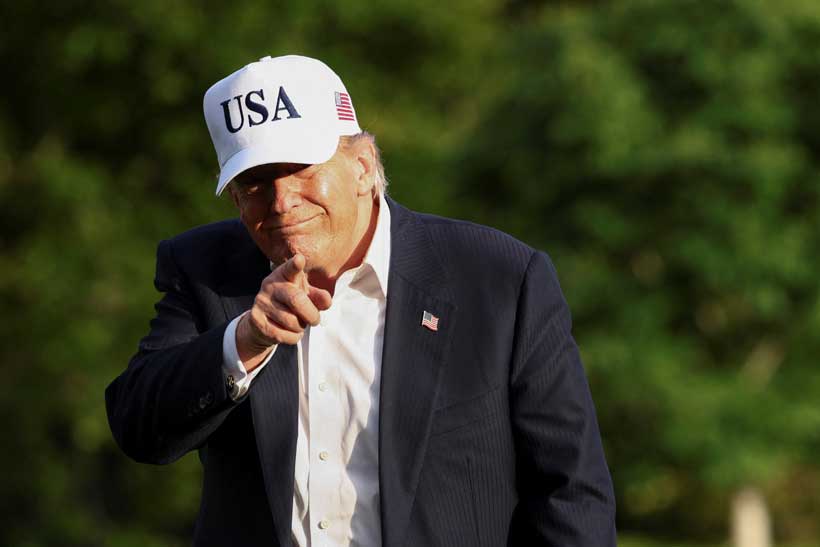
The United States is heading toward a consequential midterm election on November 3, with control of Congress, President Donald Trump’s legislative agenda and the political direction of the country at stake. Democrats are seeking to regain majorities in the House of Representatives and the Senate, while Republicans are fighting to preserve their control of both chambers.
Although midterm elections do not determine the presidency, they often serve as a referendum on the incumbent administration. With Trump’s approval ratings under pressure from rising living costs and concerns over immigration enforcement, Democrats see an opportunity to challenge Republican dominance in Washington.
The scale of the contest is reflected in campaign spending. By October 12, political advertisements aired during the 2026 election cycle had attracted a record $3.8 billion in spending, according to AdImpact, which tracks political advertising. Senate races in Texas, Ohio and Michigan have been among the biggest spending battlegrounds.
Billionaire Elon Musk has also spent approximately $366 million supporting Republicans, according to campaign finance records.
Stay ahead of the geopolitical week.
MD Briefing delivers expert analysis across five global fronts — the Indo-Pacific, energy, geoeconomics, European security, and the Middle East — every Monday morning. Free.
More than 100 million Americans could vote if turnout resembles the 2022 midterms. However, participation is generally lower than in presidential elections, which attract greater public attention.
Can Democrats Win Control of Congress?
The central contest is for control of the House and Senate, where Republicans currently hold narrow majorities.
In the House of Representatives, Republicans have 218 seats to the Democrats’ 214, alongside two vacancies and an independent who caucuses with Republicans. Democrats need a net gain of four seats to secure a majority.
The Senate presents a different challenge. Republicans hold a 53-47 advantage, meaning Democrats must gain four seats to take control, assuming the remaining seats fall along the current party alignment.
Ten Senate races could prove decisive, including contests in Maine, Ohio, North Carolina, Iowa and Georgia. Their outcomes will determine whether Democrats can overcome the Republican majority or whether Trump retains a Congress more willing to advance his legislative priorities.
A Democratic victory in either chamber would significantly change the political environment for the remainder of Trump’s term. Even without controlling both chambers, Democrats could use a House majority to scrutinise administration decisions and challenge Republican legislation.
Why Is Trump’s Approval Rating a Major Election Factor?
Trump’s economic record is emerging as a central issue in the campaign. A September Reuters/Ipsos poll put his approval rating at 32%, its lowest level in the survey’s assessment of his performance.
Rising consumer prices, household expenses and dissatisfaction with immigration enforcement could weaken Republican support, particularly among voters concerned about their economic security.
Democrats are also showing signs of stronger enthusiasm for voting than Republicans. If that advantage translates into turnout, it could improve their prospects in competitive districts and states.
Latino voters are another potentially important constituency. Some who supported Trump in 2024 may be reconsidering their political preferences amid economic frustration and concerns about immigration enforcement.
Nevertheless, a Democratic victory is far from guaranteed. Republicans could benefit from their campaign spending advantage, continuing doubts among some voters about Democratic leadership and concerns among moderate voters about progressive candidates who have won party primaries.
The election will therefore depend not only on national approval ratings but also on local candidates, turnout patterns and the ability of each party to persuade undecided voters.
How Could the Midterms Change Trump’s Presidency?
Midterm elections frequently weaken the governing party, leaving presidents with less room to pursue their domestic agendas.
For Trump, losing control of either chamber would make it harder to advance legislation and could expose his administration to more intensive congressional scrutiny.
A Democratic-controlled House could launch investigations into administration policies, government spending and alleged misconduct by Trump and his associates. House Democratic leader Hakeem Jeffries has pledged to examine what he describes as corruption within the administration.
Democrats would also seek to advance an affordability agenda focused on healthcare, groceries, housing and energy costs.
Republicans, by contrast, would have greater scope to pursue additional tax cuts, increased defence spending and reductions to social safety-net programmes, building on Trump’s 2025 legislative package known as the One Big Beautiful Bill.
The outcome could also influence the political strategies of potential presidential candidates preparing for the 2028 election. Strong performances in competitive races could elevate emerging leaders, while disappointing results could intensify internal disputes within either party.
What Does Recent Midterm History Tell Us?
Recent elections illustrate how quickly congressional power can shift when voters become dissatisfied with the governing party.
In 2010, during Barack Obama’s presidency, Republicans gained 63 House seats amid economic frustration and opposition to the president’s healthcare reform. Democrats lost control of the chamber, forcing Obama to contend with a more hostile Congress, although his party retained its Senate majority.
Trump experienced a similar setback in 2018. Democrats gained a net 40 seats in the House, taking control of the chamber, while Republicans made a net gain of two Senate seats.
The contrasting results demonstrated that voters can deliver different verdicts on the same administration across the two chambers. They also showed that a president can face significant legislative constraints even when their party retains control of the Senate.
The 2026 election could produce another divided government, depending on how competitive House districts and closely contested Senate races unfold.
Which Other Races Could Shape the Results?
Beyond Congress, voters will elect governors in 39 states and choose representatives for state legislatures across almost the entire country.
These contests matter because state governments influence policies affecting education, healthcare, taxation, infrastructure and election administration. According to Ballotpedia, Republicans currently hold approximately 55% of state legislative seats nationwide, compared with 43.8% for Democrats.
Several House contests are attracting particular attention. Republican Representative Mike Lawler is defending a New York district that Kamala Harris won in the 2024 presidential election. Democrats are also targeting competitive seats in Pennsylvania and New Jersey.
An open seat in a Nebraska swing district has drawn attention because higher fuel costs linked to the US war with Iran are affecting farmers and truckers, making energy prices a potentially decisive local issue.
These races illustrate how national developments can influence local contests, particularly when voters connect foreign policy decisions to household expenses.
Could Election Disputes Complicate the Vote?
Concerns about election integrity and presidential influence are also hanging over the campaign.
Trump has repeatedly alleged widespread cheating in US elections since 2020, despite a lack of evidence supporting claims that widespread fraud changed the outcome of that presidential election.
US elections are administered primarily by individual states, creating a decentralised system in which state officials oversee voting procedures and certification.
State election officials and congressional Democrats have been preparing for potential legal disputes over any attempts by the administration to intervene in election administration.
Any significant challenges could generate further political tensions, particularly in closely contested races where narrow margins make recounts and litigation more consequential.
Who Could Become the Next House Speaker?
If Democrats win control of the House, Jeffries is a leading candidate to become speaker. He currently serves as the House Democratic leader and would be the first Black American to hold the office if elected.
The speaker has considerable influence over the House’s legislative agenda, committee assignments and investigations. A Democratic speaker could therefore play a central role in scrutinising the Trump administration while advancing legislation focused on affordability and public services.
If Republicans retain their majority, the speakership would remain in Republican hands, with current Speaker Mike Johnson potentially continuing in the role or facing a challenge from within his party.
The outcome would help determine whether Trump’s final two years are characterised by continued Republican legislative control or sustained confrontation with a Democratic-led House.
What Happens After November 3?
The 2026 midterms will determine more than the balance of seats in Congress. They will offer a measure of public confidence in Trump’s leadership, influence the direction of US domestic policy and shape the political environment ahead of the 2028 presidential election.
A Democratic victory in the House could bring investigations and legislative gridlock, while Republican control of both chambers would give Trump a stronger opportunity to pursue his agenda. The Senate result would be particularly important for determining the administration’s legislative prospects and its ability to secure confirmations for federal appointments.
Neither party is assured a sweeping victory. Economic concerns, campaign spending, candidate quality, voter enthusiasm and the outcomes of individual competitive races will all influence the final balance of power.
For Trump, the election presents a test of whether his administration can retain congressional support amid mounting public dissatisfaction. For Democrats, it offers an opportunity to regain institutional power and demonstrate that they can turn opposition to the president into an effective governing alternative.
With information from Reuters.
