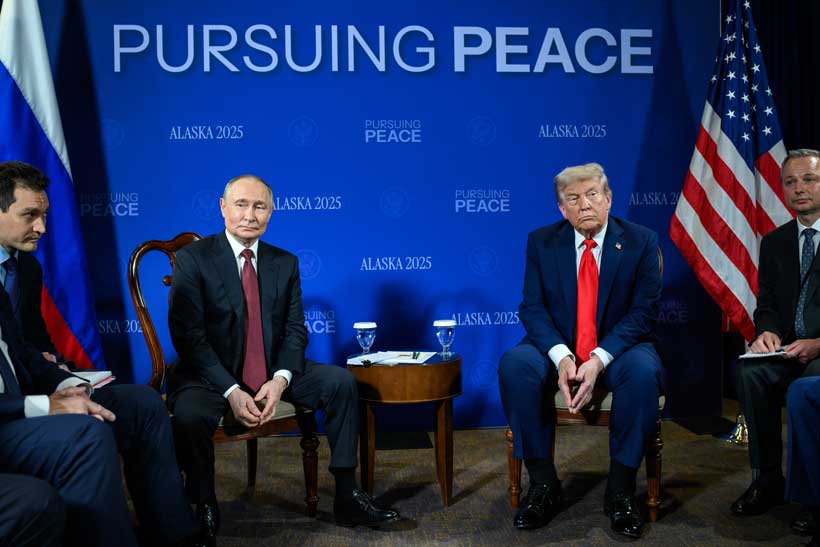
Beijing’s biggest geopolitical concern each time Trump and Putin warmly embrace one another or the United States make a friendly gesture towards Russia is the fear that such moves will not only seriously impact China-Russia relations but will also lead to a shift in US strategy toward China. Besides, experts in China have always worried that the “warming of Russia-US relations will weaken Russia’s strategic reliance on China.” At the same time, though Beijing likes to believe that the rapprochement between Russia and North Korea presents both a mix of advantages and disadvantages, the truth is that as North Korea acquires diversified sources of materials and technology, its [Pyongyang’s] economic dependence on China may gradually decrease.
It is not surprising, therefore, that the Chinese media has been recently focusing on the “increasing visibility of North Korean culture” in everyday life in Russia. Commenting on the North Korean “cultural wave” currently invading Russia, a Chinese op-ed commentary has recently observed: “Previously, North Korea’s image in the Russian public sphere was primarily linked to diplomatic news, military history, and peninsula security issues. Now, Russians can watch North Korean films in cinemas, appreciate North Korean artworks in exhibition halls, and sample local cuisine in a growing number of newly opened North Korean restaurants.” Its author, Zhang Chenyi, further noted that following the Russia-Ukraine conflict, relations between Russia and North Korea have quietly taken on a new form.
Since Donald J. Trump’s return to the White House in January last year, surprisingly and yet intriguingly, op-ed columns and media commentaries in China have been more about what Putin will do and not what Trump 2.0 will do to the China-Russian relationship. Let’s look at some of the recent Chinese media titles. An article in February 2025 asked, “Trump is allying with Russia against China; will Russia really betray China? “In April, a popular online current affairs daily in Shanghai carried in the Mandarin version a long article penned by a key Russian foreign policy scholar, under the title “The examples of Russia and China are sufficient proof that dependence on the United States is unsustainable”; as Xi was shaking hands with Trump in the White House on last Thursday (September 24), on the same day a section of electronic media in China reported rising anxiety in Moscow over “Russian worries about China changing its tune.”
Interestingly, in the Chinese view, mainstream press overseas—especially in the West—has never ceased to “sow seeds of friction” in “Russia-China relations knowing no limits.” Early into the Trump 2.0 administration, the New York Times carried a feature, in both English and Chinese versions, under the title “As Trump Courts Putin, China’s Leader Xi Emphasizes Close Ties with Russia”; more recently, within days of the successful conclusion of the New Delhi BRICS summit, Singapore’s Epoch Times in an editorial said, “China Losing Patience with Russia—And BRICS”; earlier in April, when the US-Iran war was at its peak, the Radio France Internationale wrote in Mandarin (and carried it in all other 15 language online versions): “Amid the Middle East turmoil, China is engaging in active diplomacy; can Russia fill the resource gap?”
Stay ahead of the geopolitical week.
MD Briefing delivers expert analysis across five global fronts — the Indo-Pacific, energy, geoeconomics, European security, and the Middle East — every Monday morning. Free.
Besides, it is apparent that Moscow too is quite aware of the degree of anxiety prevailing in Beijing over a possible warming of US-Russia relations. It is precisely this that leaders in Moscow periodically keep issuing statements in order to make Beijing feel at ease—statements to the effect that Russia will never join hands with the United States to harm or damage the Russia-China equation. Last year, within weeks of the Trump-Putin summit in Alaska, Moscow’s top diplomat Lavrov told the media, “Russia will never join forces with the US to confront China.” Likewise, in May this year, explaining the significance of Putin visiting Beijing just a week after Trump’s China visit, numerous Chinese commentaries emphasized “the stability of China-US relations does not presuppose estrangement from China-Russia relations, nor does the deepening of China-Russia relations come at the expense of China-US relations.”
At another level, in spite of the fact that China has been consistently providing uncritical support to Moscow since the war in Ukraine four years ago, asymmetry in Russia-China trade is making Moscow feel at unease about China. Of late, many Russian think tanks have been raising concerns regarding how China might use this trade imbalance to exert pressure on Moscow. However, experts in Beijing dismiss such unfounded fears in Moscow as “Russia’s own doing.” “Russia’s anxiety stems largely from its own situation. Faced with Western sanctions, Russia’s rising economic dependence on China has heightened sensitivity to over-reliance,” the argument in Beijing goes.
Not willing to subscribe to the Russian explanation that Moscow’s sensitivity is the reason for Putin’s “twin” diplomatic move, experts in China believe it is precisely when “sensitivity” turns into suspecting Beijing‘s intentions that misjudgment steps in. Beijing is particularly wary of three things that it believes are the result of the “misjudgment.” First, Putin proactively reopened dialogue channels with the United States; second, rising anxiety in Moscow that asymmetry in the economic power of the two countries is being leveraged by Beijing in the bilateral ties; third, the first cross-border highway bridge between Russia and North Korea was put into operation, marking a new stage in the exchange of personnel and goods between the two countries.
Regarding Putin’s proactive “diplomacy” with the United States, analysts in China do not see it as a mere routine operation by Russia to expand cooperation channels—especially the sudden closed-door meeting between Witkov-Kushner and Putin lasting three hours in Moscow—as part of diversified diplomacy. A long commentary (online) in Mandarin surfaced up in Beijing just as Xi Jinping was leaving for the New Delhi BRICS summit, where Putin was expected to be present, as if to push the following two concerns on the agenda items for Xi: one, what kind of strategic pressure will these actions (the sudden Witkov-Kushner meeting with Putin) exert on China? Two, in which dimensions are there potential for the so-called transformative and expanding cooperation opportunities?
Dismissing arguments such as “it is futile to judge the direction of Russia-US relations based on a few contacts,” the commentary emphasized that even a localized or tactical loosening of China-Russia relations must be included in Beijing’s strategic assessment framework. It further argues that once the United States withdraws from European affairs, Washington’s strategic focus will likely shift more rapidly to the Asia-Pacific region, creating a new round of stress tests on China’s surrounding security environment. “More importantly,” the commentary pointed out, “the warming of Russia-US relations will weaken Russia’s strategic reliance on China, giving it more confidence and bargaining power in bilateral negotiations—a point that must be clearly recognized at all times.”
The “misjudgment” in Moscow regarding asymmetry in bilateral trade with China is arising from the recent Lindsey O. Graham Sanctioning Russia and Iran Act of 2026, which became a law after US President Donald Trump signed the bill last Friday, and giving himself the authority to impose tariffs of up to 100% on countries, including India and China, that continue buying Russian oil and gas. A Chinese online commentary pointed out that following the new law some Russian media outlets warned Putin that China might suddenly “change its tune” and exert pressure to avoid being subject to additional tariffs from the United States, urging Moscow to prepare in advance.
To sum up, speaking at the annual meeting of Valdai Discussion Club on October 1, coincidentally also China’s National Day, fully aware of a suspecting China on one hand and concerns being expressed in the Russian media on the other, Putin underscored that “unlike the so-called ‘civilized world,’ Russia fundamentally rejects the use of administrative restrictions or sanctions against Chinese manufacturers.” To which the Chinese reactions sounded even more “untrustworthy” of Russia. “Theoretically, Russia is perfectly positioned to serve as a net exporter of raw materials to China—supplying vast quantities of timber, oil, gas, and coal for processing into finished goods destined for global markets. Through these exports alone, Russia could achieve a standard of living comparable to that of the Nordic countries,” a Chinese observer commented.
Overall, most Chinese analysts know what lies behind “Russia-China no-limit” friendship is not emotions but national interests. “Putin is trying to make Europe realize that the real adversary lies in the East, so they should stop constantly targeting him,” a Chinese expert quipped.