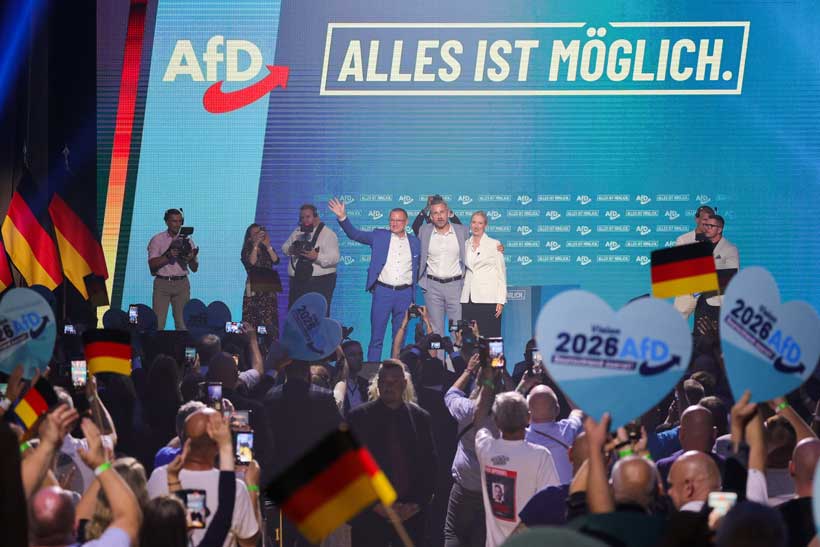
Chancellor Friedrich Merz warned that extremism is infiltrating Germany’s parliamentary system, indicating a weakening of the mainstream parties’ efforts to isolate the far-right Alternative for Germany (AfD). This week, at least four lawmakers from mainstream parties in Saxony-Anhalt defied orders and voted for the AfD to gain its first regional assembly speaker. Despite a secret ballot, suspicions pointed towards the Christian Democrats (CDU), particularly its 15 members in parliament who had been instructed to abstain. Karin Prien, the CDU’s deputy chair, emphasized that there would need to be consequences if any CDU lawmakers were involved.
The AfD, which aims to limit immigration and restore energy ties with Russia, has been leading in nationwide polls for over a year. It regards this moment as a significant political change, signaling that the so-called “firewall” to block its influence is weakening. The AfD’s success in regional elections has raised concerns among other political parties, which view it as anti-democratic and opposed to Germany’s post-World War Two values. The AfD rejects being labeled as “extreme right.”
The recent election results showed that the AfD was only short of an absolute majority, heightening fears that it could win a national election in 2029. Merz’s coalition with the Social Democrats is facing strain due to disagreements and declining poll numbers as voters blame mainstream parties for worsening living conditions. The parties have been discussing issues like pensions and taxes to address their differences while expressing a commitment to prevent extremism from taking control.
Established over a decade ago during the euro zone crisis, the AfD has transitioned from a fringe movement to the most popular party in Germany, according to polls. However, parts of the party have been labeled as extremist by German security services for opposing human rights, democracy, and the rule of law. The Federal Office for the Protection of the Constitution found the AfD incited negative sentiments toward migrants and racism. The AfD argues it is restoring German values and prioritizing citizens over migrants.
Despite the growing support for the AfD, the mainstream parties have maintained a stance of not cooperating with it, which has prevented the AfD from joining any coalition government. In Saxony-Anhalt, the party is short of three seats for a majority, and its attempts at coalition-building with the far-left BSW have not progressed. However, Ulrich Siegmund of the AfD believes he can persuade lawmakers from other parties to support him as the state premier.
In the recent speaker ballot, AfD candidate Tobias Rausch received more votes than the combined total of both the AfD and BSW. Merz has dismissed any potential collaboration with the AfD, insisting it aims to destroy the CDU. This issue is expected to be discussed at an upcoming CDU leadership meeting. The challenge of maintaining a stance of refusal towards the AfD, which attracts nearly a third of voters, especially in the east, is becoming urgent. CDU leaders warn that any signs of acceptance could threaten the party’s existence.
The AfD continues to gain traction, especially in eastern Germany, but its influence remains weaker in the west. Economists stress the need for fundamental reforms regarding pensions and taxes to accommodate an aging population. Divisions between eastern and western Germany persist, nearly four decades after reunification. President Frank-Walter Steinmeier noted that many feel neglected by the political system, which has led to insecurity and eroding confidence. He warned that the current political climate could jeopardize democracy, emphasizing the importance of standing up for democratic values.
With information from Reuters