


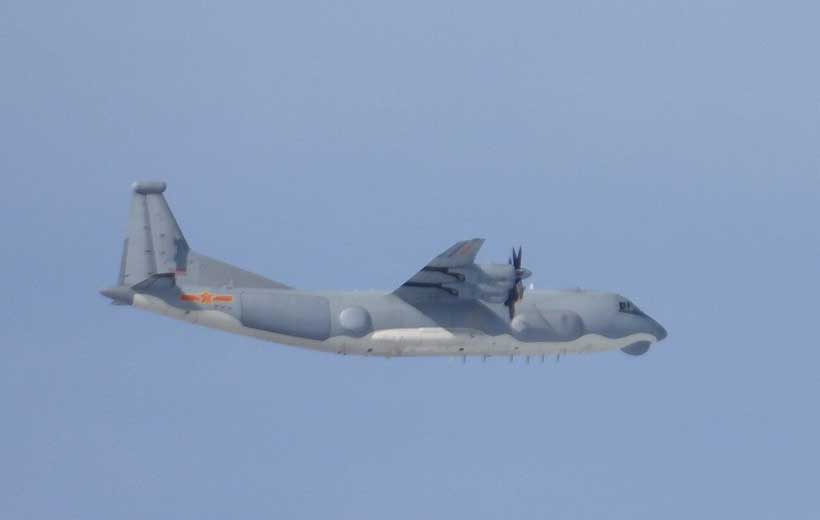
The return flight of an advanced Chinese (Y-9LG electronic warfare) and reconnaissance aircraft has raised widespread questions and intelligence concerns in Israel, after it was tracked via open-source flight data flying through Saudi airspace (near Yanbu and reaching the capital, Riyadh) on its way back from joint military exercises in Egypt. Although the aircraft did not fly directly over Tel Aviv but rather traversed Saudi airspace with prior diplomatic coordination with Saudi authorities, Israeli intelligence reports focused on its long-range surveillance capabilities. The primary objective behind tracking the Chinese electronic warfare and reconnaissance aircraft’s flight, for Israeli, American, and Western intelligence, military, and security circles, is their apprehension that Beijing is seeking to build a comprehensive electronic database—feeding its intelligence library of the operating patterns and frequencies of American and Western radars and air defense systems heavily deployed in the Red Sea region and at regional bases.
Despite military reports indicating that geographical distances and the curvature of the earth reduce the chances of direct Chinese espionage deep inside Israel in Tel Aviv while the Chinese aircraft is flying over the region’s airspace (such as Saudi airspace), the operation of Chinese sensors for passive information collection was aimed at capturing sensitive frequencies in a hot operational environment. Therefore, Washington and the Israeli Mossad analyzed the underlying objectives of this Chinese reconnaissance flight, focusing on the following points:
– First: The Chinese aircraft’s passage near Israeli airspace, serving as a target bank for electronic surveillance by China
The Israeli Mossad and the US Central Intelligence Agency (CIA) are concerned about the potential primary objective of China’s flight over Israeli airspace for several reasons, including:
Stay ahead of the geopolitical week.
MD Briefing delivers expert analysis across five global fronts — the Indo-Pacific, energy, geoeconomics, European security, and the Middle East — every Monday morning. Free.
1) The Chinese aircraft’s penetration of Western defense systems: Israeli, American, and Western intelligence experts and analysts fear that China’s main objective is to monitor the signals of radars and air defense systems heavily deployed in the Red Sea region and at regional bases.
2) Feeding into its electronic database: American and Israeli intelligence, strategic, security, and military circles accuse Beijing of using these military flights to collect sensitive frequencies and feed their electronic database with information on the operational patterns of Western systems in active combat environments. 3) Targets near the Chinese drone’s flight path: The Israeli Mossad and the American CIA are concerned about the Chinese drone flying near the strategic Saudi city of Yanbu, which houses oil and security facilities and American Patriot air defense batteries. This raises concerns about Chinese intelligence gathering and military and defense capabilities, potentially countering American and Israeli defense and military systems in the region.
– Second: Washington and Mossad’s Analysis of the Move’s Dimensions
Israeli and American intelligence and military circles fear that the Chinese aircraft is spying on Israeli and American targets for Iran. Their concerns stem from the following:
1) Obstacles to Direct Espionage: Military experts in Israel and the United States believe that geographical distances and the curvature of the earth reduce the opportunities for direct electronic espionage deep inside Israel, such as Tel Aviv, while flying over Saudi airspace. However, they emphasize that China does not miss an opportunity to intercept frequencies whenever possible.
2) Growing Chinese Influence: Mossad and American intelligence, strategic, military, and defense agencies view this incident as a worrying indicator of the deepening of China’s security and military relations in the Middle East and the expansion of its influence through joint exercises (such as the partnership with Egypt) at the expense of historical American hegemony.
3) Concerns about leaks to Iran: The biggest worry plaguing security circles in Tel Aviv is the extent to which Beijing will benefit from the memory of this aircraft and the possibility of sharing or leaking this sensitive electronic data and intelligence to its allies in the region, specifically Iran.
Here, Washington and the Israeli Mossad’s apprehension regarding this military flight of the Chinese reconnaissance and surveillance aircraft stems from several strategic and military reasons, including:
1) Israeli and American Military Concerns About China Breaking Technological Superiority and Penetrating the Wireless Silence
The United States and Israel fear that China’s digital eyes will succeed in penetrating the wireless silence of Western defense systems. Monitoring signals and frequencies allows China to understand the operational tactics of American radars designed to protect against regional threats, such as the attacks in Yemen in the Red Sea. This could help Beijing develop countermeasures or replicate this technology to break Western superiority in Asia and the Middle East.
2) The Risk of China Leaking Military Secrets Collected and Monitored by Chinese Reconnaissance Aircraft to Iran
This intelligence capture is causing serious concern in Tel Aviv and Washington about the possibility of Beijing sharing this sensitive data and frequencies with its regional allies, primarily Iran. Tehran’s acquisition of these codes and operational patterns could enable it (or its allied factions) to neutralize or penetrate US and Israeli air defense systems in any future confrontation. The dimensions of this concern can be summarized in the following points:
– Exposure of technological and defensive capabilities: The flight of Chinese spy planes and their monitoring of US bases or Israeli air defense systems, such as Iron Dome or David’s Sling, allows Beijing to collect highly accurate electronic, thermal, and optical data.
– Iranian deterrence equation: The transfer of this sensitive data from Beijing to Tehran means it can understand the vulnerabilities in the defense systems of Israel’s allies, allowing it to develop missile and drone trajectories to evade detection. This weakens the effectiveness of the combined US and Israeli air defenses against them.
– The Global Power Struggle: Washington views this cooperation as a Chinese attempt to undermine American hegemony and support regional allies (within the Axis of Resistance) to obstruct any future military plans that might target Iranian facilities.
3) China Tests American and Israeli Military Capabilities in a Real-World Operational Environment
This reconnaissance flight provided the Chinese aircraft with a golden opportunity to test and evaluate the effectiveness of its electronic systems and passive surveillance capabilities in a real-world operational environment rife with military tensions and a heightened state of alert. This demonstrates to Washington that China now possesses the capability for high-quality tactical espionage while maintaining a degree of diplomatic deniability.
4) Chinese Military Expansion and the Decline of American Hegemony
These Chinese moves coincided with a rapidly growing military and security partnership between Beijing and pivotal countries in the region, such as Egypt (through joint air and naval exercises, like the Civilization Eagle maneuvers between the Egyptian and Chinese air forces) and Saudi Arabia. Washington views this as a dangerous indicator of expanding Chinese military influence in the Middle East at the expense of historical American hegemony, exploiting the desire of regional countries to diversify their arms sources and reduce their exclusive reliance on American systems.
Accordingly, the preceding analysis reveals the extent of American and Israeli apprehension regarding the Chinese spy and reconnaissance aircraft’s flights to monitor American and Israeli military targets and the risk of its leakage to Iran. The increasing intelligence and military coordination between China and Iran represents one of the greatest strategic concerns for both the United States and Israel in the Middle East.
