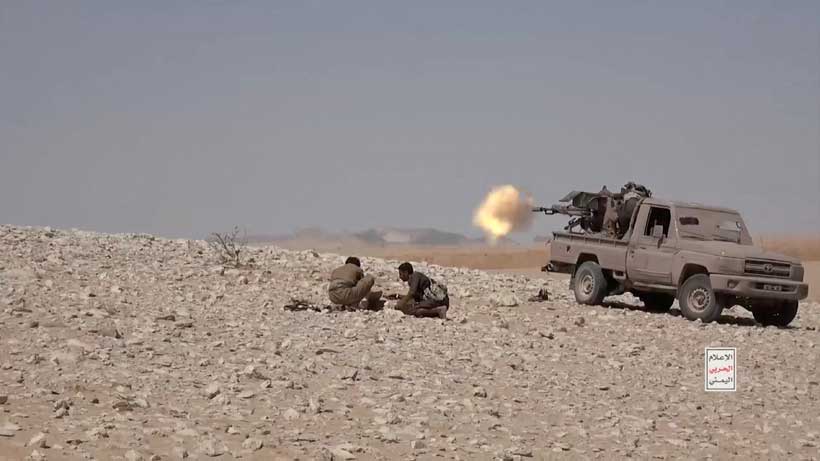
Military leaders from Saudi Arabia, Turkey, and Pakistan are meeting to discuss how to help Saudi Arabia deal with attacks from Yemen’s Houthi rebels. Meanwhile, Iraq has reduced flights from Iran, following pressure from the United States, and an Iranian official has threatened retaliation.
The Houthi rebels have attacked the Saudi-backed government in Yemen and have launched missiles into Saudi Arabia, impacting the flow of oil. This is part of a larger conflict in the Middle East that started with attacks by the US and Israel on Iran. The conflict has spread to Lebanon and the Gulf and has recently intensified in Yemen, despite efforts at the UN General Assembly to restart peace talks.
As direct fighting between the US and Iran has paused, the US has focused on financial pressure by imposing “secondary sanctions” on companies in other countries that do business with Iranian firms. This led to Iranian airlines being banned from flying to neighboring countries like the United Arab Emirates and Oman. On Friday, three more Iraqi airports suspended flights to and from Iran, joining Baghdad airport.
This ban on flights could further isolate Iran and worsen its economic problems, as the country is already facing a US blockade of its seaports. An adviser to Iran’s supreme leader has criticized regional countries for cooperating with the US and warned that if Iran cannot fly or receive airport services, no other country in the region will be able to either.
The war has caused thousands of deaths and disrupted global trade and energy supplies, leading to rising prices. While the US and Iran have engaged in intermittent fighting, Iran’s allies have become active. Hezbollah’s attacks led to an Israeli invasion of Lebanon, and the Houthi advance in Yemen has created a humanitarian crisis. Iran and its allies have significantly limited oil exports from Saudi Arabia by disrupting shipping in the Red Sea and restricting tanker traffic in the Strait of Hormuz, a vital route for global oil.
Recently, the Houthis claimed to have fired missiles and drones at Saudi targets, while Saudi authorities reported intercepting Houthi missiles. The top religious authority in Saudi Arabia has urged soldiers to be prepared to fight the Houthis until they are removed from power.
In response to these events, the foreign ministers of Saudi Arabia, Pakistan, and Turkey met to discuss a defense agreement signed in August. They condemned attacks on holy sites in Saudi Arabia and other civilian areas, reaffirming Saudi Arabia’s right to self-defense. They also planned a meeting of their chiefs of staff to determine how to support Saudi Arabia. Turkey’s Chief of General Staff is traveling to Saudi Arabia for these discussions. The defense pact states that an attack on one country is an attack on all and could lead to intelligence, logistical, or ammunition support, with the possibility of more advanced military aid depending on the threat. There is also a suggestion that the pact could be expanded into a broader alliance for the Muslim world, potentially including Iran.
Meanwhile, in New York, Iran’s Foreign Minister conveyed a proposal to the US through intermediaries. This proposal suggests that the Strait of Hormuz would be reopened if Iran’s conditions are met, including ending hostilities on all fronts within seven days, the US lifting its blockade on Iranian ports, releasing Iran’s frozen funds, and waiving oil sanctions. Iran stated that talks on other issues, such as its nuclear program, would begin after the Strait of Hormuz is reopened. An Iranian official mentioned that Tehran is reviewing Washington’s response to its peace proposals. Oil prices fell on Friday as markets considered the possibility of a truce, despite a significant drop in the number of ships transiting the Strait of Hormuz.
With information from Reuters