


Saudi Arabia is turning to a growing network of regional partners as Yemen’s Iran aligned Houthis intensify attacks, raising questions over whether the kingdom’s emerging defence arrangements with Pakistan and Turkey can prevent the conflict from spreading further across the Gulf and Red Sea.
Saudi, Turkish and Pakistani military chiefs are expected to meet to discuss support for Riyadh under the Mecca Joint Defence Agreement, signed in August. The agreement states that an attack against one of its parties constitutes an attack against all, although Turkey’s parliament has yet to ratify the pact.
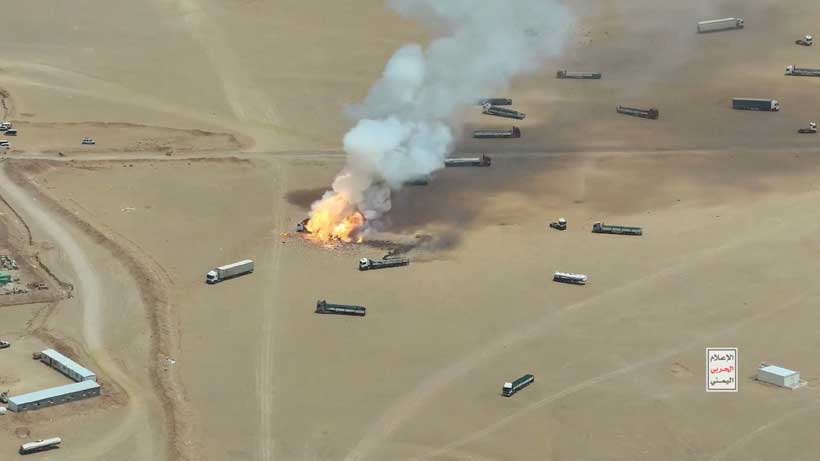
The planned military meeting comes after a sharp escalation in Houthi attacks. The group said it launched dozens of missiles and drones at Saudi targets on Thursday, while Saudi authorities said they intercepted six ballistic missiles.
Saudi Arabia had earlier issued emergency alerts for areas including Mecca, Jeddah and Yanbu, the kingdom’s main Red Sea oil port.
Stay ahead of the geopolitical week.
MD Briefing delivers expert analysis across five global fronts — the Indo-Pacific, energy, geoeconomics, European security, and the Middle East — every Monday morning. Free.
The attacks have added a new dimension to a wider Middle East conflict that began with US and Israeli strikes on Iran in February. The Houthis have attacked the Saudi backed government in Yemen while repeatedly targeting Saudi Arabia, threatening energy infrastructure and shipping routes in a region already facing severe disruption.
Saudi Arabia’s Grand Mufti, the kingdom’s highest religious authority, called on Saudi troops to be prepared to lay down their lives in fighting the Houthis until the group is removed from power.
The developments have pushed Riyadh closer to its new defence partners. Saudi, Pakistani and Turkish foreign ministers met under the framework of the Mecca agreement and condemned attacks targeting Mecca and other civilian sites while affirming Saudi Arabia’s right to defend itself.
Turkey’s defence ministry said Chief of General Staff General Selcuk Bayraktaroglu would travel to Saudi Arabia to meet his Saudi and Pakistani counterparts.
Ankara has previously indicated that it could help Riyadh meet its military requirements, particularly in technical areas. Turkish officials have also stressed, however, that any assistance at this stage would largely remain bilateral because the wider defence agreement has not yet been ratified by Turkey’s parliament.
Can the alliance deter the Houthis?
The immediate challenge for Saudi Arabia is determining how much military coordination its new partnerships can provide as Houthi attacks become more frequent and the wider regional conflict continues.
The Houthis have demonstrated their ability to threaten both Saudi territory and international shipping. Their attacks around the Red Sea have disrupted maritime traffic, while Iran’s restrictions around the Strait of Hormuz have placed additional pressure on global energy supplies.
The result is a security environment in which Saudi Arabia faces threats from two strategically important maritime corridors at the same time.
The Houthis’ relationship with Iran also remains central to the calculations of Saudi Arabia and its partners. Security experts have long debated the extent of Tehran’s direct control over the movement, which developed from a local Yemeni insurgency into a powerful armed group controlling much of northern Yemen.
Yemeni government, Iranian and regional sources have nevertheless told Reuters that the Houthis’ advance along Yemen’s Red Sea coast has involved direct guidance from Iran’s Islamic Revolutionary Guard Corps.
Iran, meanwhile, has sought to distance itself from the group.
Iranian President Masoud Pezeshkian said in a Fox News interview on Thursday that the Houthis were responsible for their own actions. His comments came as Tehran attempted to navigate a broader confrontation with Washington and Israel.
Iran diplomacy adds another layer
The escalation around Saudi Arabia is unfolding alongside diplomatic efforts aimed at containing the wider US Iran conflict.
Iranian Foreign Minister Abbas Araqchi said Tehran had conveyed a proposal to Washington through intermediaries under which Iran would reopen the Strait of Hormuz if its conditions were accepted.
Under the proposal, according to Araqchi, hostilities would end across the region within seven days, including in Lebanon. Washington would also lift its blockade of Iranian ports, release frozen Iranian funds and waive oil sanctions.
“The Strait of Hormuz will be reopened on the last day,” Araqchi said, adding that negotiations over other issues, including Iran’s nuclear program, could then begin.
Oil prices fell on Friday as markets assessed the possibility of a ceasefire, although shipping through the Strait of Hormuz remained sharply reduced.
The number of vessels recorded passing through the strait on Thursday fell to nine, about half the 10 day average before the latest disruption.
Any sustained reduction in traffic through Hormuz or the Red Sea would have consequences far beyond the region because both routes are critical to global energy and commercial trade.
Pressure on Iran grows
At the same time, Washington is attempting to tighten financial pressure on Tehran by expanding sanctions against companies in third countries that conduct business with Iranian firms.
The policy, known as secondary sanctions, has already produced effects beyond Iran. Iranian airlines were barred from neighbouring countries including the United Arab Emirates and Oman on Thursday following new US sanctions.
If the restrictions remain in place, Iran could face deeper economic isolation at a time when its ports are already under pressure from the US blockade.
For Saudi Arabia, however, the immediate security challenge remains the Houthis and their ability to operate across Yemen and the Red Sea.
The emerging Saudi, Turkish and Pakistani security arrangement therefore faces a test that extends beyond bilateral defence cooperation. It must contend with an armed group capable of threatening Saudi territory, a wider regional war involving Iran and Israel, disruptions to major shipping routes and growing pressure on Tehran.
Whether the new partnership can translate into effective deterrence will depend not only on the military capabilities of Saudi Arabia, Pakistan and Turkey, but also on how the broader Iran conflict develops and whether diplomatic efforts can prevent the war from opening additional fronts.
With information from Reuters.
