


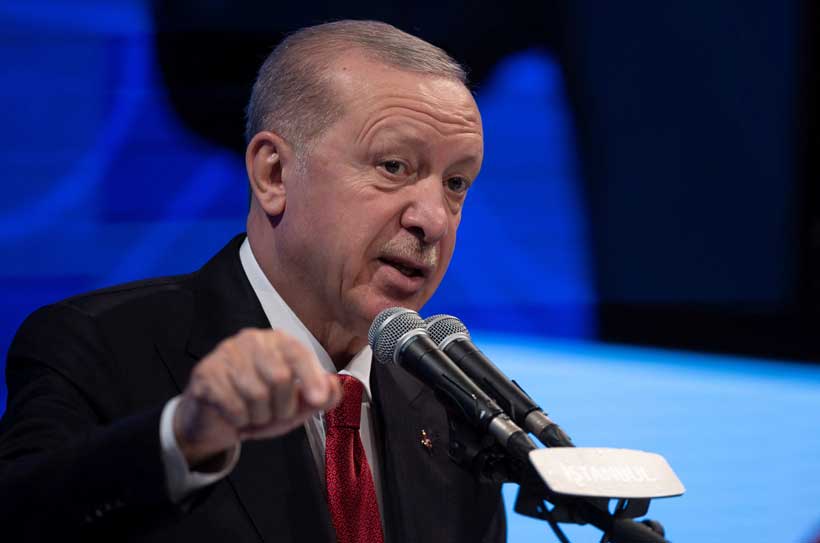
Turkish President Recep Tayyip Erdogan has warned that countries cannot be expected to move at the same pace on climate action while major gaps persist in access to financing and technology, putting the question of climate finance at the center of Turkey’s preparations to host COP31.
Speaking at the United Nations Climate Summit in New York, Erdogan said climate policies must reflect the economic conditions and development priorities of individual countries rather than impose identical expectations on states with vastly different resources.
“While inequalities persist over access to financing and technology, it is not realistic to expect all countries to advance at the same pace,” Erdogan said.
His comments come as Turkey prepares to host the COP31 climate summit in Antalya from November 9 to 20. Turkey’s presidency is being structured around an action agenda intended to translate existing climate commitments into concrete projects and measurable outcomes.
Stay ahead of the geopolitical week.
MD Briefing delivers expert analysis across five global fronts — the Indo-Pacific, energy, geoeconomics, European security, and the Middle East — every Monday morning. Free.
Among its proposed targets are increasing electricity’s share of total energy consumption to 35% by 2035 and halving the projected increase in municipal waste.
Climate Action Meets Development
Erdogan argued that climate policy cannot be separated from economic development, particularly for countries that lack the financial and technological capacity available to wealthier states.
“Every proposal in which we don’t make our climate targets meet societal and economic realities is bound to fail,” he said, calling for climate policies that account for national conditions, resources and development priorities.
The argument reflects a persistent divide in international climate negotiations. Developing countries have repeatedly emphasized that ambitious climate action requires greater access to affordable financing and technology, while developed countries have pushed for stronger implementation of existing commitments.
Erdogan said a just transition would only be sustainable if climate objectives were connected to economic prosperity and development.
“We can only make a just transition lasting to the extent that we establish a strong link between climate goals and development and prosperity,” he said.
Turkey and Australia Share COP31 Responsibilities
Turkey’s COP31 preparations are taking place under an unusual arrangement with Australia.
Australia will lead the formal negotiations, while Turkey will hold the COP presidency and oversee the action agenda. The division of responsibilities is intended to allow the summit to focus both on negotiations between governments and on translating existing commitments into practical action.
Erdogan said Turkey and Australia were working to ensure that the concerns of different regions are represented in the summit’s agenda.
He also highlighted planned diplomatic events in the Pacific, including a pre COP meeting in Fiji next month and a leaders’ meeting in Tuvalu. According to Erdogan, these gatherings can help ensure that Pacific island states have a stronger voice in discussions over climate policy.
For vulnerable island countries, the issue is particularly significant because climate risks are already closely connected to questions of economic security, infrastructure and development.
COP31 Faces Pressure to Deliver Results
Turkey’s emphasis on implementation comes as governments face growing pressure to demonstrate that international climate commitments are producing measurable results.
The challenge is not simply setting more ambitious targets. Many developing countries face constraints in financing infrastructure, deploying clean technologies and adapting to climate impacts while continuing to address poverty and economic development.
That makes the question of climate finance central to the credibility of future climate negotiations.
Turkey’s COP31 agenda will therefore have to navigate two competing expectations: maintaining pressure for stronger climate action while recognizing that countries do not begin the transition with equal financial resources, technological capacity or development priorities.
Erdogan’s message suggests that Turkey wants COP31 to focus not only on what countries should promise, but also on whether they have the means to deliver those promises.
The success of that approach will depend on whether the summit can turn the longstanding debate over climate finance and unequal capacity into concrete mechanisms that allow countries at different stages of development to advance their climate goals.
With information from Reuters.
