A decade of financial sanctions barely dented China’s discounted-Iranian-oil trade. Physical strikes on the tankers themselves might close it within months — because Beijing has a legal playbook for ignoring a Treasury designation, and none for re-floating a struck ship.
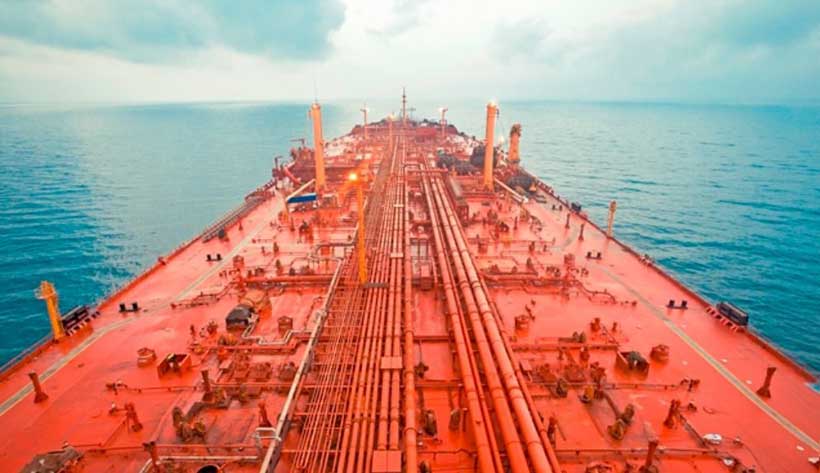
On Saturday, a US Navy strike hit an Iranian oil tanker loading at Kharg Island — the terminal that handles roughly nine in every ten barrels Iran still manages to export. It was one of three vessels US Central Command struck that day, in a war that began in February and escalated further when Iran’s Revolutionary Guard fired ballistic missiles at a US aircraft carrier and destroyer in response. Most coverage has filed this under “regional war escalates.” It is also something narrower and more consequential for global oil markets: the first time Washington has attacked the physical supply chain feeding China’s independent “teapot” refineries, rather than sanctioning the paper trail behind it. That distinction matters more than the headlines suggest, because the teapots’ own numbers show they were already running out of room to absorb a shock like this one.
The Context
Teapots are China’s independent, mostly privately owned refineries, concentrated in Shandong province, accounting for roughly a quarter of the country’s total refining capacity. Unlike China’s state oil majors, which avoid sanctioned crude to protect their access to Western banks and capital markets, teapots built their business model on the opposite trade: buying Iranian, Russian and Venezuelan oil at steep discounts state refiners won’t touch. Since the US-Israeli campaign against Iran began in February, and a US naval blockade of Iranian ports followed in April, Iran’s exports have collapsed from roughly 2 million barrels a day to as low as 111,000 barrels a day by mid-May — and China has kept absorbing nearly all of what’s left, with Treasury estimating China now buys around 90% of Iran’s total exports. Washington’s response, until this month, was almost entirely financial: OFAC has designated multiple teapot refineries since last year. This week’s strikes are the first sign Washington is trying a fundamentally different lever.
Stay ahead of the geopolitical week.
MD Briefing delivers expert analysis across five global fronts — the Indo-Pacific, energy, geoeconomics, European security, and the Middle East — every Monday morning. Free.
The Argument
Most coverage of the Hormuz strikes has treated them as one more escalation in a war already defined by oil-price headlines. That framing misses the more important story sitting underneath it: this is a live test of whether financial sanctions and physical interdiction are actually the same tool with different intensity settings, or two entirely different categories of pressure — and the evidence so far says the second.
Start with what financial sanctions have actually achieved against the teapots, which is not much. OFAC has designated multiple Shandong refiners since March 2025 for collectively processing billions of dollars of Iranian-origin oil, and Beijing has built a real playbook for absorbing the hit. On May 2, China’s Ministry of Commerce invoked its “Blocking Rules” — a law that had sat unused for five years — for the first time ever, explicitly to shield five sanctioned teapots by ordering Chinese banks and companies not to recognise or comply with the US designations. Teapots have also leaned on China’s own payment rails and barter-style clearing to route around dollar transactions altogether. None of this is subtle, and none of it has stopped the trade: China kept buying nearly all the oil Iran could still ship, right through a year of expanding designations.
The reasonable objection is that if a decade of financial sanctions and a year of stepped-up designations couldn’t meaningfully dent this arbitrage, why would military strikes on tankers do any better — won’t Iran and China simply adapt again, as they have every previous time? That objection has real force, but it misunderstands what changed this month. A Blocking Rule can order a Chinese bank to ignore a piece of paper from Washington. It cannot order an insurer to underwrite a hull sailing into an active strike zone, and it cannot make an intercepted or damaged tanker deliver its cargo. Financial sanctions are a fight over documentation and jurisdiction, arenas where Beijing has agency and precedent on its side. Physical interdiction is a fight over whether a specific ship reaches a specific port, an arena where Beijing has none.
That distinction would matter less if teapots still had the cushion they built earlier in the war. They don’t, or not much of one. China’s strategic reserve stood at roughly 1.2 billion barrels — about 109 days of import cover — in early 2026, and teapots drew on both that buffer and their own inventories to keep running through the blockade’s steepest months. By mid-August, reports of dwindling teapot stockpiles were already forcing operators to weigh resuming direct Iranian purchases despite the risk, months before this week’s strikes on the loading terminal itself. In other words, the reserve cushion that let teapots shrug off a year of OFAC designations was already thinning before Washington escalated to hitting Kharg Island directly.
The stakes are larger than one sector’s margins. Teapots run on notably thin margins that depend almost entirely on the sanctioned-crude discount to compete with better-capitalised state refiners; take away the discount, or the supply, and there is no equivalent domestic substitute at the same price. A refining segment worth roughly a quarter of China’s total capacity was built on a bet that Washington would keep fighting this trade on paper. This month, for the first time, that bet is being tested against a Navy instead of a Treasury letter.
The Scenarios
Base case (55%): Interdiction continues at roughly this month’s intensity — a harassment campaign rather than a full quarantine of Kharg Island. Some cargoes still get through via smaller vessels, ship-to-ship transfers further from the strike zone, and the flag-switching and falsified documentation Treasury has already flagged. Iranian flow to China stabilises in the low hundreds of thousands of barrels a day, enough to slow the drawdown of China’s reserves without restoring teapot margins to pre-war levels. Expect quiet consolidation among the smallest, most exposed teapots over the next two quarters, not a headline collapse.
Downside case, and the one fewer people are pricing: US strikes extend to tankers further from the immediate conflict zone, or explicitly target any vessel making the Kharg Island run regardless of flag — effectively closing the load point Iran depends on for nine in ten of its remaining barrels. Layered onto an already-thinning Chinese stockpile, this could cut Iranian-origin flow to teapots by another 70–90% within sixty days, forcing real run cuts and shutting the weakest teapot capacity. That would be the sanctions-evasion story finally resolved — not by compliance, but by the physical destruction or immobilisation of the assets doing the evading.
Upside case: a negotiated de-escalation reopens the Kharg Island corridor and resets the arbitrage — plausible given Washington is simultaneously running a parallel diplomatic track on Ukraine and may not want a third open military front for long. A less obvious alternative: Beijing stands up a state-backed insurance and reflagging scheme for this trade, mirroring how Russia’s shadow fleet matured after 2022, effectively re-insuring the risk domestically. That would be the more durable outcome, and it would mean physical interdiction, like financial sanctions before it, ultimately gets absorbed rather than defeated.
The Takeaway
The story of this war’s oil market has mostly been told through Brent’s price and the Fed’s dilemma. The more consequential and least-covered fight is happening in Shandong’s refinery margins, where a decade of financial sanctions barely dented an arbitrage that physical interdiction might close within months — not because Beijing lacks the will to protect it, but because a Blocking Rule cannot re-float a struck tanker. Watch Kharg Island’s loading tempo over the next three weeks: tanker-tracking data from firms like Kpler or Vortexa will show within days whether cargoes are still clearing the terminal, and China’s October refinery throughput figures, typically published in the first half of November, will show whether Shandong actually cut runs. If both point down, the teapot business model that a decade of sanctions failed to touch will have met the one enforcement tool it can’t blunt.